• Fri frakt över 249 kr
  • •
  • Snabba leveranser
  • •
  • Billiga böcker
Kundservice

Du är på sajten för privatpersoner.

Företag, bibliotek eller offentlig verksamhet?

Du handlar på classic.bokus.com, där alla dina funktioner finns intakta.
Till classic.bokus.com
Bokus logotyp. Gå till startsidan.
  • Erbjudanden
  • Nyheter
  • Student
  • Topplistor
  • Barn & ungdom
  • Bokus Play
  • E-böcker
  • Pocketböcker
  • Spel & pussel

10% rabatt på allt med kod NYSTART10 →

Sidfot

Mina sidor

    Hjälp

    • Kundservice
    • Vanliga frågor och svar
    • Frakt och leverans
    • Retur vid ångerrätt
    • Reklamera vara
    • Betalning
    • Köpvillkor
    • Allmänna villkor
    • Information om webbplatsens tillgänglighet

    Om Bokus

    • Om oss
    • Pressrum
    • För studenter
    • För företag
    • För bibliotek och offentlig verksamhet
    • För leverantörer
    • Hållbarhet

    Populärt

    • Aktuella erbjudanden
    • Presentkort
    • Studentlitteratur
    • Nya böcker
    • Topplistor
    • Signerade böcker
    • Engelska böcker

    Inspiration

    • Boktips
    • BookTok
    • Populära bokserier
    • Barnbokskaraktärer
    • Populära författare
    Logotyp för Bokus
    Följ oss på Facebook (extern länk)Följ oss på Instagram (extern länk)Följ oss på YouTube (extern länk)Följ oss på TikTok (extern länk)
    bokus @ CookiesAnpassa cookiesIntegritetspolicyKöpvillkor
    Till Citymail hemsida (extern länk)Till Budbee hemsida (extern länk)Till Postnord hemsida (extern länk)Till Schenker hemsida (extern länk)Till Early Bird hemsida (extern länk)Till Walleys hemsida (extern länk)
    1. Historia och arkeologi
    2. Historia
    3. Amerikas historia

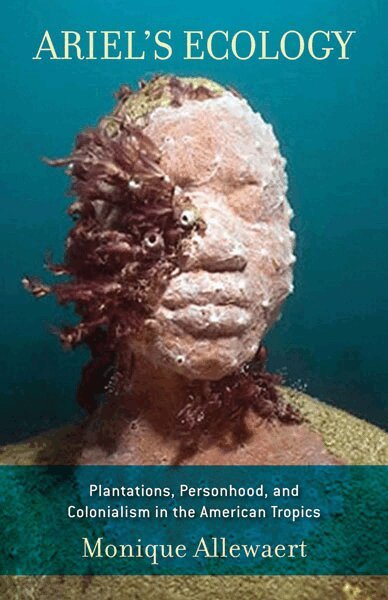
    Ariel's Ecology

    Plantations, Personhood, and Colonialism in the American Tropics

    AvMonique Allewaert

    Häftad, Engelska, 2013

    339 kr

    Beställningsvara. Skickas inom 5-8 vardagar. Fri frakt över 249 kr.

    Fler format och utgåvor

    Inbunden

    953 kr

    Beskrivning

    What happens if we abandon the assumption that a person is a discrete, world-making agent who acts on and creates place? This, Monique Allewaert contends, is precisely what occurred on eighteenth-century American plantations, where labor practices and ecological particularities threatened the literal and conceptual boundaries that separated persons from the natural world.Integrating political philosophy and ecocriticism with literary analysis, Ariel’s Ecology explores the forms of personhood that developed out of New World plantations, from Georgia and Florida through Jamaica to Haiti and extending into colonial metropoles such as Philadelphia. Allewaert’s examination of the writings of naturalists, novelists, and poets; the oral stories of Africans in the diaspora; and Afro-American fetish artifacts shows that persons in American plantation spaces were pulled into a web of environmental stresses, ranging from humidity to the demand for sugar. This in turn gave rise to modes of personhood explicitly attuned to human beings’ interrelation with nonhuman forces in a process we might call ecological.Certainly the possibility that colonial life revokes human agency haunts works from Shakespeare’s Tempest and Montesquieu’s Spirit of the Laws to Spivak’s theories of subalternity. In Allewaert’s interpretation, the transformation of colonial subjectivity into ecological personhood is not a nightmare; it is, rather, a mode of existence until now only glimmering in Che Guevara’s dictum that postcolonial resistance is synonymous with “perfect knowledge of the ground.”

    Produktinformation

    • Utgivningsdatum:2013-07-11
    • Mått:140 x 216 x 25 mm
    • Vikt:320 g
    • Format:Häftad
    • Språk:Engelska
    • Antal sidor:248
    • Förlag:University of Minnesota Press
    • ISBN:9780816677283

    Utforska kategorier

    • Amerikas historia inom Historia och arkeologi
    • Litteraturvetenskap inom Skönlitteratur

    Mer om författaren

    Monique Allewaert is assistant professor of English at the University of Wisconsin–Madison.

    Recensioner i media

    "Timely, provocative, and incisive, Ariel’s Ecology builds an impressive case for the emergence in the revolutionary Atlantic world of an ‘ecological’ personhood in writings from and about plantation ‘zones,’ variously authorized texts where ‘vitality’ and ‘agency’ heretofore thought by critics to have been abrogated from the enslaved and colonized emerge as byproducts of an ‘assemblage’ of relations with the natural world. Monique Allewaert’s important study will be of great interest to scholars working within and across multiple fields."-Sean X. Goudie, Penn State University"The book brims with theoretical and aesthetic insights on every page...With its inclusion of delightful botanical plates, rare archival documents, maps, engravings, and paintings, Ariel's Ecology will not only attract an interdisciplinary audience of scholars, educators, and students, but will also speak to a broader audience curious about subject formation in the American tropics."-Southern Spaces"With capacious readings across a wide range of print, manuscript, and oral texts both from the colonial period and beyond, Allewaert makes a methodological argument for the use of extra-generic sources in early American criticisms. A crucial intervention not only in materialist and postcolonial ecocriticisms, but also in political theory, diasporic American studies, and early American studies generally."-ISLE: Interdisciplinary Studies in Literature and Environment"Ariel’s Ecology provides a valuable, thought-provoking guide to this environment and those histories, and it will undoubtedly spur further thinking and writing in its wake."-Clio

    Innehållsförteckning

    • ContentsIntroduction: Tempest in the Plantation ZoneI1. Swamp Sublime: Ecology and Resistance in the American Plantation Zone2. Plant Life: Tropical Vegetation, Agencied Matter, and Cosmopolitical FormII3. On Parahumanity: Creole Stories and the Suspension of the Human4. Persons without Objects: Afro-American Materialisms from Fetishes to PersonhoodIII5. Involving the Universe in Ruins: Sansay’s Haitian AnabiographyEpilogue: Afterlives of Ariel’s EcologyAcknowledgmentsNotesIndex