Monique Allewaert - Böcker
Visar alla böcker från författaren Monique Allewaert. Handla med fri frakt och snabb leverans.
4 produkter
4 produkter
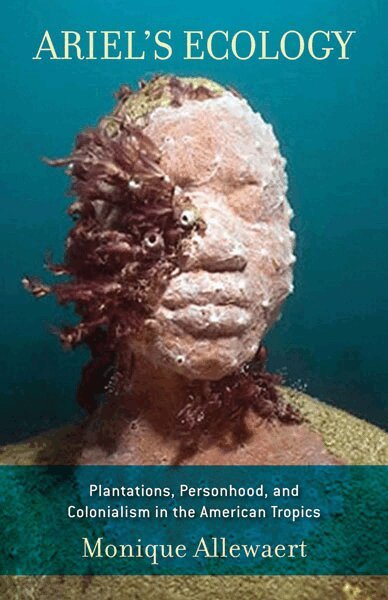
Ariel's Ecology
Plantations, Personhood, and Colonialism in the American Tropics
Inbunden, Engelska, 2013
915 kr
Skickas inom 7-10 vardagar
What happens if we abandon the assumption that a person is a discrete, world-making agent who acts on and creates place? This, Monique Allewaert contends, is precisely what occurred on eighteenth-century American plantations, where labor practices and ecological particularities threatened the literal and conceptual boundaries that separated persons from the natural world.Integrating political philosophy and ecocriticism with literary analysis, Ariel’s Ecology explores the forms of personhood that developed out of New World plantations, from Georgia and Florida through Jamaica to Haiti and extending into colonial metropoles such as Philadelphia. Allewaert’s examination of the writings of naturalists, novelists, and poets; the oral stories of Africans in the diaspora; and Afro-American fetish artifacts shows that persons in American plantation spaces were pulled into a web of environmental stresses, ranging from humidity to the demand for sugar. This in turn gave rise to modes of personhood explicitly attuned to human beings’ interrelation with nonhuman forces in a process we might call ecological.Certainly the possibility that colonial life revokes human agency haunts works from Shakespeare’s Tempest and Montesquieu’s Spirit of the Laws to Spivak’s theories of subalternity. In Allewaert’s interpretation, the transformation of colonial subjectivity into ecological personhood is not a nightmare; it is, rather, a mode of existence until now only glimmering in Che Guevara’s dictum that postcolonial resistance is synonymous with “perfect knowledge of the ground.”
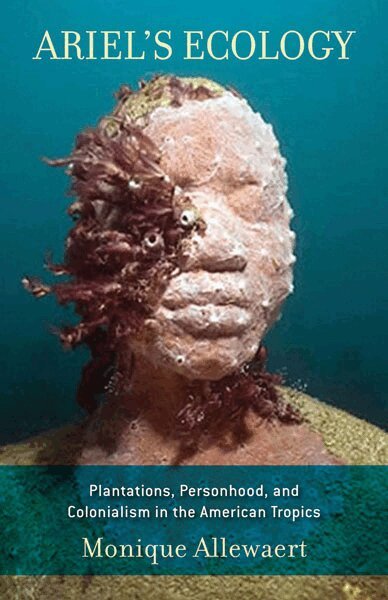
Ariel's Ecology
Plantations, Personhood, and Colonialism in the American Tropics
Häftad, Engelska, 2013
325 kr
Skickas inom 7-10 vardagar
What happens if we abandon the assumption that a person is a discrete, world-making agent who acts on and creates place? This, Monique Allewaert contends, is precisely what occurred on eighteenth-century American plantations, where labor practices and ecological particularities threatened the literal and conceptual boundaries that separated persons from the natural world.Integrating political philosophy and ecocriticism with literary analysis, Ariel’s Ecology explores the forms of personhood that developed out of New World plantations, from Georgia and Florida through Jamaica to Haiti and extending into colonial metropoles such as Philadelphia. Allewaert’s examination of the writings of naturalists, novelists, and poets; the oral stories of Africans in the diaspora; and Afro-American fetish artifacts shows that persons in American plantation spaces were pulled into a web of environmental stresses, ranging from humidity to the demand for sugar. This in turn gave rise to modes of personhood explicitly attuned to human beings’ interrelation with nonhuman forces in a process we might call ecological.Certainly the possibility that colonial life revokes human agency haunts works from Shakespeare’s Tempest and Montesquieu’s Spirit of the Laws to Spivak’s theories of subalternity. In Allewaert’s interpretation, the transformation of colonial subjectivity into ecological personhood is not a nightmare; it is, rather, a mode of existence until now only glimmering in Che Guevara’s dictum that postcolonial resistance is synonymous with “perfect knowledge of the ground.”
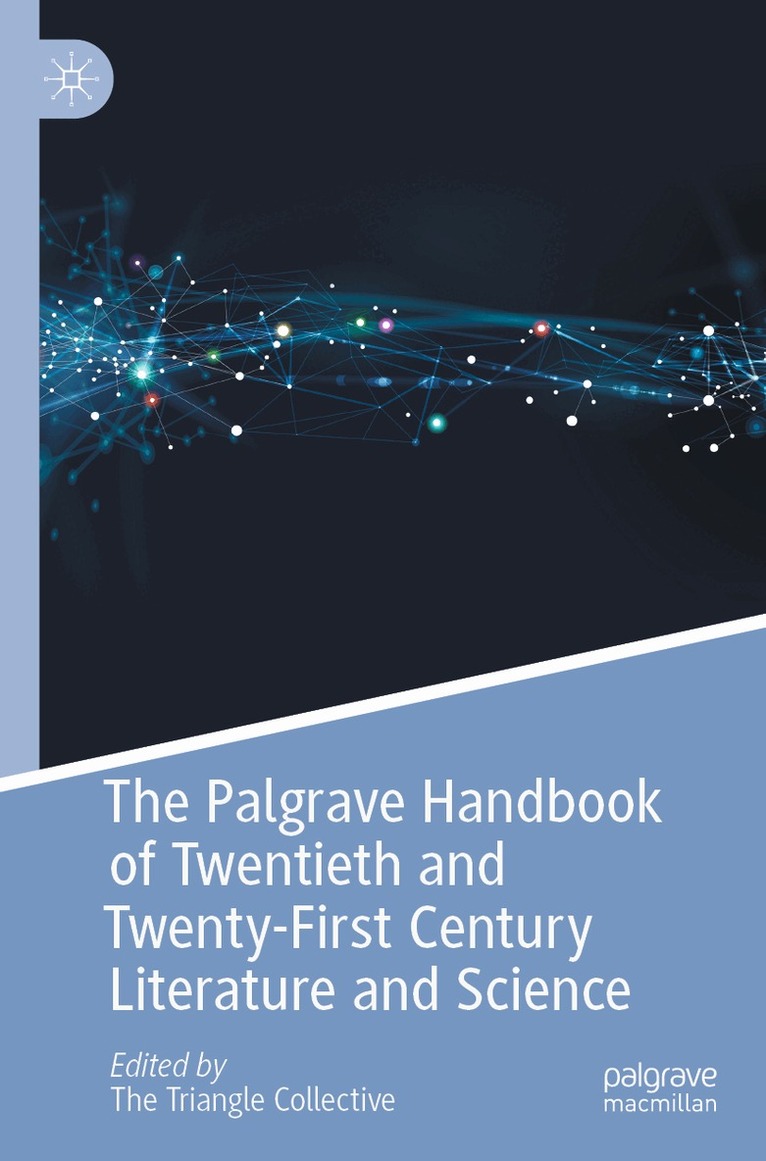
Palgrave Handbook of Twentieth and Twenty-First Century Literature and Science
Inbunden, Engelska, 2020
2 646 kr
Skickas inom 10-15 vardagar
This handbook illustrates the evolution of literature and science, in collaboration and contestation, across the twentieth and twenty-first centuries. The essays it gathers question the charged rhetoric that pits science against the humanities while also demonstrating the ways in which the convergence of literary and scientific approaches strengthens cultural analyses of colonialism, race, sex, labor, state formation, and environmental destruction.The broad scope of this collection explores the shifting relations between literature and science that have shaped our own cultural moment, sometimes in ways that create a problematic hierarchy of knowledge and other times in ways that encourage fruitful interdisciplinary investigations, innovative modes of knowledge production, and politically charged calls for social justice. Across units focused on epistemologies, techniques and methods, ethics and politics, and forms and genres, the chapters address problems rangingacross epidemiology and global health, genomics and biotechnology, environmental and energy sciences, behaviorism and psychology, physics, and computational and surveillance technologies.Chapter 19 is available open access under a Creative Commons Attribution 4.0 International License via link.springer.com.
Palgrave Handbook of Twentieth and Twenty-First Century Literature and Science
Häftad, Engelska, 2021
2 646 kr
Skickas inom 10-15 vardagar
This handbook illustrates the evolution of literature and science, in collaboration and contestation, across the twentieth and twenty-first centuries. The essays it gathers question the charged rhetoric that pits science against the humanities while also demonstrating the ways in which the convergence of literary and scientific approaches strengthens cultural analyses of colonialism, race, sex, labor, state formation, and environmental destruction.The broad scope of this collection explores the shifting relations between literature and science that have shaped our own cultural moment, sometimes in ways that create a problematic hierarchy of knowledge and other times in ways that encourage fruitful interdisciplinary investigations, innovative modes of knowledge production, and politically charged calls for social justice. Across units focused on epistemologies, techniques and methods, ethics and politics, and forms and genres, the chapters address problems rangingacross epidemiology and global health, genomics and biotechnology, environmental and energy sciences, behaviorism and psychology, physics, and computational and surveillance technologies.Chapter 19 is available open access under a Creative Commons Attribution 4.0 International License via link.springer.com.