Häftad, Engelska, 2012
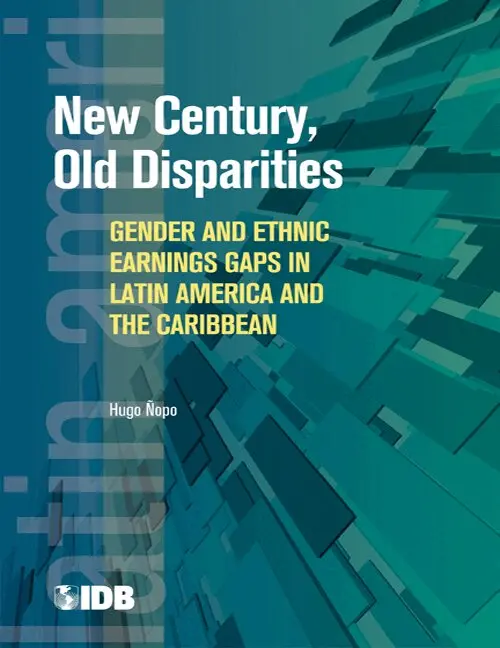
New Century, Old Disparities
Av Hugo Nopo
308 kr
Beställningsvara. Skickas inom 5-8 vardagar. Fri frakt över 249 kr.
Beskrivning
After a sustained economic growth period at the end of the last century and the beginning of this one, Latin America still faces high inequality and lower well-being indicators among women, afro-descendants, and indigenous peoples. This is a period in which the world and particularly Latin America has experienced important changes regarding the role of women and men. Marriage, education and work decisions have evolved and, as a result, women’s visibility at home, at school, in the labor markets and in society have evolved as well. But there are still, however, important challenges in the labor markets. Earnings differentials as well as occupational and hierarchical segregation are commonly accepted as the norm in the region’s labor markets.For the diverse racial and ethnic groups the situation has been less auspicious than for women. Statistics reveal that traditionally excluded ethnic groups have worse poverty and income outcomes, reflected in issues such as restricted access to public services, poorer health conditions, lack of political representation, confinement into low productivity activities and prevalent discrimination. The evidence points that in Latin America, a racially and ethnically diverse region, the benefits of the recent progress have not reached equally indigenous peoples and Afro-descendants. This pattern can be traced to lower human capital endowments, manifested in poorer educational performance and fewer years of job experience. In this way, these groups have been less able to benefit from the economic opportunities generated within this prosperous period.This book is about gender and ethnic differences in labor markets earnings. It revolves around the question: to what extent the gender (ethnic) differences in earnings are a result of gender (ethnic) differences in observable individuals’ characteristics that the labor markets reward? Such question is answered with a novel methodological approach based on matching comparisons, resembling the Oaxaca Blinder (OB) decompositions, extending their scope. What would the distribution of females’ and males’ earnings be if they had equal levels of education, if they worked the same quantity of hours per week, if they worked in the same kind of formal jobs, or in firms of the same size? What would happen with the earnings gap, for instance, if men and women had the same occupations or were distributed equally through economic sectors? Further on, what would happen if all men and women in the labor markets were equally distributed along all of these characteristics at the same time? The novelty of the methodology introduced in this book is that it allows us to create fictional labor markets where these counterfactuals are true. Furthermore, this book addresses not only the extent to which those differentials can be explained by individuals’ characteristics, but also how have these gaps evolved during the last two decades. In this way, it allows the discussion of policy options for these pressing issues in the region.
Produktinformation
- Utgivningsdatum: 2012-09-07
- Mått: 149 x 226 x 25 mm
- Vikt: 540 g
- Format: Häftad
- Språk: Engelska
- Serie: Latin American Development Forum
- Antal sidor: 352
- Förlag: World Bank Publications
- ISBN: 9780821386866
Utforska kategorier
Betyg & recensioner
0 recensioner
Inga recensioner tillgängliga.