• Fri frakt över 249 kr
  • •
  • Snabba leveranser
  • •
  • Billiga böcker
Kundservice

Du är på sajten för privatpersoner.

Företag, bibliotek eller offentlig verksamhet?

Du handlar på classic.bokus.com, där alla dina funktioner finns intakta.
Till classic.bokus.com
Bokus logotyp. Gå till startsidan.
  • Erbjudanden
  • Nyheter
  • Student
  • Topplistor
  • Barn & ungdom
  • Bokus Play
  • E-böcker
  • Pocketböcker
  • Spel & pussel

10% rabatt på allt med kod NYSTART10 →

Sidfot

Mina sidor

    Hjälp

    • Kundservice
    • Vanliga frågor och svar
    • Frakt och leverans
    • Retur vid ångerrätt
    • Reklamera vara
    • Betalning
    • Köpvillkor
    • Allmänna villkor
    • Information om webbplatsens tillgänglighet

    Om Bokus

    • Om oss
    • Pressrum
    • För studenter
    • För företag
    • För bibliotek och offentlig verksamhet
    • För leverantörer
    • Hållbarhet

    Populärt

    • Aktuella erbjudanden
    • Presentkort
    • Studentlitteratur
    • Nya böcker
    • Topplistor
    • Signerade böcker
    • Engelska böcker

    Inspiration

    • Boktips
    • BookTok
    • Populära bokserier
    • Barnbokskaraktärer
    • Populära författare
    Logotyp för Bokus
    Följ oss på Facebook (extern länk)Följ oss på Instagram (extern länk)Följ oss på YouTube (extern länk)Följ oss på TikTok (extern länk)
    bokus @ CookiesAnpassa cookiesIntegritetspolicyKöpvillkor
    Till Citymail hemsida (extern länk)Till Budbee hemsida (extern länk)Till Postnord hemsida (extern länk)Till Schenker hemsida (extern länk)Till Early Bird hemsida (extern länk)Till Walleys hemsida (extern länk)
    1. Samhälle och politik
    2. Samhälle och kultur
    3. Kultur och medier
    4. Referensverk och tvärvetenskap

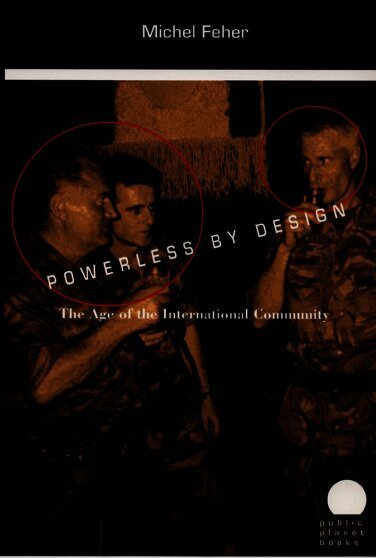
    Powerless by Design

    The Age of the International Community

    AvMichel Feher

    Häftad, Engelska, 2000

    Del i serien Public Planet Books

    336 kr

    Beställningsvara. Skickas inom 5-8 vardagar. Fri frakt över 249 kr.

    Fler format och utgåvor

    E-bok

    489 kr

    Beskrivning

    In Powerless by Design Michel Feher addresses Western officials’ responses to post–Cold War conflicts and analyzes the reactions of the Left to their governments’ positions. Sometime in the early 1990s, Feher argues, U.S. and European leaders began portraying themselves as the representatives of a new international community. In that capacity, they developed a doctrine that was not only at odds with the rhetoric of the Cold War but also a far cry from the “new world order” announced at the outset of the decade. Whereas their predecessors had invested every regional conflict with an ideological stake, explains Feher, the representatives of this international community claimed that the crises they confronted did not call for partisan involvement. Exemplary of this new approach were Western responses to ethnic cleansing in the former Yugoslavia and genocide in Rwanda. In order to avoid costly interventions, U.S. and European leaders traced these crimes to ancient tribal enmities and professed that the role of the international community should be limited to a humanitarian, impartial, and conciliatory engagement with all the warring parties. They thus managed to appear righteous but powerless, at least until NATO’s intervention in Kosovo. Faced with this doctrine, both the liberal and radical wings of the Western Left found themselves in an uneasy position. Liberals, while lured by their leaders’ humanitarianism were nonetheless disturbed by the dismal results of the policies carried out in the name of the international community. Conversely, anti-imperialist militants were quick to mock the hypocrisy of their governments’ helpless indignation, yet certainly not prepared to demand that Western powers resort to force.Are we still in this “age of the international community”? Feher shows that with NATO’s intervention in Kosovo, both liberal and radical activists suddenly found their mark: the former welcomed the newfound resolve of their governments, while the latter condemned it as the return of the imperialist “new world order.” For Western leaders, however, the war against Serbia proved an accident rather than a turning point. Indeed, less than a year later, their indifference to the destruction of Chechnya by Russian troops suggested that the discursive strategy exposed in Powerless by Design might remain with us for quite some time.

    Produktinformation

    • Utgivningsdatum:2000-09-25
    • Mått:134 x 204 x 14 mm
    • Vikt:626 g
    • Format:Häftad
    • Språk:Engelska
    • Serie:Public Planet Books
    • Antal sidor:184
    • Förlag:Duke University Press
    • ISBN:9780822326137

    Utforska kategorier

    • Referensverk och tvärvetenskap inom Samhälle och politik
    • Internationella relationer inom Samhälle och politik

    Mer om författaren

    Michel Feher is Founding Editor and Publisher of Zone Books in New York. He most recently edited The Libertine Reader: Eroticism and Enlightenment in 18th-Century France.

    Recensioner i media

    “Powerless by Design is necessary reading for anyone concerned with the contemporary politics of human rights. Feher offers a lucid and incisive indictment of the humanitarian pretensions of the international community.”-Robert Post, University of California, Berkeley “Extremely provocative and informative, this book should quickly become the center of political debate among liberal and left scholars and activists. The book deftly lays out the paradox of a discourse on human rights and international obligations that under certain political conditions undermines the very principles at stake”-Judith Butler, author of The Psychic Life of Power: Theories in Subjection “Michel Feher is a keen and lucid analyzer of doctrines and hypocrisies, and in Powerless by Design he has given us a truly valuable analysis of the doctrines and hypocrisies of right now.”-Paul Berman, author of A Tale of Two Utopias: The Political Journey of the Generation of 1968

    Innehållsförteckning

    • Acknowledgments A Puzzling Chiasm A New Doctrine A Radical Critique 1. Misguiding Definitions 2. Self-serving motives 3. Obfuscating policiesI. HumanitarianismII. DiplomacyIII. ReconstructionIV. Justice 4. Self-fulfilling prophecies An Ambiguous Evolution An Unsettling Message An Emerging Polarization Notes