• Fri frakt över 249 kr
  • •
  • Snabba leveranser
  • •
  • Billiga böcker
Kundservice

Du är på sajten för privatpersoner.

Företag, bibliotek eller offentlig verksamhet?

Du handlar på classic.bokus.com, där alla dina funktioner finns intakta.
Till classic.bokus.com
Bokus logotyp. Gå till startsidan.
  • Erbjudanden
  • Nyheter
  • Student
  • Topplistor
  • Barn & ungdom
  • Bokus Play
  • E-böcker
  • Pocketböcker
  • Spel & pussel

10% rabatt på allt med kod: NYSTART10 →

Sidfot

Mina sidor

    Hjälp

    • Kundservice
    • Vanliga frågor och svar
    • Frakt och leverans
    • Retur vid ångerrätt
    • Reklamera vara
    • Betalning
    • Köpvillkor
    • Allmänna villkor
    • Information om webbplatsens tillgänglighet

    Om Bokus

    • Om oss
    • Pressrum
    • För studenter
    • För företag
    • För bibliotek och offentlig verksamhet
    • För leverantörer
    • Hållbarhet

    Populärt

    • Aktuella erbjudanden
    • Presentkort
    • Studentlitteratur
    • Nya böcker
    • Topplistor
    • Signerade böcker
    • Engelska böcker

    Inspiration

    • Boktips
    • BookTok
    • Populära bokserier
    • Barnbokskaraktärer
    • Populära författare
    Logotyp för Bokus
    Följ oss på Facebook (extern länk)Följ oss på Instagram (extern länk)Följ oss på YouTube (extern länk)Följ oss på TikTok (extern länk)
    bokus @ CookiesAnpassa cookiesIntegritetspolicyKöpvillkor
    Till Citymail hemsida (extern länk)Till Budbee hemsida (extern länk)Till Postnord hemsida (extern länk)Till Schenker hemsida (extern länk)Till Early Bird hemsida (extern länk)Till Walleys hemsida (extern länk)
    1. Samhälle och politik
    2. Samhälle och kultur
    3. Sociala grupper och identitet
    4. Genusvetenskap

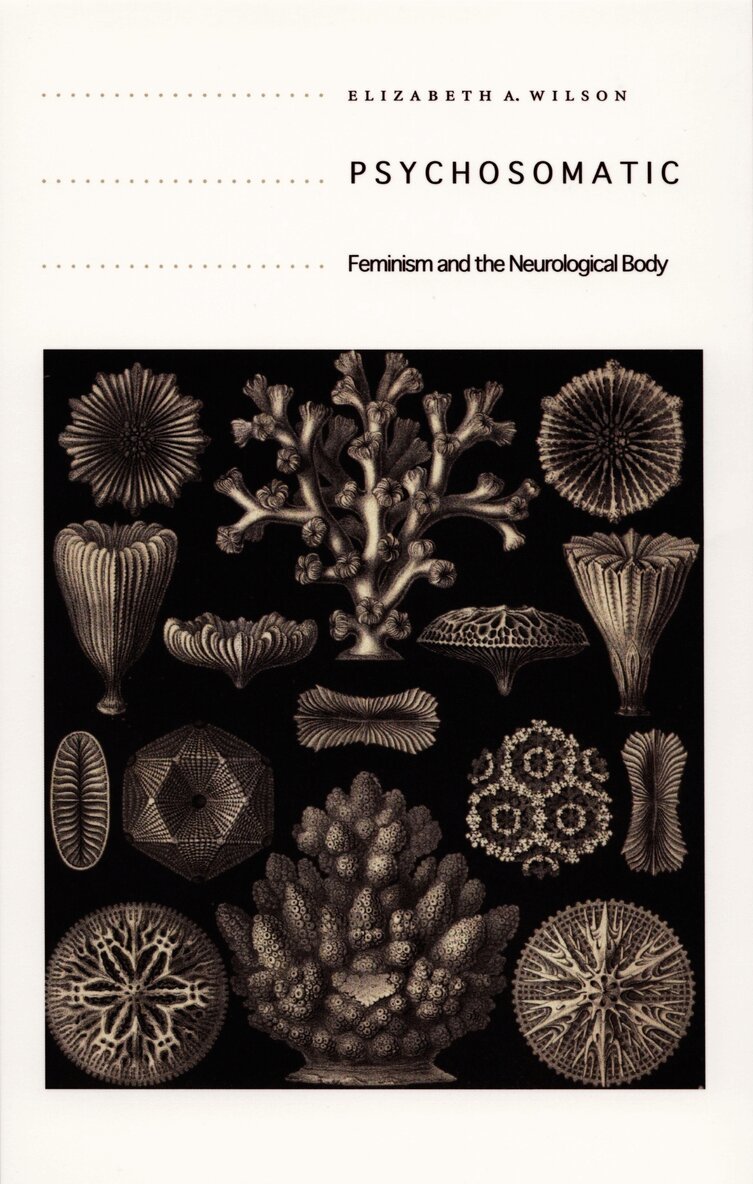
    Psychosomatic

    Feminism and the Neurological Body

    AvElizabeth A. Wilson

    Häftad, Engelska, 2004

    308 kr

    Beställningsvara. Skickas inom 5-8 vardagar. Fri frakt över 249 kr.

    Fler format och utgåvor

    E-bok

    444 kr

    Beskrivning

    How can scientific theories contribute to contemporary accounts of embodiment in the humanities and social sciences? In particular, how does neuroscientific research facilitate new approaches to theories of mind and body? Feminists have frequently criticized the neurosciences for biological reductionism, yet, Elizabeth A. Wilson argues, neurological theories-especially certain accounts of depression, sexuality, and emotion-are useful to feminist theories of the body. Rather than pointing toward the conventionalizing tendencies of the neurosciences, Wilson emphasizes their capacity for reinvention and transformation. Focusing on the details of neuronal connections, subcortical pathways, and reflex actions, she suggests that the central and peripheral nervous systems are powerfully allied with sexuality, the affects, emotional states, cognitive appetites, and other organs and bodies in ways not fully appreciated in the feminist literature. Whether reflecting on Simon LeVay’s hypothesis about the brains of gay men, Peter Kramer’s model of depression, or Charles Darwin’s account of trembling and blushing, Wilson is able to show how the neurosciences can be used to reinvigorate feminist theories of the body.

    Produktinformation

    • Utgivningsdatum:2004-06-16
    • Mått:163 x 238 x 9 mm
    • Vikt:204 g
    • Format:Häftad
    • Språk:Engelska
    • Antal sidor:136
    • Förlag:Duke University Press
    • ISBN:9780822333654

    Utforska kategorier

    • Genusvetenskap inom Samhälle och politik

    Mer om författaren

    Elizabeth A. Wilson is a Research Fellow at the Research Institute for Humanities and Social Sciences at the University of Sydney in Australia. She is the author of Neural Geographies: Feminism and the Microstructure of Cognition.

    Recensioner i media

    “It is quite a while since we have heard a voice as refreshing as that of Elizabeth A. Wilson. With boldness, wit, and extraordinary inventiveness, she shows us just how delimiting have been prevailing tendencies in science studies and feminist theory to marginalize, if not outright repudiate, the material, biological dimensions of human psychology. At the same time, by demonstrating the power of reading biological accounts with the eye of a critical theorist, she reveals the limitations operating within the life sciences. Psychosomatic teaches all of us how to do better: how to read neuroscience for the creative lessons it can offer the human sciences and how to employ the insights of the human sciences to open these same texts to dramatically new understandings.”-Evelyn Fox Keller, author of Making Sense of Life: Explaining Biological Development with Models, Metaphors, and Machines “Wilson’s writing is eloquent, considered and thought provoking. . . . In one of her articles, Wilson urged her readers to buy a copy of The Origin of Species as an important feminist text. I certainly endorse this suggestion, but I add my own: buy a copy of Psychosomatic, as it may turn out to be one of the most inspiring feminist works you will read.” - Myra J. Hird (Feminist Theory)

    Innehållsförteckning

    • Acknowledgments ixIntroduction: Somatic Compliance 11. Freud, Prozac, and Melancholic Neurology 152. The Brain in the Gut 313. Hypothalamic Preference: LeVay’s Study of Sexual Orientation 494. Trembling, Blushing: Darwin’s Nervous System 635. Emotional Lizards: Evolution and the Reptilian Brain 79Notes 97References 113Index 123