• Fri frakt över 249 kr
  • •
  • Snabba leveranser
  • •
  • Billiga böcker
Kundservice

Du är på sajten för privatpersoner.

Företag, bibliotek eller offentlig verksamhet?

Du handlar på classic.bokus.com, där alla dina funktioner finns intakta.
Till classic.bokus.com
Bokus logotyp. Gå till startsidan.
  • Erbjudanden
  • Nyheter
  • Student
  • Topplistor
  • Barn & ungdom
  • Bokus Play
  • E-böcker
  • Pocketböcker
  • Spel & pussel

10% rabatt på allt med kod NYSTART10 →

Sidfot

Mina sidor

    Hjälp

    • Kundservice
    • Vanliga frågor och svar
    • Frakt och leverans
    • Retur vid ångerrätt
    • Reklamera vara
    • Betalning
    • Köpvillkor
    • Allmänna villkor
    • Information om webbplatsens tillgänglighet

    Om Bokus

    • Om oss
    • Pressrum
    • För studenter
    • För företag
    • För bibliotek och offentlig verksamhet
    • För leverantörer
    • Hållbarhet

    Populärt

    • Aktuella erbjudanden
    • Presentkort
    • Studentlitteratur
    • Nya böcker
    • Topplistor
    • Signerade böcker
    • Engelska böcker

    Inspiration

    • Boktips
    • BookTok
    • Populära bokserier
    • Barnbokskaraktärer
    • Populära författare
    Logotyp för Bokus
    Följ oss på Facebook (extern länk)Följ oss på Instagram (extern länk)Följ oss på YouTube (extern länk)Följ oss på TikTok (extern länk)
    bokus @ CookiesAnpassa cookiesIntegritetspolicyKöpvillkor
    Till Citymail hemsida (extern länk)Till Budbee hemsida (extern länk)Till Postnord hemsida (extern länk)Till Schenker hemsida (extern länk)Till Early Bird hemsida (extern länk)Till Walleys hemsida (extern länk)
    1. Kultur
    2. Scenkonst och film
    3. Film

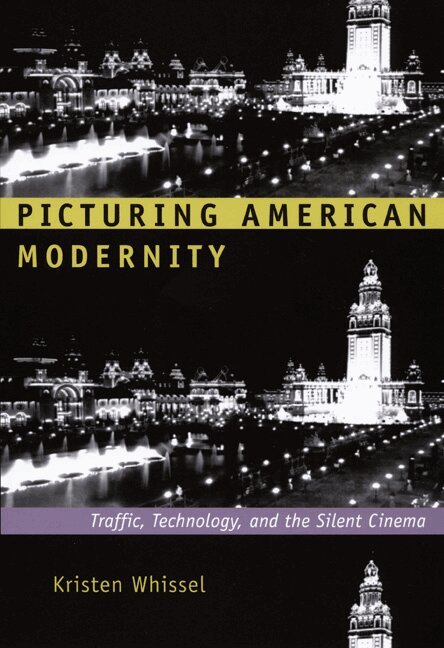
    Picturing American Modernity

    Traffic, Technology, and the Silent Cinema

    AvKristen Whissel

    Häftad, Engelska, 2008

    400 kr

    Beställningsvara. Skickas inom 5-8 vardagar. Fri frakt över 249 kr.

    Fler format och utgåvor

    E-bok

    568 kr

    Beskrivning

    In Picturing American Modernity, Kristen Whissel investigates the relationship between early American cinema and the experience of technological modernity. She demonstrates how between the late 1890s and the eve of the First World War moving pictures helped the U.S. public understand the possibilities and perils of new forms of “traffic” produced by industrialization and urbanization. As more efficient ways to move people, goods, and information transformed work and leisure at home and contributed to the expansion of the U.S. empire abroad, silent films presented compelling visual representations of the spaces, bodies, machines, and forms of mobility that increasingly defined modern life in the United States and its new territories.Whissel shows that by portraying key events, achievements, and anxieties, the cinema invited American audiences to participate in the rapidly changing world around them. Moving pictures provided astonishing visual dispatches from military camps prior to the outbreak of fighting in the Spanish-American War. They allowed audiences to delight in images of the Pan-American Exposition, and also to mourn the assassination of President McKinley there. One early film genre, the reenactment, presented spectators with renditions of bloody battles fought overseas during the Philippine-American War. Early features offered sensational dramatizations of the scandalous “white slave trade,” which was often linked to immigration and new forms of urban work and leisure. By bringing these frequently distant events and anxieties “near” to audiences in cities and towns across the country, the cinema helped construct an American national identity for the machine age.

    Produktinformation

    • Utgivningsdatum:2008-10-03
    • Mått:156 x 235 x 16 mm
    • Vikt:422 g
    • Format:Häftad
    • Språk:Engelska
    • Antal sidor:288
    • Förlag:Duke University Press
    • ISBN:9780822342014

    Utforska kategorier

    • Film inom Kultur

    Mer om författaren

    Kristen Whissel is Associate Professor of Film Studies at the University of California, Berkeley.

    Recensioner i media

    “Picturing American Modernity is a noteworthy contribution to the ongoing historiographic reworking of early cinema history. It is based on excellent archival work, which leads to new conclusions about the complex forces that shaped the cinema in its first two decades.”-Anne Friedberg, author of The Virtual Window: From Alberti to Microsoft “In Picturing American Modernity, Kristen Whissel thinks through the relation between early cinema and American culture at the turn of the century in imaginative and original ways. Probing cinema’s interaction with both current events and other forms of mass entertainment (such as the Spanish-American War, the World Expositions, and Buffalo Bill’s Wild West show), Whissel traces the creation of a new mass audience and cinema’s role in shaping the culture of American imperialism. Her in-depth analysis of the films Traffic in Souls and Shoes reveals that the concept of ‘traffic’ can also organize strategies of film narration, as the cinema began to define itself as a new form of storytelling and national identity.”-Tom Gunning, author of The Films of Fritz Lang: Allegories of Vision and Modernity

    Innehållsförteckning

    • Acknowledgments ixIntroduction 11. The Early Cinema Encounters Empire: War Actualities, American Modernity, and Military Masculinity 212. Placing Audiences on the Scene of History: Modern Warfare and the Battle Reenactment at the Turn of the Century 633. Electric Modernity and the Cinema at the Pan-American Exposition: The City of Living Light 1174. Regulating Mobility: Traffic, Technology, and Feature-Length Narrativity 161Conclusion 215Notes 233Bibliography 253Index 263