• Fri frakt över 249 kr
  • •
  • Snabba leveranser
  • •
  • Billiga böcker
Kundservice

Du är på sajten för privatpersoner.

Företag, bibliotek eller offentlig verksamhet?

Du handlar på classic.bokus.com, där alla dina funktioner finns intakta.
Till classic.bokus.com
Bokus logotyp. Gå till startsidan.
  • Erbjudanden
  • Nyheter
  • Student
  • Topplistor
  • Barn & ungdom
  • Bokus Play
  • E-böcker
  • Pocketböcker
  • Spel & pussel

Må bättre, för mindre! Upp till 50% rabatt på hälsoböcker

Sidfot

Mina sidor

    Hjälp

    • Kundservice
    • Vanliga frågor och svar
    • Frakt och leverans
    • Retur vid ångerrätt
    • Reklamera vara
    • Betalning
    • Köpvillkor
    • Allmänna villkor
    • Information om webbplatsens tillgänglighet

    Om Bokus

    • Om oss
    • Pressrum
    • För studenter
    • För företag
    • För bibliotek och offentlig verksamhet
    • För leverantörer
    • Hållbarhet

    Populärt

    • Aktuella erbjudanden
    • Presentkort
    • Studentlitteratur
    • Nya böcker
    • Topplistor
    • Signerade böcker
    • Engelska böcker

    Inspiration

    • Boktips
    • BookTok
    • Populära bokserier
    • Barnbokskaraktärer
    • Populära författare
    Logotyp för Bokus
    Följ oss på Facebook (extern länk)Följ oss på Instagram (extern länk)Följ oss på YouTube (extern länk)Följ oss på TikTok (extern länk)
    bokus @ CookiesAnpassa cookiesIntegritetspolicyKöpvillkor
    Till Citymail hemsida (extern länk)Till Budbee hemsida (extern länk)Till Postnord hemsida (extern länk)Till Schenker hemsida (extern länk)Till Early Bird hemsida (extern länk)Till Walleys hemsida (extern länk)
    1. Kultur
    2. Scenkonst och film
    3. Film

    Social History of Iranian Cinema, Volume 4

    The Globalizing Era, 1984–2010

    AvHamid Naficy

    Häftad, Engelska, 2012

    487 kr

    Beställningsvara. Skickas inom 5-8 vardagar. Fri frakt över 249 kr.

    Fler format och utgåvor

    E-bok

    698 kr

    Beskrivning

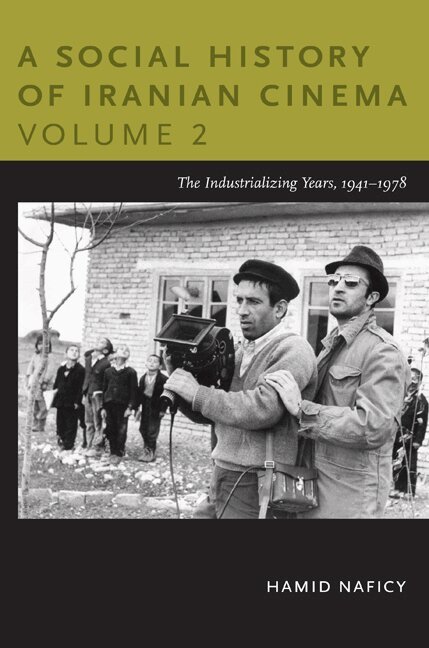
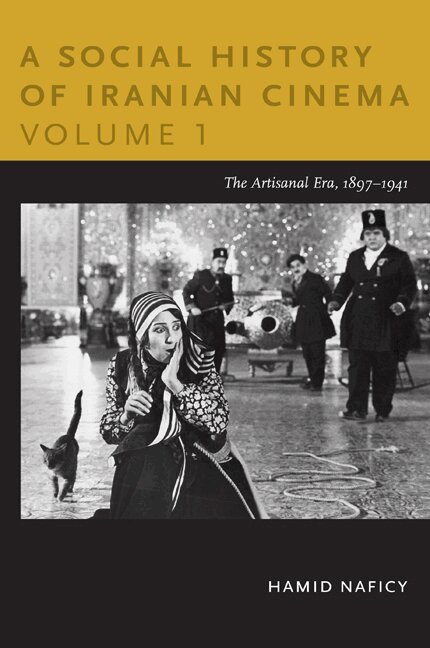
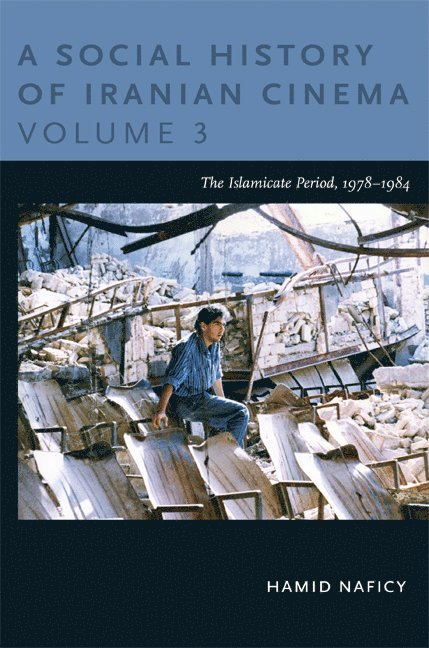
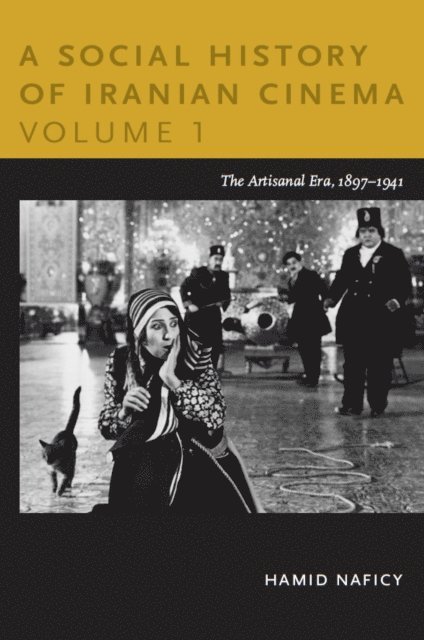
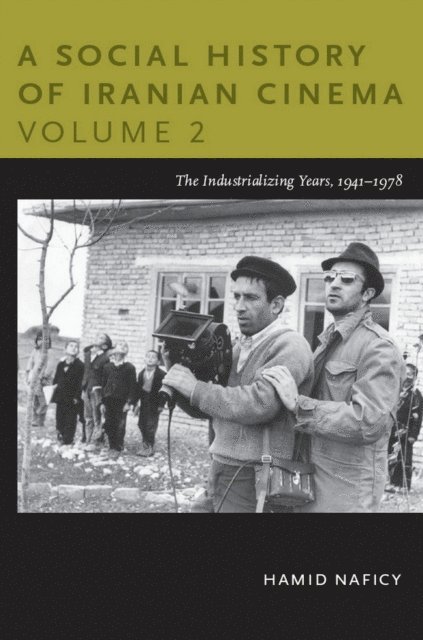
    Hamid Naficy is one of the world's leading authorities on Iranian film, and A Social History of Iranian Cinema is his magnum opus. Covering the late nineteenth century to the early twenty-first and addressing documentaries, popular genres, and art films, it explains Iran's peculiar cinematic production modes, as well as the role of cinema and media in shaping modernity and a modern national identity in Iran. This comprehensive social history unfolds across four volumes, each of which can be appreciated on its own.The extraordinary efflorescence in Iranian film, TV, and the new media since the consolidation of the Islamic Revolution animates Volume 4. During this time, documentary films proliferated. Many filmmakers took as their subject the revolution and the bloody eight-year war with Iraq; others critiqued postrevolution society. The strong presence of women on screen and behind the camera led to a dynamic women's cinema. A dissident art-house cinema-involving some of the best Pahlavi-era new-wave directors and a younger generation of innovative postrevolution directors-placed Iranian cinema on the map of world cinemas, bringing prestige to Iranians at home and abroad. A struggle over cinema, media, culture, and, ultimately, the legitimacy of the Islamic Republic, emerged and intensified. The media became a contested site of public diplomacy as the Islamic Republic regime as well as foreign governments antagonistic to it sought to harness Iranian popular culture and media toward their own ends, within and outside of Iran. The broad international circulation of films made in Iran and its diaspora, the vast dispersion of media-savvy filmmakers abroad, and new filmmaking and communication technologies helped to globalize Iranian cinema.A Social History of Iranian CinemaVolume 1: The Artisanal Era, 1897–1941Volume 2: The Industrializing Years, 1941–1978Volume 3: The Islamicate Period, 1978–1984Volume 4: The Globalizing Era, 1984–2010
    Produktinformation

    • Utgivningsdatum:2012-11-06
    • Mått:157 x 233 x 40 mm
    • Vikt:934 g
    • Format:Häftad
    • Språk:Engelska
    • Antal sidor:664
    • Förlag:Duke University Press
    • ISBN:9780822348788

    Utforska kategorier

    • Film inom Kultur

    Mer om författaren

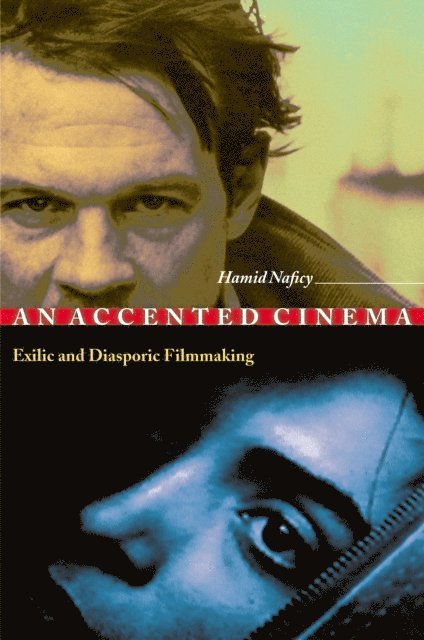
    Hamid Naficy is Professor of Radio-Television-Film and the Hamad Bin Khalifa Al-Thani Professor in Communication at Northwestern University. He is the author of An Accented Cinema: Exilic and Diasporic Filmmaking, The Making of Exile Cultures: Iranian Television in Los Angeles, and (in Persian) Film-e Mostanad, a two-volume history of nonfiction cinema around the world. Naficy helped to launch ongoing annual Iranian film festivals in Los Angeles and Houston.

    Recensioner i media

    "A Social History of Iranian Cinema is an extraordinary achievement, a scholarly, detailed work in which a massive amount of material is handled with the lightest touch. Yet it is Hamid Naficy's personal experience and investment that give this project a particular distinction. Only a skilled historian, one who is on the inside of his story, could convey so vividly the symbolic significance of cinema for twentieth-century Iran and its deep intertwining with national culture and politics."-Laura Mulvey, author of Death 24× a Second: Stillness and the Moving Image "Hamid Naficy is already established as the doyen of historians, as well as critics, of Iranian cinema. Based on his deep understanding of modern Iranian political and social history, this detailed critical study of cinema in Iran since its debut more than a century ago is his crowning achievement. To say that it is a must-read for virtually all concerned with modern Iranian history, and not just cinema and the arts, is to state the obvious."-Homa Katouzian, author of The Persians: Ancient, Mediaeval and Modern Iran "Hamid Naficy seamlessly brings together a century of Iran's cinematic history, marking its technological advancements and varying genres and storytelling techniques, and perceptively addressing its sociopolitical impact on the formation of Iran's national identity. A Social History of Iranian Cinema is essential reading not only for the cinephile interested in Iran's unique and rich cinematic history but also for anyone wanting a deeper understanding of the cataclysmic events and metamorphoses that have shaped Iran, from the pivotal Constitutional Revolution that ushered in the twentieth century, through the Islamic Revolution, and into the twenty-first century."-Shirin Neshat, visual artist, filmmaker, and director of the film Women Without Men "This magisterial four-volume study of Iranian cinema will be the defining work on the topic for a long time to come. Situating film within its sociopolitical context, Hamid Naficy covers the period leading up to the Constitutional Revolution and continues after the Islamic Revolution, examining questions about modernity, globalization, Islam, and feminism along the way. A Social History of Iranian Cinema is a guide for our thinking about cinema and society and the ways that the creative expression of film should be examined as part of a wider engagement with social issues."-Annabelle Sreberny, coauthor of Blogistan: The Internet and Politics in Iran “The major strength of the book lies in a vast array of information and examples with a picturesque description of life and society in Iran and cinema that has found numerous platforms all over the world. The scrupulousness with which these histories unfold and develop, coupled with the author’s profound understanding of the milieu, and its media and film, makes this book a must read for anyone interested in contemporary Iran and its extraordinary cinema.” - Arezou Zalipour (Media International Australia) “[A]n important intervention in Iranian film studies. Naficy has conducted significant research for them while providing new insights on and revisions of his earlier writings.” - Pedram Partovi (Iranian Studies) “The four volumes of A Social History of Iranian Cinema constitute a landmark achievement. . . . For students of Iranian cinema, I can think of no better place to begin than these four volumes. The sheer expansiveness of Naficy’s project is a testimony to the untold narratives, theoretical paradigms, and concepts waiting to be found in the ongoing history of Iranian cinema.” - Sara Saljoughi (International Journal of Middle East Studies)

    Innehållsförteckning

    • Illustrations xiAcknowledgments xvOrganization of the Volumes xxiA Word about Illustrations xxviiAbbreviations xxix1. The Resurgence of Nonfiction Cinema: Postrevolutionary Documentaries and Fiction War Films 12. Under Cover, on Screen: Women's Representation and Women's Cinema 923. All Certainties Melt into Thin Air: Art-House Cinema, a "Postal" Cinema 1754. Emergent Contestatory Films, Media Culture, and Public Diplomacy 2695. Iranian, but with a Different Accent: A Cinema of Displacement or a Displaced Cinema? 369Appendix A: Iranian Films in Distribution 513Appendix B: Film House of Iran's Film Collection 515Appendix C: International Film and Video Center Iranian Film Collection 520Notes 523Bibliography 559Index 591