• Fri frakt över 249 kr
  • •
  • Snabba leveranser
  • •
  • Billiga böcker
Kundservice

Du är på sajten för privatpersoner.

Företag, bibliotek eller offentlig verksamhet?

Du handlar på classic.bokus.com, där alla dina funktioner finns intakta.
Till classic.bokus.com
Bokus logotyp. Gå till startsidan.
  • Erbjudanden
  • Nyheter
  • Student
  • Topplistor
  • Barn & ungdom
  • Bokus Play
  • E-böcker
  • Pocketböcker
  • Spel & pussel

10% rabatt på allt med kod: NYSTART10 →

Sidfot

Mina sidor

    Hjälp

    • Kundservice
    • Vanliga frågor och svar
    • Frakt och leverans
    • Retur vid ångerrätt
    • Reklamera vara
    • Betalning
    • Köpvillkor
    • Allmänna villkor
    • Information om webbplatsens tillgänglighet

    Om Bokus

    • Om oss
    • Pressrum
    • För studenter
    • För företag
    • För bibliotek och offentlig verksamhet
    • För leverantörer
    • Hållbarhet

    Populärt

    • Aktuella erbjudanden
    • Presentkort
    • Studentlitteratur
    • Nya böcker
    • Topplistor
    • Signerade böcker
    • Engelska böcker

    Inspiration

    • Boktips
    • BookTok
    • Populära bokserier
    • Barnbokskaraktärer
    • Populära författare
    Logotyp för Bokus
    Följ oss på Facebook (extern länk)Följ oss på Instagram (extern länk)Följ oss på YouTube (extern länk)Följ oss på TikTok (extern länk)
    bokus @ CookiesAnpassa cookiesIntegritetspolicyKöpvillkor
    Till Citymail hemsida (extern länk)Till Budbee hemsida (extern länk)Till Postnord hemsida (extern länk)Till Schenker hemsida (extern länk)Till Early Bird hemsida (extern länk)Till Walleys hemsida (extern länk)
    1. Samhälle och politik
    2. Social välfärd och brottslighet
    3. Socialt arbete och välfärd

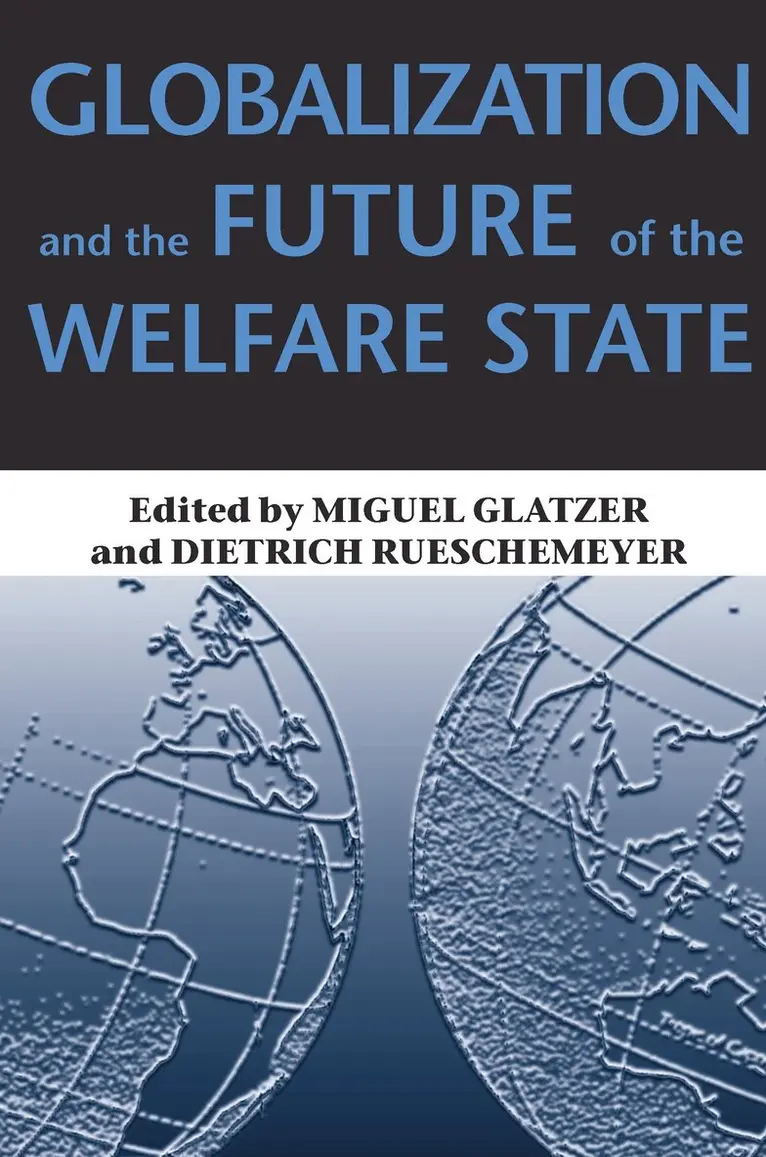
    Globalization and the Future of the Welfare State

    AvMiguel Glatzer,Dietrich Rueschemeyer

    Häftad, Engelska, 2004

    669 kr

    Beställningsvara. Skickas inom 5-8 vardagar. Fri frakt över 249 kr.

    Beskrivning

    In the last quarter of the twentieth century, the global political economy has undergone a profound transformation. Democracy has swept the globe, and both rich and developing nations must compete in an increasingly integrated world economy.How are social welfare policies being affected by this wave of economic globalization? Leading researchers explore the complex question in this new comparative study. Shifting their focus from the more commonly studied, established welfare states of northwestern Europe, the authors of Globalization and the Future of the Welfare State examine policy development in the middle-income countries of southern and eastern Europe, Latin America, Russia, and East Asia. Previous investigations into the effects of globalization on welfare states have generally come to one of two conclusions. The first is that a global economy undermines existing welfare states and obstructs new developments in social policy, as generous provisions place a burden on a nation's resources and its ability to compete in the international marketplace. In contrast, the second builds on the finding that economic openness is positively correlated with greater social spending, which suggests that globalization and welfare states can be mutually reinforcing.Here the authors find that globalization and the success of the welfare state are by no means as incompatible as the first view implies. The developing countries analyzed demonstrate that although there is great variability across countries and regions, domestic political processes and institutions play key roles in managing the disruptions wrought by globalization.

    Produktinformation

    • Utgivningsdatum:2004-12-20
    • Mått:156 x 235 x 18 mm
    • Vikt:426 g
    • Format:Häftad
    • Språk:Engelska
    • Antal sidor:288
    • Förlag:University of Pittsburgh Press
    • ISBN:9780822958611

    Utforska kategorier

    • Socialt arbete och välfärd inom Samhälle och politik

    Mer om författaren

    Miguel Glatzer is a research associate at the University Center for International Studies at the University of Pittsburgh.

    Recensioner i media

    By linking an analysis of rich and poor country welfare states, Glatzer and Rueschemeyer show that glib forecasts of the welfare state's death are greatly exaggerated.