• Fri frakt över 249 kr
  • •
  • Snabba leveranser
  • •
  • Billiga böcker
Kundservice

Du är på sajten för privatpersoner.

Företag, bibliotek eller offentlig verksamhet?

Du handlar på classic.bokus.com, där alla dina funktioner finns intakta.
Till classic.bokus.com
Bokus logotyp. Gå till startsidan.
  • Erbjudanden
  • Nyheter
  • Student
  • Topplistor
  • Barn & ungdom
  • Bokus Play
  • E-böcker
  • Pocketböcker
  • Spel & pussel

10% rabatt på allt med kod NYSTART10 →

Sidfot

Mina sidor

    Hjälp

    • Kundservice
    • Vanliga frågor och svar
    • Frakt och leverans
    • Retur vid ångerrätt
    • Reklamera vara
    • Betalning
    • Köpvillkor
    • Allmänna villkor
    • Information om webbplatsens tillgänglighet

    Om Bokus

    • Om oss
    • Pressrum
    • För studenter
    • För företag
    • För bibliotek och offentlig verksamhet
    • För leverantörer
    • Hållbarhet

    Populärt

    • Aktuella erbjudanden
    • Presentkort
    • Studentlitteratur
    • Nya böcker
    • Topplistor
    • Signerade böcker
    • Engelska böcker

    Inspiration

    • Boktips
    • BookTok
    • Populära bokserier
    • Barnbokskaraktärer
    • Populära författare
    Logotyp för Bokus
    Följ oss på Facebook (extern länk)Följ oss på Instagram (extern länk)Följ oss på YouTube (extern länk)Följ oss på TikTok (extern länk)
    bokus @ CookiesAnpassa cookiesIntegritetspolicyKöpvillkor
    Till Citymail hemsida (extern länk)Till Budbee hemsida (extern länk)Till Postnord hemsida (extern länk)Till Schenker hemsida (extern länk)Till Early Bird hemsida (extern länk)Till Walleys hemsida (extern länk)
    1. Samhälle och politik
    2. Politik och statsskick

    Optic of the State

    Visuality and Power in Argentina and Brazil

    AvJens Andermann

    Häftad, Engelska, 2007

    Del i serien Illuminations

    670 kr

    Beställningsvara. Skickas inom 5-8 vardagar. Fri frakt över 249 kr.

    Beskrivning

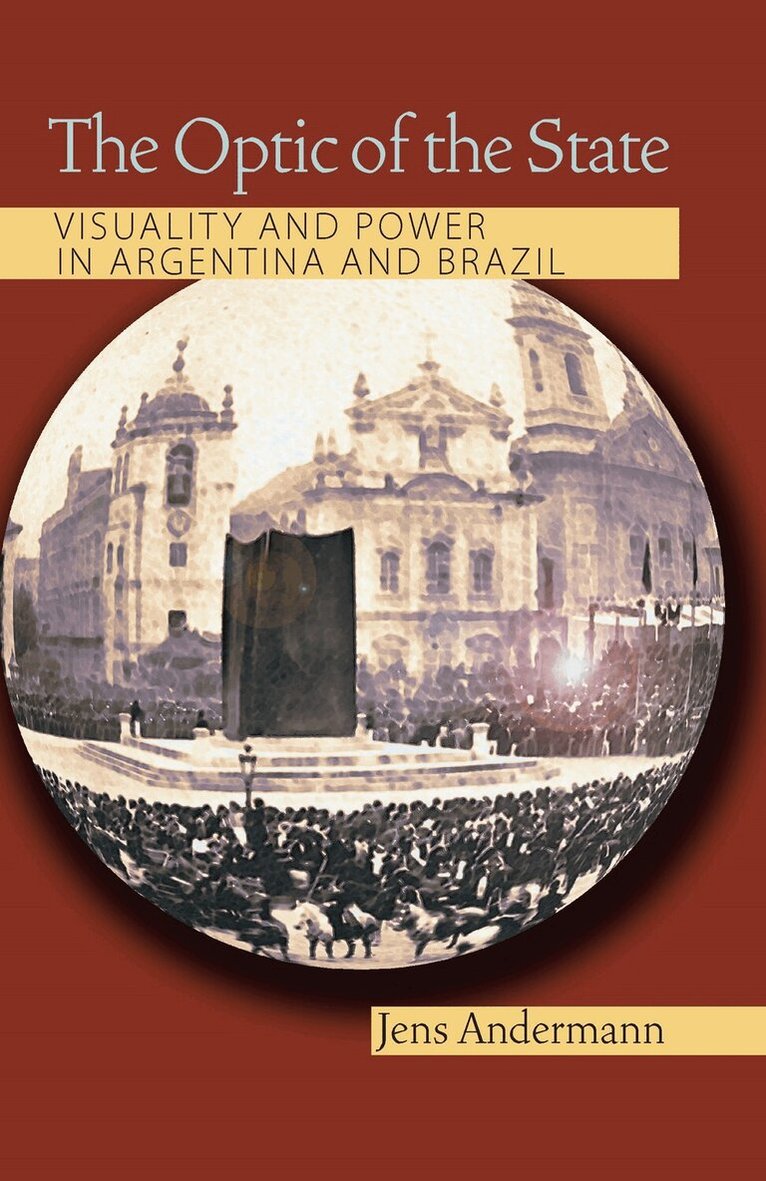
    The Optic of the State traces the production of nationalist imaginaries through the public visual representation of modern state formation in Brazil and Argentina. As Jens Andermann reveals, the foundational visions of national heritage, territory, and social and ethnic composition were conceived and implemented, but also disputed and contested, in a complex interplay between government, cultural, and scientific institutions and actors, as a means of propagating political agendas and power throughout the emerging states.The purpose of these imaginaries was to vindicate the political upheavals of the recent past and secure the viability of the newly independent states through a sense of historic destiny and inevitable evolution. The careful presentation of artifacts and spectacles was also aimed abroad in order to win the favor of European imperial powers and thereby acquire a competitive place in the nascent global economy of the late nineteenth century.The Optic of the State offers a fascinating critique of the visual aspects of national mythology. It exposes how scientific and cultural institutions inscribed the state-form in time and space, thus presenting historical processes as natural \u201cgivens.\u201d

    Produktinformation

    • Utgivningsdatum:2007-10-31
    • Mått:152 x 235 x 17 mm
    • Vikt:240 g
    • Format:Häftad
    • Språk:Engelska
    • Serie:Illuminations
    • Antal sidor:272
    • Förlag:University of Pittsburgh Press
    • ISBN:9780822959724

    Utforska kategorier

    • Politik och statsskick inom Samhälle och politik

    Mer om författaren

    Jens Andermann is reader in Latin American and Luso-Brazilian Studies at Birkbeck College, University of London. He is the coeditor of Images of Power: Iconography, Culture and the State in Latin America.

    Recensioner i media

    As Andermann affirms in his brilliant study on the uses of visual cultures as state policy in Argentina and Brazil at the end of nineteenth century, maps, archives, and museums work a 'civilized' visuality on the 'bare life' of local cultures. This history of violence reveals how the technological gaze colonizes spaces and everyday practices, and reactivates the instruments of imperial capital. - Graciela Montaldo, Columbia University