Jens Andermann - Böcker
Visar alla böcker från författaren Jens Andermann. Handla med fri frakt och snabb leverans.
10 produkter
10 produkter
661 kr
Skickas inom 10-15 vardagar
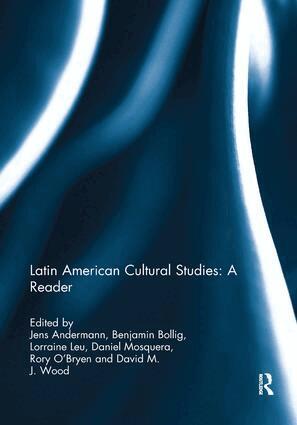
Featuring twenty-five key essays from the Journal of Latin American Cultural Studies (Traves/sia), this book surveys the most influential themes and concepts, as well as scouring some of the polemics and controversies, which have marked the field over the last quarter of a century since the Journal's foundation in 1992. Emerging at a moment of crisis of revolutionary narratives, and at the onset of neoliberal economics and emergent narcopolitics, the cultural studies impetus in Latin America was part of an attempted intellectual reconstruction of the (centre-) left in terms of civil society, and the articulation of social movements and agencies, thinking beyond the verticalist constructions from previous decades. This collection maps these developments from the now classical discussions of the ‘cultural turn’ to more recent responses to the challenges of biopolitics, affect theory, posthegemony and ecocriticism. It also addresses novel political constellations including resurgent national-popular or eco-nativist and indigenous agencies. Framed by a critical introduction from the editors, this volume is both a celebration of influential essays published over twenty five years of the Journal and a representative overview of the field in its multiple ramifications, entrenchments and exchanges.
2 165 kr
Skickas inom 10-15 vardagar
Featuring twenty-five key essays from the Journal of Latin American Cultural Studies (Traves/sia), this book surveys the most influential themes and concepts, as well as scouring some of the polemics and controversies, which have marked the field over the last quarter of a century since the Journal's foundation in 1992. Emerging at a moment of crisis of revolutionary narratives, and at the onset of neoliberal economics and emergent narcopolitics, the cultural studies impetus in Latin America was part of an attempted intellectual reconstruction of the (centre-) left in terms of civil society, and the articulation of social movements and agencies, thinking beyond the verticalist constructions from previous decades. This collection maps these developments from the now classical discussions of the ‘cultural turn’ to more recent responses to the challenges of biopolitics, affect theory, posthegemony and ecocriticism. It also addresses novel political constellations including resurgent national-popular or eco-nativist and indigenous agencies. Framed by a critical introduction from the editors, this volume is both a celebration of influential essays published over twenty five years of the Journal and a representative overview of the field in its multiple ramifications, entrenchments and exchanges.
479 kr
Skickas inom 7-10 vardagar
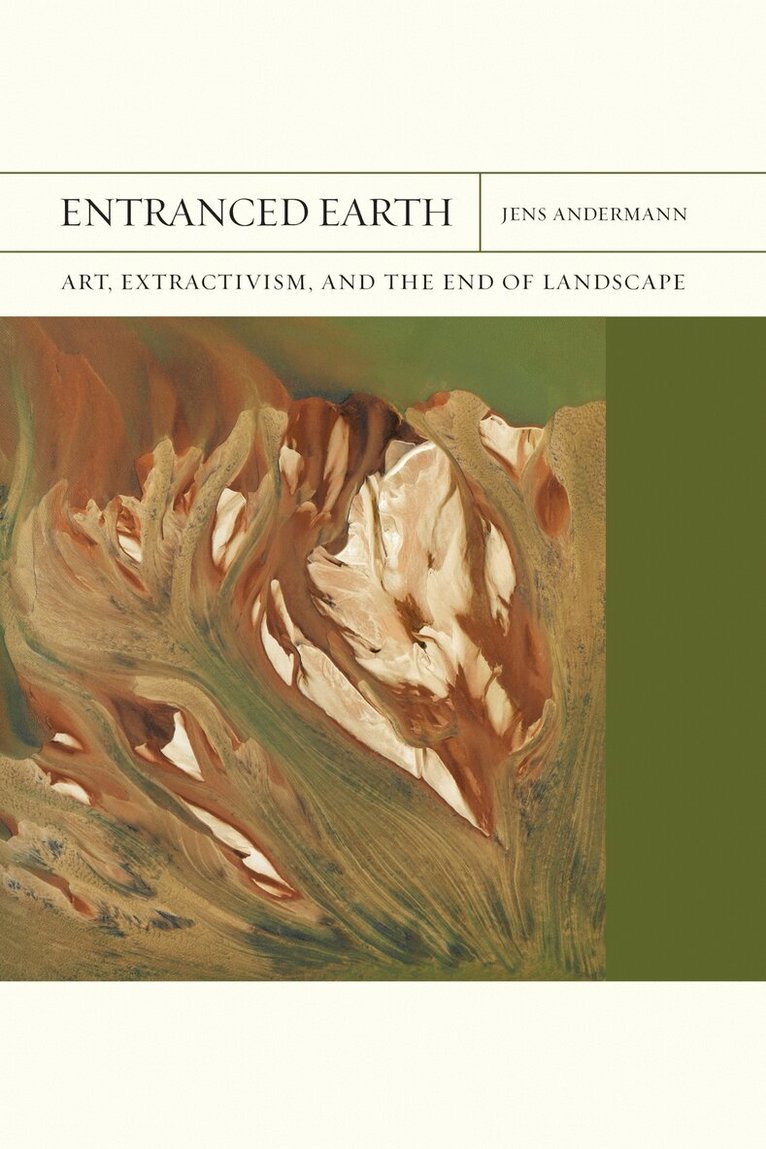
A sweeping analysis of the lasting effects of neocolonial extractivism in Latin American aesthetic modernity from 1920 to the presentLooking to the extractive frontier as a focal point of Latin American art, literature, music, and film, Jens Andermann asks what emerges at the other end of landscape. Art in the Global South has long represented and interrogated “insurgent nature”—organic and inorganic matter, human and nonhuman life, thrown into turmoil.In Entranced Earth: Art, Extractivism, and the End of Landscape, Andermann traces the impact of despaisamiento—world-destroying un-landscaping—throughout the Latin American modernist archive. At the same time, he explores innovative, resilient modes of allyship forged between diverse actors through their shared experiences of destruction. From the literary regionalism of the 1930s to contemporary bio art, from modernist garden architecture to representations of migration and displacement in sound art and film, Entranced Earth tracks the crisis of landscape and environmental exhaustion beyond despair toward speculative, experimental forms of survival.
647 kr
Skickas inom 7-10 vardagar
The Optic of the State traces the production of nationalist imaginaries through the public visual representation of modern state formation in Brazil and Argentina. As Jens Andermann reveals, the foundational visions of national heritage, territory, and social and ethnic composition were conceived and implemented, but also disputed and contested, in a complex interplay between government, cultural, and scientific institutions and actors, as a means of propagating political agendas and power throughout the emerging states.The purpose of these imaginaries was to vindicate the political upheavals of the recent past and secure the viability of the newly independent states through a sense of historic destiny and inevitable evolution. The careful presentation of artifacts and spectacles was also aimed abroad in order to win the favor of European imperial powers and thereby acquire a competitive place in the nascent global economy of the late nineteenth century.The Optic of the State offers a fascinating critique of the visual aspects of national mythology. It exposes how scientific and cultural institutions inscribed the state-form in time and space, thus presenting historical processes as natural \u201cgivens.\u201d
324 kr
Skickas inom 7-10 vardagar
Changes in the Landscape is a collection of timely essays that bring the methodologies and commitments of ecocriticism to bear on the study of Latin American literature and cultural production. The book’s eleven chapters, written by some of the leading voices in the field, invite readers to consider how the relationship between humans and nonhuman nature was fundamentally transformed during a period when new modes of capitalist production were emerging in the region and around the world. Jennifer L. French’s introductory essay provides a historical and theoretical framework for the collection.Ranging from the immediate aftermath of the Spanish‑American Wars of Independence (1810–1826) to the early twentieth century (1925), the volume’s essays cover a wide variety of genres and forms of cultural production, from JosÉ HernÁndez’s epic poem MartÍn Fierro to prose fiction, painting and photography, and the personal albums compiled by Spanish-American women. Individually and collectively, the essays engage with scientific writing as both a discourse of power and a source of potentially significant, even revelatory information about human and nonhuman nature. Changes in the Landscape enables readers to more fully understand the transition from colonial regimes to the ecocidal extractivism of the export boom (1870–1930) by drawing out and analyzing some of the cognitive resources and rhetorical strategies that were available to imagine, protest, or enact new norms and expectations regarding the relations between human and nonhuman life, be it the life of wildflowers, waterfalls, or Cuba’s CiÉnaga de Zapata.
Changes in the Landscape
Humans and Nature in Nineteenth-Century Latin America
Inbunden, Engelska, 2025
1 620 kr
Skickas inom 5-8 vardagar
Changes in the Landscape is a collection of timely essays that bring the methodologies and commitments of ecocriticism to bear on the study of Latin American literature and cultural production. The book’s eleven chapters, written by some of the leading voices in the field, invite readers to consider how the relationship between humans and nonhuman nature was fundamentally transformed during a period when new modes of capitalist production were emerging in the region and around the world. Jennifer L. French’s introductory essay provides a historical and theoretical framework for the collection.Ranging from the immediate aftermath of the Spanish‑American Wars of Independence (1810–1826) to the early twentieth century (1925), the volume’s essays cover a wide variety of genres and forms of cultural production, from JosÉ HernÁndez’s epic poem MartÍn Fierro to prose fiction, painting and photography, and the personal albums compiled by Spanish-American women. Individually and collectively, the essays engage with scientific writing as both a discourse of power and a source of potentially significant, even revelatory information about human and nonhuman nature. Changes in the Landscape enables readers to more fully understand the transition from colonial regimes to the ecocidal extractivism of the export boom (1870–1930) by drawing out and analyzing some of the cognitive resources and rhetorical strategies that were available to imagine, protest, or enact new norms and expectations regarding the relations between human and nonhuman life, be it the life of wildflowers, waterfalls, or Cuba’s CiÉnaga de Zapata.
1 956 kr
Skickas inom 3-6 vardagar
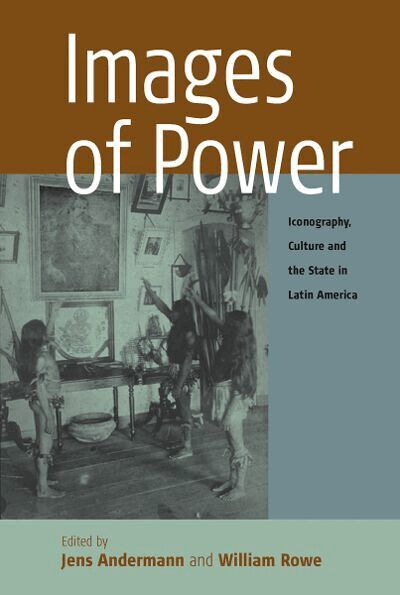
In Latin America, where even today writing has remained a restricted form of expression, the task of generating consent and imposing the emergent nation-state as the exclusive form of the political, was largely conferred to the image. Furthermore, at the moment of its historical demise, the new, 'postmodern' forms of sovereignty appear to rely even more heavily on visual discourses of power. However, a critique of the iconography of the modern state-form has been missing. This volume is the first concerted attempt by cultural, historical and visual scholars to address the political dimension of visual culture in Latin America, in a comparative perspective spanning various regions and historical stages. The case studies are divided into four sections, analysing the formation of a public sphere, the visual politics of avant-garde art, the impact of mass society on political iconography, and the consolidation and crisis of territory as a key icon of the state.
566 kr
Skickas inom 3-6 vardagar
In Latin America, where even today writing has remained a restricted form of expression, the task of generating consent and imposing the emergent nation-state as the exclusive form of the political, was largely conferred to the image. Furthermore, at the moment of its historical demise, the new, 'postmodern' forms of sovereignty appear to rely even more heavily on visual discourses of power. However, a critique of the iconography of the modern state-form has been missing. This volume is the first concerted attempt by cultural, historical and visual scholars to address the political dimension of visual culture in Latin America, in a comparative perspective spanning various regions and historical stages. The case studies are divided into four sections, analysing the formation of a public sphere, the visual politics of avant-garde art, the impact of mass society on political iconography, and the consolidation and crisis of territory as a key icon of the state.
354 kr
Skickas inom 10-15 vardagar
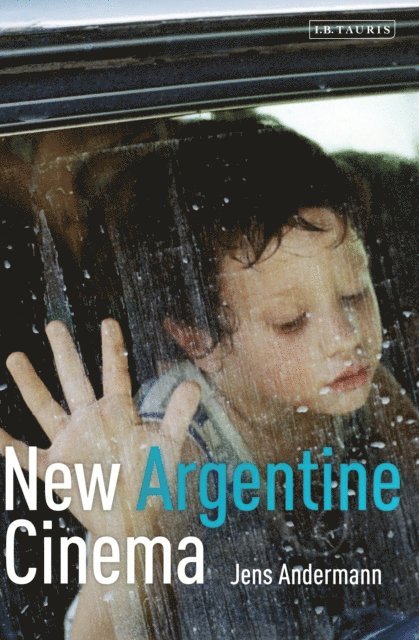
Argentine filmmaking from the mid-1990s to the present has enjoyed worldwide success. New Argentine Cinema explores this cinema in order to discover the elements that have made for this success, in relation to the country's profound political, social and cultural crisis during the same period. Jens Andermann shows how the most recent wave of films differs markedly from the Argentine cinema of the preceding decade, following the end of the dictatorship in 1983. Studying films by Lisandro Alonso, Albertina Carri, Lucrecia Martel, Raul Perrone, Martin Rejtman, and Pablo Trapero, among others, he identifies a shift in aesthetic sensibilities between these directors and those of the previous generation as well as a profound change in the way films are being made, and their relation to the audiovisual field at large. In combining close comparative analyses with a review of the changing models of production, editing, actorship and location, Andermann uncovers the ways in which Argentine films have managed to construct a complex, multilayered account of their own present, as shot through - or 'perforated' - by the still unresolved legacies of the past.
2 654 kr
Skickas inom 5-8 vardagar
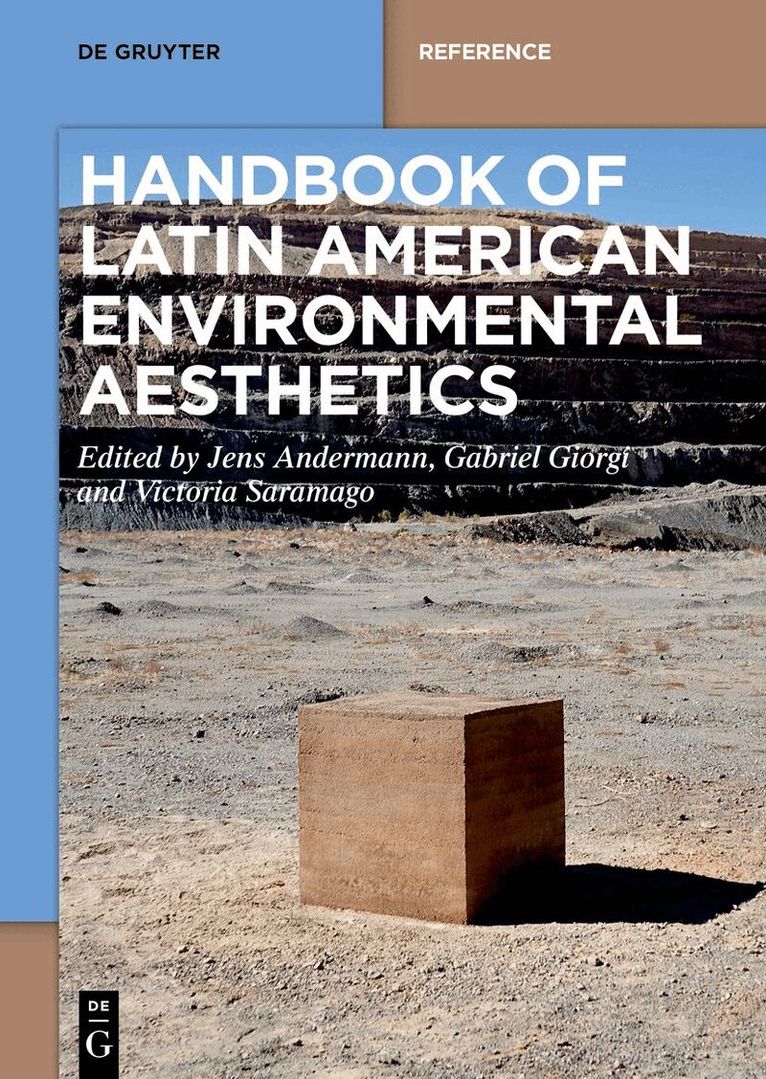
The Handbook of Latin American Environmental Aesthetics offers a comprehensive overview of Latin American aesthetic and conceptual production addressing the more-than-human environment at the intersection between art, activism, and critique. Fields include literature, performance, film, and other audiovisual media as well as their interactions with community activisms. Scholars who have helped establish environmental approaches in the field as well as emergent critical voices revisit key concepts such as ecocriticism, (post-)extractivism, and multinaturalism, while opening new avenues of dialogue with areas including critical race theory and ethnicity, energy humanities, queer-*trans studies, and infrastructure studies, among others. This volume both traces these genealogies and maps out key positions in this increasingly central field of Latin Americanism, at the same time as they relate it to the environmental humanities at large. By showing how artistic and literary productions illuminate critical zones of environmental thought, articulating urgent social and material issues with cultural archives, historical approaches and conceptual interventions, this volume offers cutting-edge critical tools for approaching literature and the arts from new angles that call into question the nature/culture boundary.