• Fri frakt över 249 kr
  • •
  • Snabba leveranser
  • •
  • Billiga böcker
Kundservice

Du är på sajten för privatpersoner.

Företag, bibliotek eller offentlig verksamhet?

Du handlar på classic.bokus.com, där alla dina funktioner finns intakta.
Till classic.bokus.com
Bokus logotyp. Gå till startsidan.
  • Erbjudanden
  • Nyheter
  • Student
  • Topplistor
  • Barn & ungdom
  • Bokus Play
  • E-böcker
  • Pocketböcker
  • Spel & pussel

10% rabatt på allt med kod NYSTART10 →

Sidfot

Mina sidor

    Hjälp

    • Kundservice
    • Vanliga frågor och svar
    • Frakt och leverans
    • Retur vid ångerrätt
    • Reklamera vara
    • Betalning
    • Köpvillkor
    • Allmänna villkor
    • Information om webbplatsens tillgänglighet

    Om Bokus

    • Om oss
    • Pressrum
    • För studenter
    • För företag
    • För bibliotek och offentlig verksamhet
    • För leverantörer
    • Hållbarhet

    Populärt

    • Aktuella erbjudanden
    • Presentkort
    • Studentlitteratur
    • Nya böcker
    • Topplistor
    • Signerade böcker
    • Engelska böcker

    Inspiration

    • Boktips
    • BookTok
    • Populära bokserier
    • Barnbokskaraktärer
    • Populära författare
    Logotyp för Bokus
    Följ oss på Facebook (extern länk)Följ oss på Instagram (extern länk)Följ oss på YouTube (extern länk)Följ oss på TikTok (extern länk)
    bokus @ CookiesAnpassa cookiesIntegritetspolicyKöpvillkor
    Till Citymail hemsida (extern länk)Till Budbee hemsida (extern länk)Till Postnord hemsida (extern länk)Till Schenker hemsida (extern länk)Till Early Bird hemsida (extern länk)Till Walleys hemsida (extern länk)
    1. Historia och arkeologi
    2. Historia
    3. Europas historia

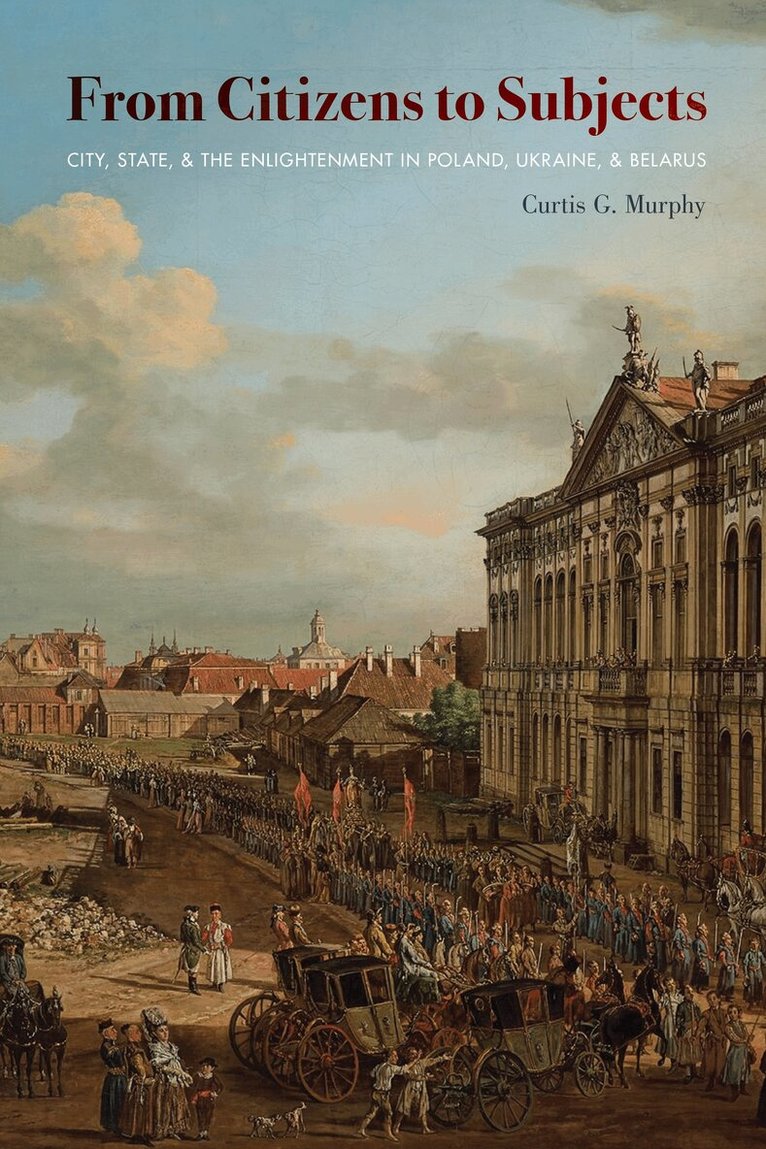
    From Citizens to Subjects

    City, State, and the Enlightenment in Poland, Ukraine, and Belarus

    AvCurtis Murphy

    Häftad, Engelska, 2018

    Del i serien Russian and East European Studies

    751 kr

    Beställningsvara. Skickas inom 5-8 vardagar. Fri frakt över 249 kr.

    Beskrivning

    From Citizens to Subjects challenges the common assertion in historiography that Enlightenment-era centralization and rationalization brought progress and prosperity to all European states, arguing instead that centralization failed to improve the socioeconomic position of urban residents in the former Polish-Lithuanian Commonwealth over a hundred-year period.Murphy examines the government of the Polish-Lithuanian Commonwealth and the several imperial administrations that replaced it after the Partitions, comparing and contrasting their relationships with local citizenry, minority communities, and nobles who enjoyed considerable autonomy in their management of the cities of present-day Poland, Ukraine, and Belarus. He shows how the failure of Enlightenment-era reform was a direct result of the inherent defects in the reformers' visions, rather than from sabotage by shortsighted local residents. Reform in Poland-Lithuania effectively destroyed the existing system of complexities and imprecisions that had allowed certain towns to flourish, while also fostering a culture of self-government and civic republicanism among city citizens of all ranks and religions. By the mid-nineteenth century, the increasingly immobile post-Enlightenment state had transformed activist citizens into largely powerless subjects without conferring the promised material and economic benefits of centralization.

    Produktinformation

    • Utgivningsdatum:2018-07-24
    • Mått:152 x 229 x 22 mm
    • Vikt:480 g
    • Format:Häftad
    • Språk:Engelska
    • Serie:Russian and East European Studies
    • Antal sidor:312
    • Förlag:University of Pittsburgh Press
    • ISBN:9780822964629

    Utforska kategorier

    • Europas historia inom Historia och arkeologi

    Mer om författaren

    Curtis G. Murphy is assistant professor in the Department of History, Philosophy, and Religious Studies at Nazarbayev University in Astana, Kazakhstan.

    Recensioner i media

    This ambitious and significant monograph challenges a widely encountered narrative that assumes that enlightened centralizing government brought progress and order in place of the 'archaic' privileges and exemptions that held back urban growth in early modern Europe. Based on a wide range of sources and spanning the traditional Polish caesura of 1795, this is a refreshing work that should also find its place in wider arguments about the efficacy of centralization and decentralization in the modern state.