• Fri frakt över 249 kr
  • •
  • Snabba leveranser
  • •
  • Billiga böcker
Kundservice

Du är på sajten för privatpersoner.

Företag, bibliotek eller offentlig verksamhet?

Du handlar på classic.bokus.com, där alla dina funktioner finns intakta.
Till classic.bokus.com
Bokus logotyp. Gå till startsidan.
  • Erbjudanden
  • Nyheter
  • Student
  • Topplistor
  • Barn & ungdom
  • Bokus Play
  • E-böcker
  • Pocketböcker
  • Spel & pussel

10% rabatt på allt med kod: NYSTART10 →

Sidfot

Mina sidor

    Hjälp

    • Kundservice
    • Vanliga frågor och svar
    • Frakt och leverans
    • Retur vid ångerrätt
    • Reklamera vara
    • Betalning
    • Köpvillkor
    • Allmänna villkor
    • Information om webbplatsens tillgänglighet

    Om Bokus

    • Om oss
    • Pressrum
    • För studenter
    • För företag
    • För bibliotek och offentlig verksamhet
    • För leverantörer
    • Hållbarhet

    Populärt

    • Aktuella erbjudanden
    • Presentkort
    • Studentlitteratur
    • Nya böcker
    • Topplistor
    • Signerade böcker
    • Engelska böcker

    Inspiration

    • Boktips
    • BookTok
    • Populära bokserier
    • Barnbokskaraktärer
    • Populära författare
    Logotyp för Bokus
    Följ oss på Facebook (extern länk)Följ oss på Instagram (extern länk)Följ oss på YouTube (extern länk)Följ oss på TikTok (extern länk)
    bokus @ CookiesAnpassa cookiesIntegritetspolicyKöpvillkor
    Till Citymail hemsida (extern länk)Till Budbee hemsida (extern länk)Till Postnord hemsida (extern länk)Till Schenker hemsida (extern länk)Till Early Bird hemsida (extern länk)Till Walleys hemsida (extern länk)
    1. Filosofi och religion
    2. Filosofi
    3. Filosofiska discipliner

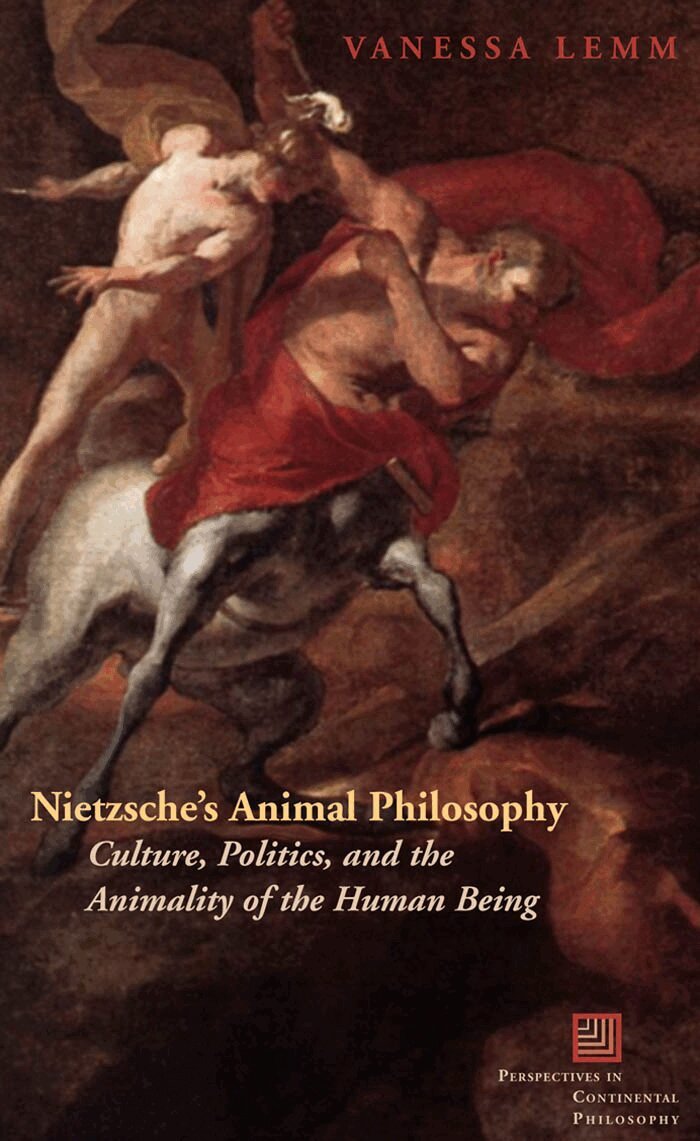
    Nietzsche's Animal Philosophy

    Culture, Politics, and the Animality of the Human Being

    AvVanessa Lemm

    Inbunden, Engelska, 2009

    Del i serien Perspectives in Continental Philosophy

    1 103 kr

    Beställningsvara. Skickas inom 10-15 vardagar. Fri frakt över 249 kr.

    Fler format och utgåvor

    Häftad

    465 kr

    Beskrivning

    This book explores the significance of human animality in the philosophy of Friedrich Nietzsche and provides the first systematic treatment of the animal theme in Nietzsche's corpus as a whole Lemm argues that the animal is neither a random theme nor a metaphorical device in Nietzsche's thought. Instead, it stands at the center of his renewal of the practice and meaning of philosophy itself. Lemm provides an original contribution to on-going debates on the essence of humanism and its future. At the center of this new interpretation stands Nietzsche's thesis that animal life and its potential for truth, history, and morality depends on a continuous antagonism between forgetfulness (animality) and memory (humanity). This relationship accounts for the emergence of humanity out of animality as a function of the antagonism between civilization and culture.By taking the antagonism of culture and civilization to be fundamental for Nietzsche's conception of humanity and its becoming, Lemm gives a new entry point into the political significance of Nietzsche's thought. The opposition between civilization and culture allows for the possibility that politics is more than a set of civilizational techniques that seek to manipulate, dominate, and exclude the animality of the human animal. By seeing the deep-seated connections of politics with culture, Nietzsche orients politics beyond the domination over life and, instead, offers the animality of the human being a positive, creative role in the organization of life. Lemm's book presents Nietzsche as the thinker of an emancipatory and affirmative biopolitics.This book will appeal not only to readers interested in Nietzsche, but also to anyone interested in the theme of the animal in philosophy, literature, cultural studies and the arts, as well as those interested in the relation between biological life and politics.

    Produktinformation

    • Utgivningsdatum:2009-04-15
    • Mått:152 x 229 x 24 mm
    • Vikt:469 g
    • Format:Inbunden
    • Språk:Engelska
    • Serie:Perspectives in Continental Philosophy
    • Antal sidor:256
    • Förlag:Fordham University Press
    • ISBN:9780823230273

    Utforska kategorier

    • Filosofiska discipliner inom Filosofi och religion

    Mer om författaren

    Vanessa Lemm is Professor of Philosophy at the School of Humanities and Languages at the University of New South Wales, Sydney, Australia. She is the author of Nietzsche's Animal Philosophy: Culture, Politics, and the Animality of the Human Being (New York: Fordham University Press, 2009), Nietzsche y el pensamiento politico contemporaneo (Santiago: Fondo de cultura economica, 2013) and several articles on Nietz sche, biopolitics, and contemporary political theory. She has also edited volumes on Hegel and Foucault..

    Recensioner i media

    "Lemm's important contribution lies in complicating Nietzsche's political theory, in distinguishing between a politics of civilization and of culture." -Perspectives on Politics "[Lemm] consolidates her reputation as one of Nietzsche's most original, attentive, and lively readers." -Journal of Nietzsche Studies "[For] anyone who is brave enough to open up and embrace the question of animality in the face of contemporary problems." -The Agonist "Lemm offers a fresh and ultimately persuasive interpretation of several of Nietzsche's core concepts, including culture, civilization, morality, freedom, and truth ... Simply put, this is a must-read for Nietzsche scholars. Highly recommended." -Choice "Vanessa Lemm's Nietzsche's Animal Philosophy is an important contribution to the debate about the animality of human life. Deeply scholarly and rigorous, Lemm's book points to the centrality of the animal in Nietzsche and will be an important resource for those seeking to understand the breadth and passion of Nietzsche's writings on life, art, and creativity." -Theory & Event "... Convincingly reveals the positive political core of Nietzsche's work and successfully moves it beyond his own epch, highlighting its relevance for the twenty-first century." -Foucault Studies