• Fri frakt över 249 kr
  • •
  • Snabba leveranser
  • •
  • Billiga böcker
Kundservice

Du är på sajten för privatpersoner.

Företag, bibliotek eller offentlig verksamhet?

Du handlar på classic.bokus.com, där alla dina funktioner finns intakta.
Till classic.bokus.com
Bokus logotyp. Gå till startsidan.
  • Erbjudanden
  • Nyheter
  • Student
  • Topplistor
  • Barn & ungdom
  • Bokus Play
  • E-böcker
  • Pocketböcker
  • Spel & pussel

10% rabatt på allt med kod: NYSTART10 →

Sidfot

Mina sidor

    Hjälp

    • Kundservice
    • Vanliga frågor och svar
    • Frakt och leverans
    • Retur vid ångerrätt
    • Reklamera vara
    • Betalning
    • Köpvillkor
    • Allmänna villkor
    • Information om webbplatsens tillgänglighet

    Om Bokus

    • Om oss
    • Pressrum
    • För studenter
    • För företag
    • För bibliotek och offentlig verksamhet
    • För leverantörer
    • Hållbarhet

    Populärt

    • Aktuella erbjudanden
    • Presentkort
    • Studentlitteratur
    • Nya böcker
    • Topplistor
    • Signerade böcker
    • Engelska böcker

    Inspiration

    • Boktips
    • BookTok
    • Populära bokserier
    • Barnbokskaraktärer
    • Populära författare
    Logotyp för Bokus
    Följ oss på Facebook (extern länk)Följ oss på Instagram (extern länk)Följ oss på YouTube (extern länk)Följ oss på TikTok (extern länk)
    bokus @ CookiesAnpassa cookiesIntegritetspolicyKöpvillkor
    Till Citymail hemsida (extern länk)Till Budbee hemsida (extern länk)Till Postnord hemsida (extern länk)Till Schenker hemsida (extern länk)Till Early Bird hemsida (extern länk)Till Walleys hemsida (extern länk)
    1. Skönlitteratur
    2. Litteraturvetenskap
    3. Litteraturvetenskap

    Pain of Reformation

    Spenser, Vulnerability, and the Ethics of Masculinity

    AvJoseph Campana

    Häftad, Engelska, 2014

    385 kr

    Beställningsvara. Skickas inom 5-8 vardagar. Fri frakt över 249 kr.

    Fler format och utgåvor

    Inbunden

    826 kr

    Beskrivning

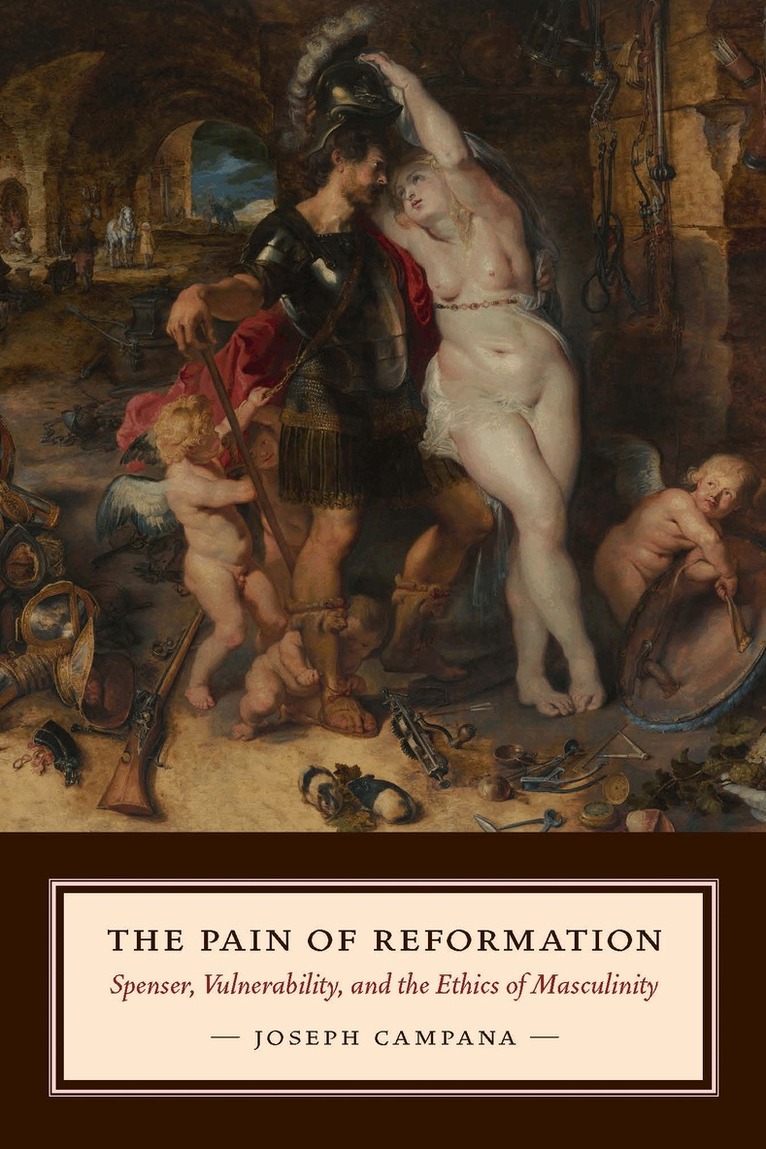
    The Pain of Reformation argues that Edmund Spenser's 1590 Faerie Queene represents an extended meditation on emerging notions of physical, social, and affective vulnerability in Renaissance England. Histories of violence, trauma, and injury have dominated literary studies, often obscuring vulnerability, or an openness to sensation, affect, and aesthetics that includes a wide range of pleasures and pains. This book approaches early modern sensations through the rubric of the vulnerable body, explores the emergence of notions of shared vulnerability, and illuminates a larger constellation of masculinity and ethics in post-Reformation England. Spenser's era grappled with England's precarious political position in a world tense with religious strife and fundamentally transformed by the doctrinal and cultural sea changes of the Reformation, which had serious implications for how masculinity, affect, and corporeality would be experienced and represented. Intimations of vulnerability often collided with the tropes of heroic poetry, producing a combination of defensiveness, anxiety, and shame. It has been easy to identify predictably violent formations of early modern masculinity but more difficult to see Renaissance literature as an exploration of vulnerability. The underside of representations of violence in Spenser's poetry was a contemplation of the precarious lives of subjects in post-Reformation England. Spenser's adoption of the allegory of Venus disarming Mars, understood in Renaissance Europe as an allegory of peace, indicates that The Faerie Queene is a heroic poem that militates against forms of violence and war that threatened to engulf Europe and devastate an England eager to militarize in response to perceived threats from within and without. In pursuing an analysis, disarmament, and redefinition of masculinity in response to a sense of shared vulnerability, Spenser's poem reveals itself to be a vital archive of the way gender, violence, pleasure, and pain were understood.

    Produktinformation

    • Utgivningsdatum:2014-03-01
    • Mått:152 x 229 x 20 mm
    • Vikt:386 g
    • Format:Häftad
    • Språk:Engelska
    • Antal sidor:296
    • Förlag:Fordham University Press
    • ISBN:9780823261680
    • Utmärkelser:Winner of South Central Modern Language Association Book Award 2013

    Utforska kategorier

    • Litteraturvetenskap inom Skönlitteratur

    Mer om författaren

    Joseph Campana is Alan Dugald McKillop Chair and Associate Professor at Rice University. He is the author of The Pain of Reformation: Spenser, Vulnerability, and the Ethics of Masculinity (Fordham, 2012), which won the South Central MLA Book Prize, and two collections of poetry, The Book of Faces (Graywolf, 2005) and Natural Selections (Iowa, 2012), which won the Iowa Poetry Prize. His essays have appeared in PMLA, Modern Philology, ELH, Shakespeare, Shakespeare Studies, and elsewhere. He is currently completing two studies, The Child's Two Bodies, which considers children and sovereignty in the works of Shakespeare, and Bee Tree Child, which explores scale, multiplicity, plasticity, and other new rubrics for calibrating the relationship between human and non-human worlds in the Renaissance.

    Recensioner i media

    "A brilliant, bold, generous, and moving book. Campana makes powerful contributions in ethics, gender and sexuality, and the narrative imagination in Spenser's Reformation culture."---—Theresa Krier, Macalester College Campana makes a highly compelling case for his claims, and this accomplished and ambitious book will undoubtedly provoke a great deal of lively discussion for years to come. (—Studies in English Literature, 1500-1900) . . . This book will hearten anyone seeking an alternative to overly pious or hegemonic readings of 'The Faerie Queene'. (—Renaissance Quarterly) "This splendid book makes a fresh and original entry into the burgeoning criticism on Renaissance selfhood. Campana brilliantly links the motif of vulnerability to the social and physiological precariousness of early modern masculinity."---—Michael Schoenfeldt, The University of Michigan

    Innehållsförteckning

    • List of Figures Acknowledgments Introduction 1 Part 1: The Legend of Holiness 1. Reading Bleeding Trees: Th e Poetics of Other People's Pain 2. Spenser's Dark Materials: Representation in the Shadow of Christ Part II: The Legend of Temperance 3. On Not Defending Poetry: Spenser, Suff ering, and the Energy of Aff ect 4. Boy Toys and Liquid Joys: Pleasure and Power in the Bower of Bliss Part III: The Legend of Chastity 5. Vulnerable Subjects: Amoret's Agony, Britomart's Battle for Chastity 6. Damaged Gods: Adonis and the Pain of Allegory Conclusion Notes 000 Index 000