• Fri frakt över 249 kr
  • •
  • Snabba leveranser
  • •
  • Billiga böcker
Kundservice

Du är på sajten för privatpersoner.

Företag, bibliotek eller offentlig verksamhet?

Du handlar på classic.bokus.com, där alla dina funktioner finns intakta.
Till classic.bokus.com
Bokus logotyp. Gå till startsidan.
  • Erbjudanden
  • Nyheter
  • Student
  • Topplistor
  • Barn & ungdom
  • Bokus Play
  • E-böcker
  • Pocketböcker
  • Spel & pussel

10% rabatt på allt med kod NYSTART10 →

Sidfot

Mina sidor

    Hjälp

    • Kundservice
    • Vanliga frågor och svar
    • Frakt och leverans
    • Retur vid ångerrätt
    • Reklamera vara
    • Betalning
    • Köpvillkor
    • Allmänna villkor
    • Information om webbplatsens tillgänglighet

    Om Bokus

    • Om oss
    • Pressrum
    • För studenter
    • För företag
    • För bibliotek och offentlig verksamhet
    • För leverantörer
    • Hållbarhet

    Populärt

    • Aktuella erbjudanden
    • Presentkort
    • Studentlitteratur
    • Nya böcker
    • Topplistor
    • Signerade böcker
    • Engelska böcker

    Inspiration

    • Boktips
    • BookTok
    • Populära bokserier
    • Barnbokskaraktärer
    • Populära författare
    Logotyp för Bokus
    Följ oss på Facebook (extern länk)Följ oss på Instagram (extern länk)Följ oss på YouTube (extern länk)Följ oss på TikTok (extern länk)
    bokus @ CookiesAnpassa cookiesIntegritetspolicyKöpvillkor
    Till Citymail hemsida (extern länk)Till Budbee hemsida (extern länk)Till Postnord hemsida (extern länk)Till Schenker hemsida (extern länk)Till Early Bird hemsida (extern länk)Till Walleys hemsida (extern länk)
    1. Medicin
    2. Andra medicinska specialiteter
    3. Klinisk psykologi
    4. Psykoterapi som behandlingsmetod

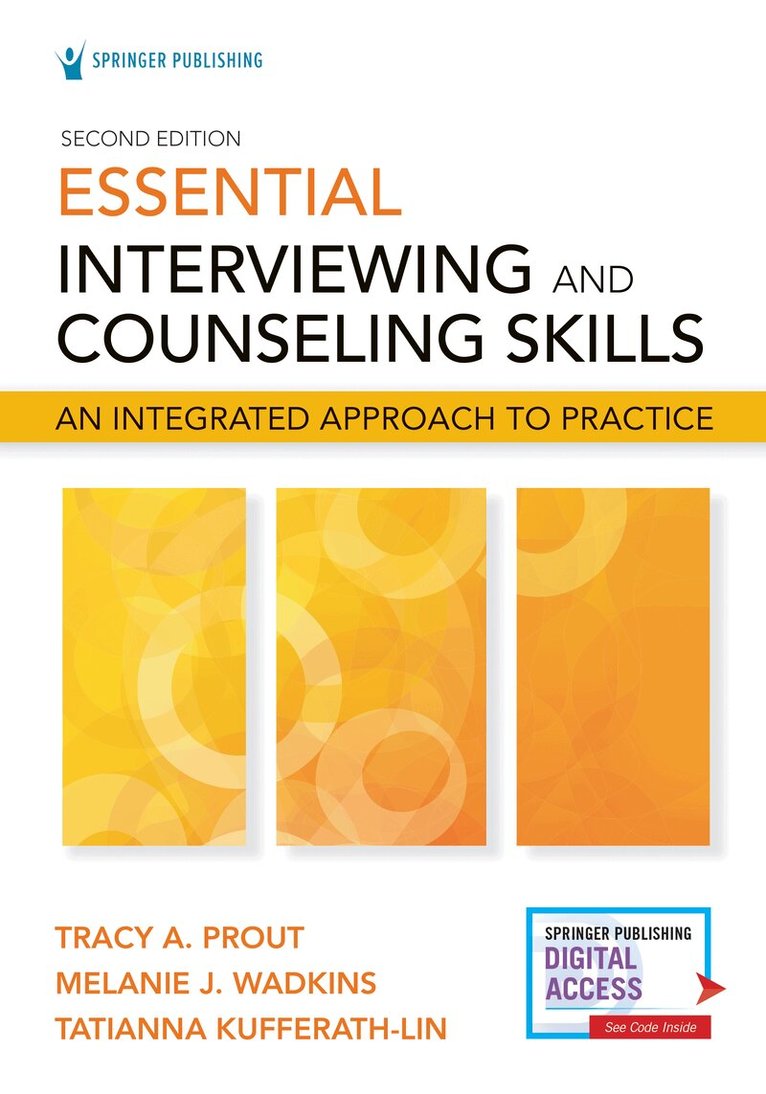
    Essential Interviewing and Counseling Skills, Second Edition

    An Integrated Approach to Practice

    AvTracy Prout,Melanie Wadkins

    Häftad, Engelska, 2021

    1 494 kr

    Beställningsvara. Skickas inom 5-8 vardagar. Fri frakt över 249 kr.

    Beskrivning

    The only comprehensive interviewing and counseling text grounded in a strong multi-theoretical foundationStructured around CACREP standards, Essential Interviewing and Counseling Skills Second Edition uniquely encompasses both theory and practice from the perspectives of a diverse array of theoretical schools and practice strategies. While continuing to disseminate counseling fundamentals, the second edition focuses extensively on the acquisition of robust interviewing and counseling skills including special preparation for the initial assessment and counseling session. It is also distinguished by its integration of cognitive behavioral and psychodynamic therapy approaches. Throughout, the text emphasizes the importance of multicultural humility and a multicultural orientation to counseling—including challenging students to examine their own backgrounds and biases. This latest edition also addresses key aspects of telehealth that have come to the fore during the COVID pandemic.The use of case examples throughout highlights multiple theoretical approaches and illustrates how to integrate a wide range of perspectives. With an emphasis on counseling clients from diverse cultural backgrounds, each chapter focuses on strategies for working with varied populations, with an emphasis on intersectionality. The authors consider many forms of diversity including race, ethnicity, immigration, and country of origin along with age, gender, sexual orientation, religion, language, and physical and cognitive abilities. Purchase includes digital access for use on most mobile devices or computers. Updates to the instructor's resources include an Instructor's Manual, Power Points and a new test bank.New to the Second Edition:Includes a new chapter on Theoretical Integration of Approaches in CounselingNew discussions on how to successfully use telehealth for interviewing and counselingIncludes "Hot off the Press" boxes highlighting cutting edge research to inform strategies for counseling and professional developmentThe entire text has been updated with the latest research and clinical references.Key Features:Includes an emphasis on multicultural competence and humility throughout the text and features a "Spotlight on Culture" focusing on specific cultural considerations in each chapterProvides a balanced, integrated theoretical and practical approach to interviewing and counseling with a focus on skills developmentDiscusses evidence-based practice, assessment, diagnosis, and when/how to end treatmentTeaches the fundamental skills of empathy, active listening, treatment planning and developing a strong therapeutic alliance with the client

    Produktinformation

    • Utgivningsdatum:2021-08-09
    • Mått:178 x 254 x undefined mm
    • Vikt:830 g
    • Format:Häftad
    • Språk:Engelska
    • Antal sidor:450
    • Upplaga:2
    • Förlag:Springer Publishing Co Inc
    • ISBN:9780826192653

    Utforska kategorier

    • Psykoterapi som behandlingsmetod inom Medicin

    Mer om författaren

    Tracy A. Prout, PhD is Associate Professor of Psychology at the Ferkauf Graduate School of Psychology where she teaches psychodynamic psychotherapy with an emphasis on psychotherapy integration. She is a licensed psychologist and has a clinical practice in Beacon, NY where she sees children, adolescents, and adults.Melanie J. Wadkins, PhD, is a clinical psychologist and Associate Professor of Psychology at the Ferkauf Graduate School of Psychology. She is the Director of the combined School - Clinical Child Psychology program and provides training to doctoral students in evidence-based practice and cognitive behavioral therapy.Tatianna Kufferath-Lin, PsyD is a doctoral candidate at the Yeshiva University, Ferkauf Graduate School of Psychology.

    Innehållsförteckning

    • SECTION 1: Building the FoundationChapter 1: Introduction to Counseling and InterviewingLearning ObjectivesWhat is Counseling?Evolution and Professionalization of CounselingCareer OptionsMental Health Counseling and Marriage and Family TherapyClinical and Counseling PsychologySocial WorkCreative Arts TherapiesPsychiatric/Mental Health Nurse PractitionerPastoral CounselingThe Clinical InterviewWhy Do We Interview?How Do We Interview?Becoming a Counseling ProfessionalMistakesManaged CareIntegrating Theory and Research Into PracticeKnow ThyselfChapter ReviewQuiz YourselfPersonal Reflection Essay QuestionsKeywordsFurther ReadingsReferencesChapter 2: Interviewing and Counseling Skills - Doing Our Best - Ethics & Professional ResponsibilityLearning ObjectivesUnderstanding EthicsGuiding PrinciplesBeneficence and NonmaleficenceFidelity and ResponsibilityIntegrity and VeracityJusticeHot off the PressRespect for People ‘s Rights, Dignity, and AutonomyThe Ethics Code & Professional StandardsThe APA Ethics CodeThe ACA Ethics CodeConfidentiality and Its LimitsSafety of Patient and OthersCourt RequestsThe Health Insurance Portability and Accountability Act of 1996 (HIPAA)Special CasesWorking with Children and AdolescentsWorking with Adults Under GuardianshipDual RelationshipsDefinitions and ExamplesAvoiding Exploitative Multiple RelationshipsMaking Ethical DecisionsVirtue EthicsThe Philosophical Approach to Decision MakingPractice-Based Decision MakingConsidering Specific Ethical DilemmasEthical DilemmaChapter ReviewQuiz YourselfPersonal Reflection Essay QuestionsKeywordsFurther ReadingReferences Chapter 3: Understanding Your Clients: Case Conceptualization and Selection of Counseling InterventionsLearning ObjectivesIntroductionPsychodynamic TheoryA Brief Overview of Historical InfluencesBasic Tenets of Psychodynamic PsychotherapyCase Formulation from a Psychodynamic PerspectiveSelection of Counseling InterventionsTransference Focused Psychotherapy for Borderline PersonalityMentalization-Based Therapy for Borderline Personality DisorderEmpirically Supported Psychodynamic Treatments for Panic & DepressionCognitive Behavioral TheoryOverview of CBTThe Interconnectedness of Emotions, Thoughts, and BehaviorHistorical InfluencesBehaviorismClassical Conditioning from the Subject ‘s PerspectiveCognitive Theories of Psychological ProblemsAlbert Ellis: Rational Emotive Behavior TherapyAaron Beck: The Negative Cognitive TriadCognitive-Behavioral Case FormulationSelection of Counseling InterventionsExposure Therapy for Anxiety DisordersCognitive Restructuring for DepressionDialectical Behavior Therapy for Borderline Personality DisorderIntegrating Other PerspectivesHumanistic and Existential PsychologyFamily SystemsBiological ApproachesIntegrating of PerspectivesHot off the PressAn Integrated Case Formulation ExamplePsychodynamic Case FormulationCognitive Behavioral FormulationOther ComponentsAn Integrated Treatment ApproachConclusionChapter ReviewQuiz YourselfPersonal Reflection Essay QuestionsKeywordsFurther ReadingReferencesChapter 4: Interviewing and Counseling Skills: Introduction to Issues of DiversityLearning ObjectivesIntroduction: Interviewing and Counseling from a Multicultural PerspectiveTypes of DiversityRace, Ethnicity, Country of Origin, LanguageAcculturationImmigrationSexual OrientationIssues of Gender and Gender IdentityReligion and Spirituality in ContextPhysical and Cognitive AbilitiesSocial Class and Socioeconomic Status—Crossing the DivideIntersectionalityKnowing YourselfWorking with Clients Who Share Your Cultural BackgroundPotential Challenges to HelpingThe Client As ExpertDeveloping Cross Cultural CompetenceExperiences in CommunityContinuing EducationChapter ReviewQuiz YourselfPersonal Reflection Essay QuestionsKeywordsFurther ReadingRaceLanguage/ImmigrationDisabilitySexual Orientation and Gender IssuesReligionClass IssuesAppendixReferences SECTION 2: Getting Started – Interviewing and Developing a RelationshipChapter 5: Interviewing and Counseling Skills - Beginnings: The Initial InterviewLearning ObjectivesThe Office - Physical and Virtual SpacesSafetyFirst Impressions & ProfessionalismPreparing Yourself For Clinical WorkSelf-CareBuilding Healthy RelationshipsTherapy for the TherapistOpening CommunicationHow To BeginGreetings and Initial ContactClinical InterviewsConfidentialityFacilitative Interpersonal Skills for CounselorsBalancing Client Autonomy and Responsibility to SocietyDocumentationChapter ReviewQuiz YourselfPersonal Reflection Essay QuestionsKeywordsFurther ReadingReferencesChapter 6: Interviewing and Counseling Skills: Modes of ListeningLearning ObjectivesIntroductionA Different Type of ListeningA Different Type of RelationshipActive ListeningPaying AttentionReflective ListeningMirroring AffectFollowing the Client ‘s WordsAvoiding DigressionListening for ThemesListening for CuesGetting the Whole PictureFour Listening ResponsesClarificationParaphraseReflectionSummarizationNonverbal CommunicationBody LanguageEye ContactWhat to AvoidThe Use of Interpreters and TranslatorsAvoiding BurnoutChapter ReviewQuiz YourselfPersonal Reflection Essay QuestionsKeywordsFurther ReadingReferencesChapter 7: Interviewing and Counseling Skills: Empathy and the Therapeutic AllianceLearning ObjectivesDefining the Therapeutic RelationshipThe FrameListening and Attending to ClientsZooming Out: The Spectrum of Therapeutic InterventionsZooming in on EmpathyDeveloping EmpathyThe Therapeutic AllianceHow to Build Therapeutic AllianceRuptures and Repair of the Therapeutic AllianceThe Value of Therapeutic RupturesChapter ReviewQuiz YourselfPersonal Reflection Essay QuestionsKeywordsFurther ReadingReferencesSECTION 3: Connecting and Promoting ChangeChapter 8: Interviewing and Counseling Skills: Assessment, Case Formulation, & Treatment PlanningLearning ObjectivesIntroductionAssessmentTestingBehavioral AssessmentCollateral DataDiagnosisOverview of DSM-5 DiagnosisDSM-5 Cultural FormulationAdvantages and Disadvantages to ClassificationPsychodynamic Diagnostic ManualTreatment PlansCommunicating with Clients about Treatment RecommendationsCareful CommunicationGoal SettingContinuous Goal AssessmentWho's Driving the Bus?Wellness and Prevention ApproachesAn Evidence-Based Model of WellnessSpecific Wellness PracticesHelping Groups Avoid Psychological, Educational, and Health ProblemsHot off the PressChapter ReviewQuiz YourselfPersonal Reflection Essay QuestionsKeywordsFurther ReadingReferencesChapter 9: Interviewing and Counseling Skills: The Nature of the Counseling RelationshipLearning ObjectivesIntroductionTransferenceHistory of Transference: Freud to Contemporary NeuroscienceAdler ‘s Perspective on TransferenceTransference Within Other Therapeutic FrameworksCountertransferenceCountertransference in Action: Distortion to AversionManaging Transference and CountertransferenceThe Interplay of Transference and Countertransference DynamicsThe Real RelationshipPower DynamicsEvaluating the Process in SupervisionThe Ethics of Self-DisclosureChapter ReviewQuiz YourselfPersonal Reflection Essay QuestionsKeywordsFurther ReadingReferences Chapter 10: Interviewing and Counseling Skills - Promoting Change: Counseling Skills that Address Thoughts & BehaviorsLearning ObjectivesAddressing AmbivalenceThe Transtheoretical Model of ChangeAssessing Readiness to ChangeMatching Counseling Approaches to the Client ‘s Stage of ChangeCognitive TechniquesIncreasing Self-EfficacySocial Learning TheoryThe Integrated Behavioral ModelIncreasing cognitive dissonanceMotivational InterviewingBehavioral TechniquesOperant PrinciplesBehavioral Activation for DepressionPsychodynamic TechniquesHow Do Thoughts and Behaviors Change in Psychodynamic Psychotherapy?Managing Stress and Intrapsychic ConflictIntegrative ApproachesDialectical Behavior TherapyAcceptance and Commitment TherapyChapter ReviewPersonal Reflection Essay QuestionsKeywordsFurther ReadingReferences Chapter 11: Interviewing and Counseling Skills - Promoting Change: Counseling Skills That Address Emotions and RelationshipsLearning ObjectivesIdentifying and Understanding EmotionsMetacognition and Meta-EmotionAssessing MetacognitionNonverbal Expression of EmotionsWorking with EmotionsEnhancing AwarenessEmotion RegulationPromoting Adaptive Emotion RegulationEmotional Awareness and RegulationTransforming EmotionWorking with Your Own EmotionsSocial AwarenessRelationship Management SkillsDeliberate Practice as a Tool for Working with EmotionsUnderstanding Systems – Clients in ContextRelational DynamicsDouble BindsTriangulationHomeostasisChange Within A SystemAmbivalence & ConflictChapter ReviewQuiz YourselfPersonal Reflection Essay QuestionsKeywordsFurther ReadingReferences SECTION 4: Endings and Professional IssuesChapter 12: Interviewing and Counseling Skills: EndingsLearning ObjectivesTermination IssuesWhen to End TreatmentSymptom ReliefSustained Remission and MasteryEmotional FunctioningGoals Have Been MetWhat to ExpectTypes of TerminationTherapist-Initiated Premature TerminationGuidelines for Therapist-Initiated Premature TerminationIssues of Post-Termination ContactTime-Limited TreatmentsChapter ReviewQuiz YourselfPersonal Reflection Essay QuestionsKeywordsFurther ReadingReferences Chapter 13: Interviewing and Counseling Skills: Varieties of Counseling SituationsLearning ObjectivesIntroductionGroup CounselingTypes of therapy groupsProcess GroupsSupport GroupsPsycho-educational GroupsSkills training GroupsYalom's Therapeutic FactorsWorking in SchoolsWorking with ChildrenPersonal and Social Development of StudentsCareer Development with StudentsAcademic Achievement of StudentsCommunication with Staff and ParentsMarriage and Family CounselingFamily Systems TheoryStructural Family TherapyCareer CounselingAptitude, Interest, and Skills Assessment and Career MatchingJohn Holland ‘s RIASEC TheoryCareer DevelopmentDonald Super ‘s Life-Career RainbowCareer ChangeForensic SettingsForensic AssessmentForensic InterventionsMarriage and Family Conflicts in the Legal SystemCrisis Intervention and Suicide PreventionAssessing Risk for SuicideThinking About SuicideTherapeutic InterventionsReferral to TreatmentChapter ReviewPersonal Reflection Essay QuestionsQuiz YourselfKeywordsFurther ReadingAbout Group CounselingAbout School CounselingAbout Marriage and Family CounselingAbout Career CounselingAbout Counseling in Forensic SettingsAbout Suicide Assessment and PreventionReferences Chapter 14: Interviewing & Counseling Skills -- Using Counseling Skills That WorkLearning ObjectivesUnderstanding Empirical ResearchEmpirically Supported TreatmentsUnderstanding Methodology Empirically Supported Treatments Understanding MethodologyEvidence-Based PracticePractice-Based EvidenceDeveloping a StyleFinding the Theories That FitIntegrative or Eclectic?Maintaining Current KnowledgeContinuing EducationBeing a Savvy Consumer of ResearchCritical ThinkingChapter Review Personal Reflection Essay QuestionsKeywordsFurther ReadingReferences Chapter 15: Interviewing and Counseling Skills: Theoretical Integration of Approaches in CounselingLearning ObjectivesIntroductionIntegration and EclecticismRoutes to IntegrationTechnical EclecticismTheoretical IntegrationAssimilative IntegrationCommon FactorsIntegration Across Domains of EngagementEmotionalBuilding the Capacity for Affect Regulation and Reflective FunctioningProviding a Corrective Emotional ExperienceCognitiveShaping the Client ‘s ExpectationsAttending to the Client ‘s ValuesWorking with the Client ‘s Schemas and BeliefsBehavioralFacilitating ExposureSuggesting Intersession Experiences and HomeworkChallenges of Integrating Multiple PerspectivesOutcome Research on IntegrationIntegrative TreatmentsEmotion-Focused Therapy for Depression and for CouplesSchema Therapy for BPDSystematic Treatment Selection for General Outpatient PopulationsWhere Do I Go from Here?Chapter SummaryQuiz YourselfPersonal Reflection Essay QuestionsKeywordsFurther ReadingReferences