• Fri frakt över 249 kr
  • •
  • Snabba leveranser
  • •
  • Billiga böcker
Kundservice

Du är på sajten för privatpersoner.

Företag, bibliotek eller offentlig verksamhet?

Du handlar på classic.bokus.com, där alla dina funktioner finns intakta.
Till classic.bokus.com
Bokus logotyp. Gå till startsidan.
  • Erbjudanden
  • Nyheter
  • Student
  • Topplistor
  • Barn & ungdom
  • Bokus Play
  • E-böcker
  • Pocketböcker
  • Spel & pussel

10% rabatt på allt med kod NYSTART10 →

Sidfot

Mina sidor

    Hjälp

    • Kundservice
    • Vanliga frågor och svar
    • Frakt och leverans
    • Retur vid ångerrätt
    • Reklamera vara
    • Betalning
    • Köpvillkor
    • Allmänna villkor
    • Information om webbplatsens tillgänglighet

    Om Bokus

    • Om oss
    • Pressrum
    • För studenter
    • För företag
    • För bibliotek och offentlig verksamhet
    • För leverantörer
    • Hållbarhet

    Populärt

    • Aktuella erbjudanden
    • Presentkort
    • Studentlitteratur
    • Nya böcker
    • Topplistor
    • Signerade böcker
    • Engelska böcker

    Inspiration

    • Boktips
    • BookTok
    • Populära bokserier
    • Barnbokskaraktärer
    • Populära författare
    Logotyp för Bokus
    Följ oss på Facebook (extern länk)Följ oss på Instagram (extern länk)Följ oss på YouTube (extern länk)Följ oss på TikTok (extern länk)
    bokus @ CookiesAnpassa cookiesIntegritetspolicyKöpvillkor
    Till Citymail hemsida (extern länk)Till Budbee hemsida (extern länk)Till Postnord hemsida (extern länk)Till Schenker hemsida (extern länk)Till Early Bird hemsida (extern länk)Till Walleys hemsida (extern länk)
    1. Psykologi och pedagogik
    2. Pedagogik
    3. Undervisning i specifika ämnen

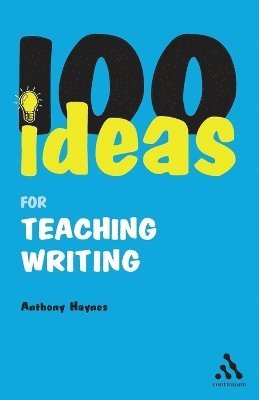
    100 Ideas for Teaching Writing

    AvAnthony Haynes

    Häftad, Engelska, 2007

    172 kr

    Beställningsvara. Skickas inom 10-15 vardagar. Fri frakt över 249 kr.

    Beskrivning

    Pupils across the age range and across the curriculum spend an extraordinary amount of time writing, yet teachers often do not receive much training on how to teach writing. Pupils do not always develop confidence or fulfil their potential. This book shows teachers how to approach the teaching of writing so that they: can teach writing as part of the whole curriculum and as a component of pupils' linguistic development; can teach writing as a process rather than just a product - the process includes: finding ideas, designing briefs, drafting, revising, polishing and presenting; and use assessment as part of a cycle to improve pupils' learning and the teacher's planning. The book is full of practical tips including instant lessons, effective resources, and lists of dos and don'ts. Emphasis is put on providing pupils with a sense of purpose, opportunities to write for real and varied audiences, and experience of real life types of writing.

    Produktinformation

    • Utgivningsdatum:2007-03-10
    • Mått:129 x 198 x 7 mm
    • Vikt:138 g
    • Format:Häftad
    • Språk:Engelska
    • Antal sidor:128
    • Förlag:Bloomsbury Publishing PLC
    • ISBN:9780826483096

    Utforska kategorier

    • Undervisning i specifika ämnen inom Psykologi och pedagogik

    Mer om författaren

    Former Chair of English Association schools committee. Former faculty coordinator and mentor of PGCE students and NQTs. Written and presented on numerous educational topics including: teaching of writing; teaching of poetry; bilingual education; using the internet and other educational resouces. Experienced examiner.

    Innehållsförteckning

    • 1. Thinking about writing eg; * place in curriculum; * the writing cycle; * progression (what to do when); * common abuses; 2. Teaching the writing process eg; * Writing roles: the composer and the secretary; * process and product: it's not either/or; * main stages in the process; * writing frames (David Wray); 3. Starting points; * getting ideas; * free-writing; * intensive writing (Margaret Langdon); * stimuli; 4. Drafting and redrafting eg; * Helping pupils to plan; * Responding to drafts; * Proofreading; * presentation; 5. Forms and structures eg; * Essays; * Reports; * Narratives; * poetry. 6. Writing for different audiences eg; * Who are we writing for? specifying the audience; * The key distinction: personal and impersonal audiences; * Writing for real audiences; * Writing for simulated audiences; 7. Technology (handwriting, ICT) eg; * Pens; * physical factors (seating, posture, grip); * ICT as a stimulus; * ICT and the drafting process: on not starting at the top; 8. Spelling eg; * good practice; * bad practice (often well-intentioned and sadly all too common); * whole school approaches; * children's spelling ages; 9. Punctuation eg; * Teaching punctuation marks as road signs; * Showing how punctuation affects meaning; * Speech marks; * Apostrophes; 10. Assessment and evaluation eg; * self-assessment by pupils; * establishing symbols for marking; * practical techniques for marking; * what to do with the results; 11. Resources eg; * Dictionaries; * Objects in the classroom; * Websites for pupils; books for teacher.