• Fri frakt över 249 kr
  • •
  • Snabba leveranser
  • •
  • Billiga böcker
Kundservice

Du är på sajten för privatpersoner.

Företag, bibliotek eller offentlig verksamhet?

Du handlar på classic.bokus.com, där alla dina funktioner finns intakta.
Till classic.bokus.com
Bokus logotyp. Gå till startsidan.
  • Erbjudanden
  • Nyheter
  • Student
  • Topplistor
  • Barn & ungdom
  • Bokus Play
  • E-böcker
  • Pocketböcker
  • Spel & pussel

10% rabatt på allt med kod: NYSTART10 →

Sidfot

Mina sidor

    Hjälp

    • Kundservice
    • Vanliga frågor och svar
    • Frakt och leverans
    • Retur vid ångerrätt
    • Reklamera vara
    • Betalning
    • Köpvillkor
    • Allmänna villkor
    • Information om webbplatsens tillgänglighet

    Om Bokus

    • Om oss
    • Pressrum
    • För studenter
    • För företag
    • För bibliotek och offentlig verksamhet
    • För leverantörer
    • Hållbarhet

    Populärt

    • Aktuella erbjudanden
    • Presentkort
    • Studentlitteratur
    • Nya böcker
    • Topplistor
    • Signerade böcker
    • Engelska böcker

    Inspiration

    • Boktips
    • BookTok
    • Populära bokserier
    • Barnbokskaraktärer
    • Populära författare
    Logotyp för Bokus
    Följ oss på Facebook (extern länk)Följ oss på Instagram (extern länk)Följ oss på YouTube (extern länk)Följ oss på TikTok (extern länk)
    bokus @ CookiesAnpassa cookiesIntegritetspolicyKöpvillkor
    Till Citymail hemsida (extern länk)Till Budbee hemsida (extern länk)Till Postnord hemsida (extern länk)Till Schenker hemsida (extern länk)Till Early Bird hemsida (extern länk)Till Walleys hemsida (extern länk)
    1. Samhälle och politik
    2. Samhälle och kultur
    3. Kultur och medier
    4. Referensverk och tvärvetenskap

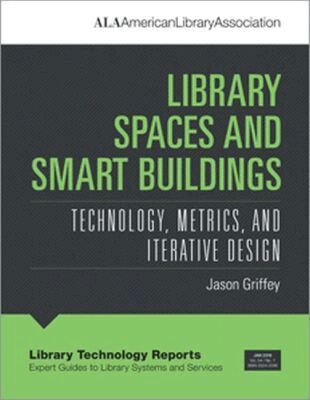
    Library Spaces and Smart Buildings

    Technology, Metrics, and Iterative Design

    AvJason Griffey

    Häftad, Engelska, 2018

    Del i serien Library Technology Reports

    479 kr

    Beställningsvara. Skickas inom 5-8 vardagar. Fri frakt över 249 kr.

    Beskrivning

    Library Technology Reports, January 2018 (54:1)As the world of information access has pivoted from physical goods to digital screens, the ways that libraries measure themselves have changed. For years, measurements such as door counts, circulation tracking, and material tracking have been used to evaluate library building usage. With new advances in sensor technology, artificial intelligence and machine learning, computer vision, and more, we are now beginning to be able to monitor spaces in ways that were previously unthinkable.In Library Technology Reports (vol. 54, no. 1), “Library Spaces and Smart Buildings: Technology, Metrics, and Itera­tive Design,” Jason Griffey explores these technologies and provides librarians and other interested parties with a look into what’s possible in the current state of technology for smart library buildings. In this report, Jason Griffey;Covers three case studies that explore how librarians are using technological tools to analyze library spacesShares new ways to think about your space and how you can measure building usageExplores the future of technological change and smart library buildingsLooking at three different projects that involved space metrics and analysis in libraries, this report shows how Virginia Tech; Con­cordia University in Montreal, Quebec, Canada; and the Measure the Future project are using technologi­cal tools to analyze library spaces to improve their environment for their users. Virginia Tech is research­ing how furniture movement acts as a stand-in for patron activity. Concordia University experimented with a project that monitored noise levels. The Mea­sure the Future project is using computer vision to see how patrons move around in library spaces and derive “attention” measures from those movements while doing so with a strong protection on any sort of identification of patrons. Finally, Griffey takes a look at what the next five to ten years of technological progress will bring and how that might change the possibilities for a smart library.

    Produktinformation

    • Utgivningsdatum:2018-04-30
    • Mått:216 x 280 x undefined mm
    • Vikt:103 g
    • Format:Häftad
    • Språk:Engelska
    • Serie:Library Technology Reports
    • Antal sidor:32
    • Förlag:American Library Association
    • ISBN:9780838916100

    Utforska kategorier

    • Referensverk och tvärvetenskap inom Samhälle och politik

    Mer om författaren

    Jason Griffey is a librarian, technologist, consultant, writer, and speaker. He is the founder and principal at Evenly Distributed, a technology consulting and creation firm for libraries, museums, educational institutions, and other nonprofits. Griffey is an Affiliate Fellow at the Berk­man Klein Center for Internet and Society at Harvard University and was formerly an associate professor and Head of Library Information Technology at the Univer­sity of Tennessee at Chattanooga. Griffey was a winner of the Knight Foundation News Challenge for Libraries in 2015 for the Measure the Future project (http://measurethefuture.net), an open hardware project designed to provide actionable use metrics for library spaces. Griffey is also the creator and director of the LibraryBox Project (http://librarybox.us), an open-source portable digital file distribution system. Griffey has written and spoken internationally on topics such as the future of technology and libraries, personal electronics in the library, privacy, copyright, and intellectual property.

    Innehållsförteckning

    • Chapter 1—Introduction, Jason GriffeyChapter 2—How to Measure the Future, Jason GriffeyChapter 3—Raspberry Pi and Arduino Prototype: Measuring and Displaying Noise Levels to Enhance User Experience in an Academic Library, Janice Yu Chen KungChapter 4—Building Intelligent Infrastructures: Steps toward Designing IoT-Enabled Library Facilities, Jonathan Bradley, Patrick Tomlin, and Brian MathewsChapter 5—Future Directions, Jason Griffey