• Fri frakt över 249 kr
  • •
  • Snabba leveranser
  • •
  • Billiga böcker
Kundservice

Du är på sajten för privatpersoner.

Företag, bibliotek eller offentlig verksamhet?

Du handlar på classic.bokus.com, där alla dina funktioner finns intakta.
Till classic.bokus.com
Bokus logotyp. Gå till startsidan.
  • Erbjudanden
  • Nyheter
  • Student
  • Topplistor
  • Barn & ungdom
  • Bokus Play
  • E-böcker
  • Pocketböcker
  • Spel & pussel

10% rabatt på allt med kod: NYSTART10 →

Sidfot

Mina sidor

    Hjälp

    • Kundservice
    • Vanliga frågor och svar
    • Frakt och leverans
    • Retur vid ångerrätt
    • Reklamera vara
    • Betalning
    • Köpvillkor
    • Allmänna villkor
    • Information om webbplatsens tillgänglighet

    Om Bokus

    • Om oss
    • Pressrum
    • För studenter
    • För företag
    • För bibliotek och offentlig verksamhet
    • För leverantörer
    • Hållbarhet

    Populärt

    • Aktuella erbjudanden
    • Presentkort
    • Studentlitteratur
    • Nya böcker
    • Topplistor
    • Signerade böcker
    • Engelska böcker

    Inspiration

    • Boktips
    • BookTok
    • Populära bokserier
    • Barnbokskaraktärer
    • Populära författare
    Logotyp för Bokus
    Följ oss på Facebook (extern länk)Följ oss på Instagram (extern länk)Följ oss på YouTube (extern länk)Följ oss på TikTok (extern länk)
    bokus @ CookiesAnpassa cookiesIntegritetspolicyKöpvillkor
    Till Citymail hemsida (extern länk)Till Budbee hemsida (extern länk)Till Postnord hemsida (extern länk)Till Schenker hemsida (extern länk)Till Early Bird hemsida (extern länk)Till Walleys hemsida (extern länk)
    1. Psykologi och pedagogik
    2. Psykologi
    3. Biologisk psykologi och neuropsykologi

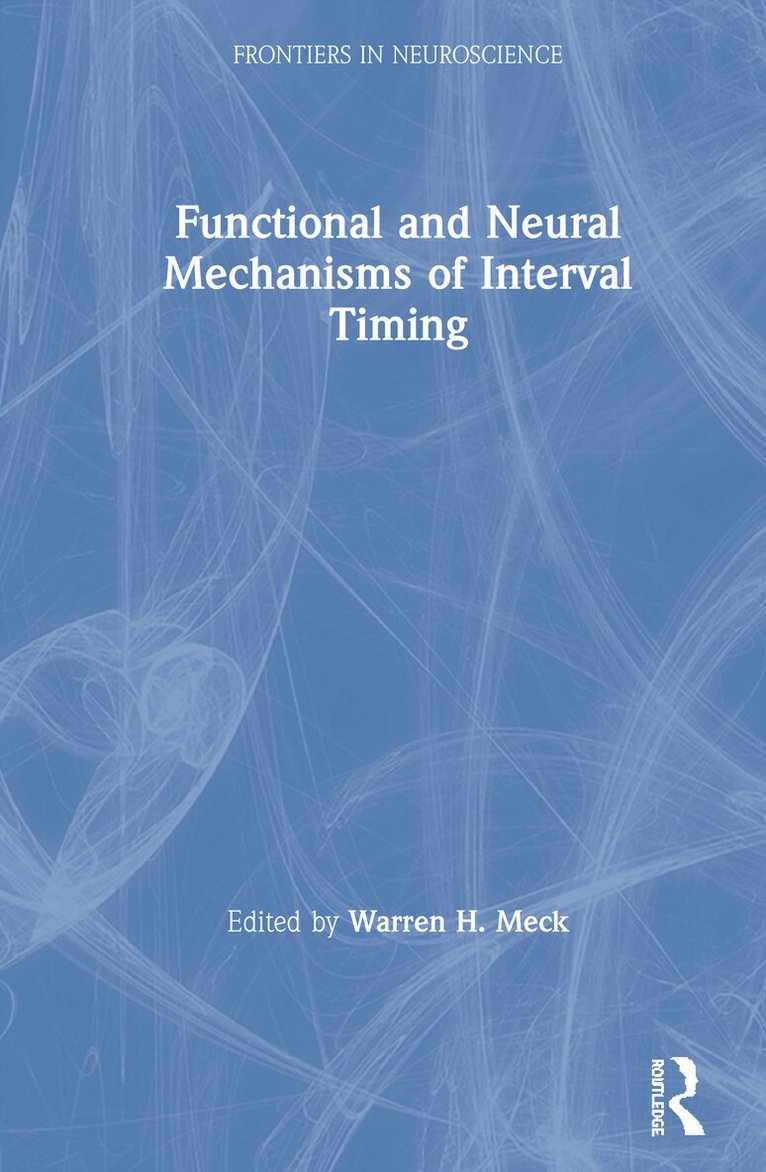
    Functional and Neural Mechanisms of Interval Timing

    AvWarren H. Meck

    Inbunden, Engelska, 2003

    Del i serien Frontiers in Neuroscience

    2 871 kr

    Beställningsvara. Skickas inom 10-15 vardagar. Fri frakt över 249 kr.

    Beskrivning

    Understanding temporal integration by the brain is expected to be among the premier topics to unite systems, cellular, computational, and cognitive neuroscience over the next decade. The phenomenon has been studied in humans and animals, yet until now, there has been no publication to successfully bring together the latest information gathered from this exciting area of research. For the first time, Functional and Neural Mechanisms of Interval Timing synthesizes the current knowledge of both animal behavior and human cognition as related to both technical and theoretical approaches in the study of duration discrimination.Chapters written by the foremost experts in the field integrate the fields of time quantum and psychophysics, rhythmic performance and synchronization, as well as attentional effort and cognitive strategies through the linkage of time as information in brain and behavior. This cutting-edge scientific work promotes a concerted view of timing and time perception for those on both sides of the behavior-biology divide. With Functional and Neural Mechanisms of Interval Timing neuroscientists, ethologists, and psychologists will gain the necessary background to understand the psychophysics and neurobiology of this crucial behavior.

    Produktinformation

    • Utgivningsdatum:2003-03-24
    • Mått:156 x 234 x 36 mm
    • Vikt:1 270 g
    • Format:Inbunden
    • Språk:Engelska
    • Serie:Frontiers in Neuroscience
    • Antal sidor:600
    • Förlag:Taylor & Francis Inc
    • ISBN:9780849311093

    Utforska kategorier

    • Biologisk psykologi och neuropsykologi inom Psykologi och pedagogik

    Recensioner i media

    "[A] thorough and richly informative book. … Throughout the volume, the writing style gives a clear, even, concise, expository flow with an excellent balance of detailed methodology and findings of each study, with helpful interpretations of their juxtapositions to other studies. For the student in the field, this is a treasure trove. For clinicians or researchers in other areas who want a reference that will guide an understanding of this timely field, this will be invaluable and highly recommended."- Journal of Clinical Psychiatry, Aug. 2005"Each chapter includes an introduction to topic matter, data, discussion, and is referenced for additional reading which makes this a reader friendly book. … [A] good start for those who are interested in understanding how to modulate behavior related to timing events, and external and internal stimuli. … [The book] is well organized and reader friendly, particularly for those who have some knowledge in psychology and neurobiology."- Contemporary Topics in Laboratory Animal Science, Vol. 43, No. 4, July 2004"Warren Meck, the editor, straddles both the human/nonhuman and brain/behaviour divides. He is in an ideal position to edit such a volume. Altogether, the collection constitutes a comprehensive and readable package on recent developments on this topic. … The editorial work on the book is superb. The chapters read well … . I recommend this volume as an excellent, comprehensive state-of-the-art compendium on interval timing."- Animal Cognition"Never before has such a large array of phenomena and methods been put together with such a coherent analysis. It is a remarkable achievement for both unity and synthesis in the domains of behavioral and cognitive neuroscience. The book is certainly a major step in giving the field of timing and time perception a theoretical focus of great scientific power."- From the Foreword by Robert Rousseau, Laval University, Quebec

    Innehållsförteckning

    • A Concise Guide to Interval Timing. Towards a Comparative Psychology. Decisions and Memories in Human Timing. Behavioral Evidence for Non-Linear Processes. Mode-Control Models of Counting and Timing in Non-Verbal Primates. Dopaminergic Mechanisms of Interval Timing and Attention. Physiology of Human Interval Timing Assessed Using Functional MRI. Modality Differences in Interval Timing. Electrophysiological Evidence for a Specific Processing of Temporal Information in Humans. Neural Networks and the Representation of Time. Basal Ganglia Involvement in Interval Timing and Sequence Learning. Cerebellum. Neurogenomics and the Study of Interval Timing. Striatal Beat-Frequency Models. Simultaneous Temporal Processing and Divided Attention.