• Fri frakt över 249 kr
  • •
  • Snabba leveranser
  • •
  • Billiga böcker
Kundservice

Du är på sajten för privatpersoner.

Företag, bibliotek eller offentlig verksamhet?

Du handlar på classic.bokus.com, där alla dina funktioner finns intakta.
Till classic.bokus.com
Bokus logotyp. Gå till startsidan.
  • Erbjudanden
  • Student
  • Topplistor
  • Barn & ungdom
  • Bokus Play
  • E-böcker
  • Ljudböcker
  • Pocketböcker
  • Spel och pussel

Pocketfynda! Hundratals böcker för 49 kr/st →

Sidfot

Mina sidor

    Hjälp

    • Kundservice
    • Vanliga frågor och svar
    • Frakt och leverans
    • Retur vid ångerrätt
    • Reklamera vara
    • Betalning
    • Köpvillkor
    • Allmänna villkor
    • Information om webbplatsens tillgänglighet

    Om Bokus

    • Om oss
    • Pressrum
    • För studenter
    • För företag
    • För bibliotek och offentlig verksamhet
    • För leverantörer
    • Hållbarhet

    Populärt

    • Aktuella erbjudanden
    • Presentkort
    • Studentlitteratur
    • Nya böcker
    • Topplistor
    • Signerade böcker
    • Engelska böcker

    Inspiration

    • Boktips
    • BookTok
    • Barnbokskaraktärer
    • Populära författare
    Logotyp för Bokus
    Följ oss på Facebook (extern länk)Följ oss på Instagram (extern länk)Följ oss på YouTube (extern länk)Följ oss på TikTok (extern länk)
    bokus @ CookiesAnpassa cookiesIntegritetspolicyKöpvillkor
    Till Citymail hemsida (extern länk)Till Budbee hemsida (extern länk)Till Postnord hemsida (extern länk)Till Schenker hemsida (extern länk)Till Early Bird hemsida (extern länk)Till Walleys hemsida (extern länk)
    1. Samhälle och politik
    2. Social välfärd och brottslighet
    3. Brottslighet och kriminologi
    4. Brottsutredning och kriminalteknik

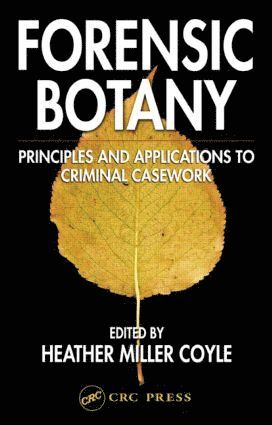
    Forensic Botany

    Principles and Applications to Criminal Casework

    AvHeather Miller Coyle

    Inbunden, Engelska, 2004

    2 858 kr

    Tillfälligt slut

    Beskrivning

    Increasingly, forensic scientists use plant evidence to reconstruct crimes. The forensic aspects of this subject require an understanding of what is necessary for botanical evidence to be accepted in our judicial system.Bringing together the latest information into a single resource, Forensic Botany: Principles and Applications to Criminal Casework introduces the basic science underlying this emerging field of forensic botany. Contributors discuss the recognition of pertinent plant evidence at a crime scene, the appropriate collection and preservation of the material, and maintenance of a chain of custody. They also explain scientific testing methods, the validation of new forensic techniques, and admissibility criteria for court. An overview of plant biology and historical developments in forensic DNA analysis is also included, as well as case examples featuring the use of botanical evidence in a variety of criminal cases.In an effort to build the scientific foundation for this promising field, this book provides definitive coverage of forensic botany with detailed applications and case examples. It familiarizes forensic scientists with the role of botanical evidence in criminal investigations and its potential value in the pursuit of justice.

    Produktinformation

    • Utgivningsdatum:2004-09-15
    • Mått:156 x 234 x undefined mm
    • Vikt:616 g
    • Format:Inbunden
    • Språk:Engelska
    • Antal sidor:348
    • Förlag:Taylor & Francis Inc
    • ISBN:9780849315299

    Utforska kategorier

    • Brottsutredning och kriminalteknik inom Samhälle och politik

    Recensioner i media

    "…very well written and informative, providing the reader with an excellent and concise introduction to plant biology, plant genetics, plant identification procedures, and the application of botanical evidence in criminal cases. All forensic scientists will enjoy reading the fascinating case examples highlighting the use botanical evidence. Scientists in forensic DNA typing analysis and trace evidence examination will value this book as an excellent reference text."-Canadian Society of Forensic Science, Peter Bilous, M.Sc., Ph.D."This book provides an essential introduction to the field, to all those who have an interest in scenes of crime investigation as well as forensic pathologists … . [W]ell written … easy to read … [and] thought provoking. It is not often that one is introduced to a whole new area of forensic practice, and not have the slightest idea what it entails. With the benefit of this fairly unique book, no on need be in that position when his exciting field of forensic botany takes off."- www.forensicmed.co.uk"Good reference text on biology and its relationship to forensic science. Good illustrations, easy to read."-Journal of the American Association of Forensic Dentists"Coyle is a bone fide plant biologist having received a Ph.D, in plant biology from the University of New Hampshire … . She does a good job of making sure to direct her botanical summaries to forensics. Her descriptions of using plants as crime scene evidence are almost reminiscent of ethnobotanical descriptions. Coyle et al. keep us interested in their descriptions by not just explaining techniques but providing a variety of high-quality, pertinent examples to show how these techniques have been used in the past. The appendix, Considerations for the Use of Forensic Botanical Evidence: An Overview, is an excellent resource … . I like Coyle’s book and it would make an excellent addition to a forensic biologist’s library."— Alfredo Gomez-Beloz, Center for World Indigenous Studies, Olympia, WA in Economic Botany 61(2) 2007"Forensic Botany: Principles and Applications to Criminal Casework is packed with details – details that forensic scientists must note and perhaps use in their crime scene investigations." – David M. Jarzen, Florida Museum of Natural History, University of Florida, in AASP Newsletter, June 2007, Vol. 40, No. 2

    Innehållsförteckning

    • Introduction. Basic Plant Biology. Plant Cell Structure and Function. Modes of Plant Reproduction. DNA Structure and Function. Plant Diversity. The Use of Biological and Botanical Evidence in Criminal Investigations. An Overview of Historical Developments in Forensic DNA Analysis. DNA and the Identification of Plant Species from Stomach Contents. Plant Identification by DNA. Case Applications of Forensic Botany. Tracking Clonally Propagated Marijuana Using Amplified Fragment Length Polymorphism (AFLP) Analysis. Legal Considerations for Acceptance of New Forensic Methods in Court. Forensic Palynology. Classical and Future DNA Typing Technologies for Plants. Appendix 1: Considerations for the Use of Forensic Botanical Evidence: An Overview. Appendix 2: Glossary of Terms. Appendix 3: Directory of Contacts. Appendix 4: Biographies.