• Fri frakt över 249 kr
  • •
  • Snabba leveranser
  • •
  • Billiga böcker
Kundservice

Du är på sajten för privatpersoner.

Företag, bibliotek eller offentlig verksamhet?

Du handlar på classic.bokus.com, där alla dina funktioner finns intakta.
Till classic.bokus.com
Bokus logotyp. Gå till startsidan.
  • Erbjudanden
  • Nyheter
  • Student
  • Topplistor
  • Barn & ungdom
  • Bokus Play
  • E-böcker
  • Pocketböcker
  • Spel & pussel

10% rabatt på allt med kod: NYSTART10 →

Sidfot

Mina sidor

    Hjälp

    • Kundservice
    • Vanliga frågor och svar
    • Frakt och leverans
    • Retur vid ångerrätt
    • Reklamera vara
    • Betalning
    • Köpvillkor
    • Allmänna villkor
    • Information om webbplatsens tillgänglighet

    Om Bokus

    • Om oss
    • Pressrum
    • För studenter
    • För företag
    • För bibliotek och offentlig verksamhet
    • För leverantörer
    • Hållbarhet

    Populärt

    • Aktuella erbjudanden
    • Presentkort
    • Studentlitteratur
    • Nya böcker
    • Topplistor
    • Signerade böcker
    • Engelska böcker

    Inspiration

    • Boktips
    • BookTok
    • Populära bokserier
    • Barnbokskaraktärer
    • Populära författare
    Logotyp för Bokus
    Följ oss på Facebook (extern länk)Följ oss på Instagram (extern länk)Följ oss på YouTube (extern länk)Följ oss på TikTok (extern länk)
    bokus @ CookiesAnpassa cookiesIntegritetspolicyKöpvillkor
    Till Citymail hemsida (extern länk)Till Budbee hemsida (extern länk)Till Postnord hemsida (extern länk)Till Schenker hemsida (extern länk)Till Early Bird hemsida (extern länk)Till Walleys hemsida (extern länk)
    1. Djur och Natur
    2. Djurböcker
    3. Vilda djur
    4. Fjärilar, insekter, spindlar

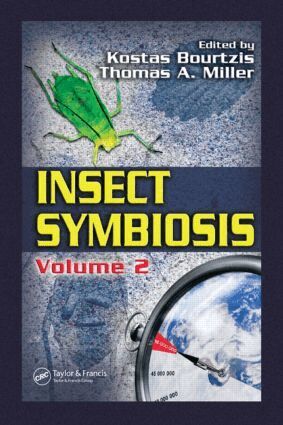
    Insect Symbiosis, Volume 2

    AvKostas Bourtzis,Thomas A. Miller

    Inbunden, Engelska, 2006

    Del i serien Contemporary Topics in Entomology

    1 723 kr

    Tillfälligt slut

    Beskrivning

    Summarizing current knowledge on symbiotic organisms in the biology of insects, Insect Symbiosis, Volume IIdescribes the diversity of symbiotic bacteria associated with pests such as whiteflies, aphids, mealybugs, psyllids, and tsetse flies. The book illustrates how symbiosis research has important ramifications for evolutionary biology, physiology, parasitology, genetics, and animal behavior and is especially relevant to the control of agricultural and disease-carrying pests.In this second volume, a few repeat authors describe brand new aspects of their research, while a new group covers recently developing aspects of symbiotic relationships. The book includes updated information on Wolbachia biology and how it influences insect life, supplies two new examples of using symbionts in crop protection, and discusses the recent “bug in a bug” mealy bug case. The book provides analysis and synthesis of cutting-edge research in insect symbiosis that sheds light on the evolution of the host/symbiont relationship, and in turn, on the general study of evolution, physiology, and genetics.

    Produktinformation

    • Utgivningsdatum:2006-06-23
    • Mått:178 x 254 x undefined mm
    • Vikt:725 g
    • Format:Inbunden
    • Språk:Engelska
    • Serie:Contemporary Topics in Entomology
    • Antal sidor:300
    • Förlag:Taylor & Francis Inc
    • ISBN:9780849341946

    Utforska kategorier

    • Fjärilar, insekter, spindlar inom Djur och Natur
    • Insekter inom Naturvetenskap och teknik

    Mer om författaren

    Kostas Bourtzis, Thomas A. Miller

    Recensioner i media

    Each reader will find chapters to delight him- or herself. … should find a home in every biology library… a solid introduction to students, and extensive reviews of the past 20 years of research for professional investigators. They also will provide hours of enjoyable reading. The books represent the flowering of decades of research by dozens of pioneering scientists, and show how important symbiosis is to the biological sciences. The topic is so rich, and the investigators so productive that the editors could continue to produce a new volume every 3 years, indefinitely. Let’s hope they do.—Michael F. Dolan, University of Massachusetts, Amherst, USA, in SymbiosisWe have a great deal to learn about this planet where animals thrive in symbioses with microorganisms and we can learn much about it here.—From the Preface by Lynn Margulis, Distinguished Professor, Department of Geosciences, University of Massachusetts Bourtzis … and Miller … present 15 contributions covering such topics as mollicutes associated with arthropods and plants, the evolutionary origin and maintenance of the mutualistic symbiosis between termites and fungi, paternal sex ratio chromosomes in parasitoid wasps, and insect pest control using Wolbachia and/or radiation, among others.—SciTech Book News, December 2006 Co-editor Thomas Miller has been awarded the G.J. Mendel Honorary Medal for Merit in the Biological Sciences. By awarding this medal, the Academy Council gives its highest recognition to Dr. Miller’s outstanding achievements, which have been acknowledged worldwide.—Academy of Sciences of the Czech Republic This excellent overview of some of the relationships between insects and the various microorganisms that live within them should trigger additional research on the ‘bugs’ of interest to you. The chapters each contain numerous references and excellent illustrations, including color figures in the center of the volume. Run, don’t walk, to get a copy of this book; it just may change how you think about your ‘bugs’ —Marjorie A. Hoy, University of Florida, Gainesville, USA, in Florida Entomologist 86 (4)

    Innehållsförteckning

    • Symbiosis as a Mechanism of Evolution. CFB Bacteria. Symbionts in Cockroaches. PSR Factors in Insects. Bacteria Live Inside Bacteria in a Mealybug. Diversity of Symbionts in Diverse Insect Species, Primary Symbionts, Secondary Symbionts, Arsenophonus, Chlamydia-Like Bacteria. Evolution of Insect Symbionts Genomes. Ants, Agriculture, and Antibiotics: An Ancient Quadripartite Symbiosis. The First Insect Wolbachia Genome. The First Nematode Wolbachia Genome. Comparative Wolbachia Genomics. Tsetse Secondary Symbionts, Mainly Sodalis. Insect-Transmitted Plant Pathogenic Mollicutes. Photorhabdus Genome, Toxins Entomopathogenic Nematodes. Host Plant Specialization Governed by Facultative Symbiont. Locusts and Gut Bacteria. Bacteria Invade Mitochondria of Ticks. Termite Symbiotic Systems. The Applied Biology of Wolbachia. Paratransgenesis Applied to Control Insect-Transmitted Plant Pathogens: The Pierce’s Disease Case.