• Fri frakt över 249 kr
  • •
  • Snabba leveranser
  • •
  • Billiga böcker
Kundservice

Du är på sajten för privatpersoner.

Företag, bibliotek eller offentlig verksamhet?

Du handlar på classic.bokus.com, där alla dina funktioner finns intakta.
Till classic.bokus.com
Bokus logotyp. Gå till startsidan.
  • Erbjudanden
  • Nyheter
  • Student
  • Topplistor
  • Barn & ungdom
  • Bokus Play
  • E-böcker
  • Pocketböcker
  • Spel & pussel

10% rabatt på allt med kod: NYSTART10 →

Sidfot

Mina sidor

    Hjälp

    • Kundservice
    • Vanliga frågor och svar
    • Frakt och leverans
    • Retur vid ångerrätt
    • Reklamera vara
    • Betalning
    • Köpvillkor
    • Allmänna villkor
    • Information om webbplatsens tillgänglighet

    Om Bokus

    • Om oss
    • Pressrum
    • För studenter
    • För företag
    • För bibliotek och offentlig verksamhet
    • För leverantörer
    • Hållbarhet

    Populärt

    • Aktuella erbjudanden
    • Presentkort
    • Studentlitteratur
    • Nya böcker
    • Topplistor
    • Signerade böcker
    • Engelska böcker

    Inspiration

    • Boktips
    • BookTok
    • Populära bokserier
    • Barnbokskaraktärer
    • Populära författare
    Logotyp för Bokus
    Följ oss på Facebook (extern länk)Följ oss på Instagram (extern länk)Följ oss på YouTube (extern länk)Följ oss på TikTok (extern länk)
    bokus @ CookiesAnpassa cookiesIntegritetspolicyKöpvillkor
    Till Citymail hemsida (extern länk)Till Budbee hemsida (extern länk)Till Postnord hemsida (extern länk)Till Schenker hemsida (extern länk)Till Early Bird hemsida (extern länk)Till Walleys hemsida (extern länk)
    1. Naturvetenskap och teknik
    2. Teknik och industri
    3. Tillverkningsteknik

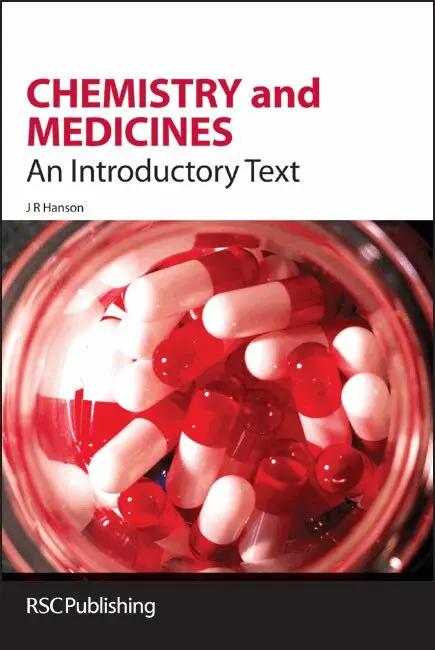
    Chemistry and Medicines

    An Introductory Text

    AvJames R Hanson

    Inbunden, Engelska, 2006

    498 kr

    Beställningsvara. Skickas inom 5-8 vardagar. Fri frakt över 249 kr.

    Fler format och utgåvor

    E-bok

    436 kr

    E-bok

    434 kr

    Beskrivning

    Medicinal chemistry incorporates bio-organic chemistry, organic synthetic methods, physical organic chemistry and organic reaction mechanisms. These areas of chemistry are crucial to the design and synthesis of new drugs, both in academia and the pharmaceutical industry. Chemistry and Medicines: An Introductory Text provides a general introduction to this fascinating subject. The first chapters contain a brief historical introduction followed by a description of the chemical features involved in the adsorption, distribution, metabolism and excretion of a drug. The remaining chapters describe the chemistry underlying the design and synthesis of some of the key drugs used to combat some major diseases of the peripheral and central nervous system, infectious diseases and cancers. A glossary and suggestions for further reading complete this textbook. The book is aimed at those studying advanced undergraduate and postgraduate courses in medicinal chemistry.

    Produktinformation

    • Utgivningsdatum:2006-08-17
    • Mått:156 x 234 x 14 mm
    • Vikt:510 g
    • Format:Inbunden
    • Språk:Engelska
    • Antal sidor:166
    • Förlag:Royal Society of Chemistry
    • ISBN:9780854046454

    Utforska kategorier

    • Tillverkningsteknik inom Naturvetenskap och teknik

    Mer om författaren

    Professor Hanson is Emeritus Professor of Chemistry at the University of Sussex.

    Recensioner i media

    Examples, exemplify the approaches and methodology that are peculiar to medicinal chemistry.

    Innehållsförteckning

    • Chapter 1: Introduction;1.1: Aims;1.2: The Classification of Drugs;1.3: Targets for the Medicinal Chemist;1.4: The Stages in the Development of a Drug;1.5: The Synthesis of a Drug;1.6: The History of Medicinal Chemistry;Chapter 2: General Principles of Medicinal Chemistry;2.1: Aims;2.2: Administration and Absorption;2.3: The Gastrointestinal Tract;2.4: Other Routes of Administration;2.5: Physico-Chemical Measurements;2.6: Formulation;2.7: Drug Metabolism;2.8: Oxidation by Cytochrome P450s;2.9: The Hydroxylation of Aromatic Rings;2.10: The Hydroxylation of Aliphatic Systems;2.11: The Monoamine Oxidases;2.12: Other Phase One Changes;2.13: Phase Two Changes;2.14: Excretion;2.15: Pro-Drugs;2.16: Quantitative Structure: Activity Relationships;2.17: Hansch QSAR Analyses;2.18: Craig Plots and the Topliss Decision Tree;2.19: Drug: Receptor Interactions;Chapter 3: Neurotransmitters as Targets;3.1: Aims;3.2: Introduction;3.3: The Nervous System;3.4: The Neurotransmitters;3.5: Cell-Surface Receptors;3.6: Ion-Channel-Linked Receptors;3.7: Kinase-Linked Receptors;3.8: G-Protein-Linked Receptors;3.9: Agonists and Antagonists;3.10: Acetylcholine;3.11: Neuromuscular Blocking Agents in Surgery;3.12: Muscarinic Agonists;3.13: Local Anaesthetics;3.14: Catecholamines as Neurotransmitters;3.15: The Adrenergic Receptors;3.16: a-Adrenergic Receptor Agonists;3.17: b-Adrenergic Receptor Agonists - The Developmentof Anti-Asthma Drugs;3.18: b1-Adrenergic Antagonists 'b-Blockers';3.19: The Treatment of Hypertension;Chapter 4 Medicinal Chemistry and the Central Nervous System;4.1: Aims;4.2: Introduction;4.3: The Treatment of Neurodegenerative Diseases;4.4: Dopamine Antagonists as Neuroleptic Agents;4.5: Serotonin as a Neurotransmitter;4.6: The Treatment of Depression;4.7: GABA as a Neurotransmitter;4.8: The Treatment of Epilepsy;4.9: Benzodiazepines as Anxiolytic Agents;4.10: Barbiturate Sleeping Tablets;4.11: Opioids as Analgesics;Chapter 5: Local and Circulatory Hormone Targets;5.1: Aims;5.2: Introduction;5.3: Histamine as a Target;5.4: Histamine Antagonists in the Treatment of Peptic Ulcers;5.5: The Prostaglandins and Non-Steroidal Anti-Inflammatory Agents;5.6: The Development of Ibuprofen;5.7: The Mechanism of Action of Aspirin;5.8: Medicinal Uses of Prostaglandins;5.9: The Sterols and Steroid Hormones;5.10: The Biosynthesis of the Steroids;5.11: The Control of Cholesterol Biosynthesis;5.12: The Steroidal Anti-Inflammatory Agents;5.13: The Steroidal Oral Contraceptives;5.14: The Role of Nitric Oxide;Chapter 6: Anti-infective Agents;6.1: Aims;6.2: Introduction;6.3: Bacterial Diseases;6.4: Antiseptics;6.5: The Sulfonamide Anti-Bacterial Agents;6.6: The Penicillins;6.7: Clavulanic Acid and the Inhibition of b-Lactamases;6.8: The Cephalosporins;6.9: The Mode of Action of the b-Lactam Antibiotics;6.10: Other Antibiotics;6.11: Synthetic Anti-Bacterial Agents;6.12: Anti-Viral Agents;6.13: The Inhibition of Nucleic Acid Biosynthesis;6.14: Inhibitors of Reverse Transcriptase;6.15: Neuraminidase Inhibitors;6.16: The Synthesis of Nucleoside Analogues;6.17: Anti-Fungal Agents;6.18: Ergosterol Biosynthesis Inhibitors;6.19: Other Anti-Fungal Agents;6.20: Parasitic Infections;Chapter 7: Cancer Chemotherapy;7.1: Aims;7.2: Introduction;7.3: The Cell Cycle;7.4: Cancer Chemotherapy;7.5: Anti-Metabolites;7.6: Alkylating Agents;7.7: Intercalating Agents;7.8: Anti-Mitotic Agents;7.9: Interference with Selected Developmental Processes;7.10: Monoclonal Antibodies;7.11: Prostate Cancer;Further Reading;Glossary;Subject Index