• Fri frakt över 249 kr
  • •
  • Snabba leveranser
  • •
  • Billiga böcker
Kundservice

Du är på sajten för privatpersoner.

Företag, bibliotek eller offentlig verksamhet?

Du handlar på classic.bokus.com, där alla dina funktioner finns intakta.
Till classic.bokus.com
Bokus logotyp. Gå till startsidan.
  • Erbjudanden
  • Nyheter
  • Student
  • Topplistor
  • Barn & ungdom
  • Bokus Play
  • E-böcker
  • Pocketböcker
  • Spel & pussel

10% studentrabatt med kod TERM26

Sidfot

Mina sidor

    Hjälp

    • Kundservice
    • Vanliga frågor och svar
    • Frakt och leverans
    • Retur vid ångerrätt
    • Reklamera vara
    • Betalning
    • Köpvillkor
    • Allmänna villkor
    • Information om webbplatsens tillgänglighet

    Om Bokus

    • Om oss
    • Pressrum
    • För studenter
    • För företag
    • För bibliotek och offentlig verksamhet
    • För leverantörer
    • Hållbarhet

    Populärt

    • Aktuella erbjudanden
    • Presentkort
    • Studentlitteratur
    • Nya böcker
    • Topplistor
    • Signerade böcker
    • Engelska böcker

    Inspiration

    • Boktips
    • BookTok
    • Populära bokserier
    • Barnbokskaraktärer
    • Populära författare
    Logotyp för Bokus
    Följ oss på Facebook (extern länk)Följ oss på Instagram (extern länk)Följ oss på YouTube (extern länk)Följ oss på TikTok (extern länk)
    bokus @ CookiesAnpassa cookiesIntegritetspolicyKöpvillkor
    Till Citymail hemsida (extern länk)Till Budbee hemsida (extern länk)Till Postnord hemsida (extern länk)Till Schenker hemsida (extern länk)Till Early Bird hemsida (extern länk)Till Walleys hemsida (extern länk)
    1. Samhälle och politik
    2. Samhälle och kultur
    3. Sociala grupper och identitet

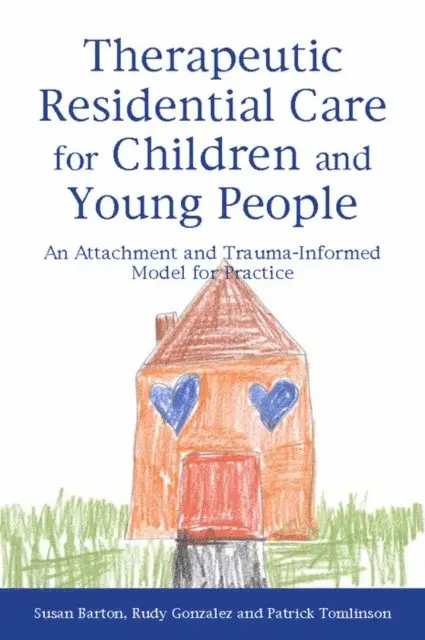
    Therapeutic Residential Care for Children and Young People

    An Attachment and Trauma-Informed Model for Practice

    AvPatrick Tomlinson,Rudy Gonzalez

    E-bok
    Engelska, 2011

    489 kr

    Läs direkt i Bokus Reader – eller ladda ned till din enhet

    Fler format och utgåvor

    Häftad

    498 kr

    Beskrivning

    Children and young people in care who have been traumatized need a therapeutic environment where they can heal and which meets their emotional and developmental needs.This book provides a model of care for traumatized children and young people, based on theory and practice experience pioneered at the Lighthouse Foundation, Australia. The authors explain the impact of trauma on child development, drawing on psychodynamic, attachment and neurobiological trauma theories. The practical aspects of undertaking therapeutic care are then outlined, covering everything from forming therapeutic relationships to the importance of the home environment and daily routines. The book considers the totality of the child's experience at the individual, group, organization and community levels and argues that attention to all of these is essential if the child is to achieve wellness. Case material from both children and carers are used throughout to illustrate both the impact of trauma and how children have been helped to recovery through therapeutic care.This book will provide anyone caring for traumatized children and young people in a residential setting with both the understanding and the practical knowledge to help children recover. It will be essential reading for managers and decision-makers responsible for looked after children, child care workers such as residential and foster carers, youth workers, social workers, mental health workers and child welfare academics.

    Produktinformation

    • Utgivningsdatum:2011-09-15
    • Språk:Engelska
    • Filformat:EPUB
    • Kopieringsskydd:LCP
    • ISBN:9780857005380
    • Förlag:Jessica Kingsley Publishers

    Utforska kategorier

    • Sociala grupper och identitet inom Samhälle och politik
    • Barnpsykologi och utvecklingspsykologi inom Psykologi och pedagogik
    • Pediatrik inom Medicin

    Mer om författaren

    Susan Barton is founder of the Lighthouse Foundation, Australia, which provides therapeutic residential care for traumatized and homeless children. After fostering children for several years, she founded the charity in 1991 in order to extend to more children in need the therapeutic family model of care that she had started to develop. She has won numerous awards for her work with homeless and traumatized children. Rudy Gonzalez is Director of Care Service at the Lighthouse Foundation. He has worked as a family counsellor and case manager, a psychologist in a forensic setting undertaking therapeutic work with male violent offenders both individually and in a therapeutic community, and has worked as a psychologist with traumatized children. Patrick Tomlinson is a social care consultant. He has many years' experience as a practitioner, manager and director of therapeutic child care services, and is author of several books on therapeutic child care.

    Recensioner i media

    From the introduction through the final appendices, I was struck by the constant and integrated presence of thinking, feeling and reflection as integral to meeting the needs of young people, whether at an individual or organisational level... This book offers vision and motivation to those with requisite courage to work towards a more humane system of care for children and young people.

    Innehållsförteckning

    • Foreword. Acknowledgements. Authors' Note. Introduction. What is child abuse and neglect? The cost of abuse. The need for early intervention, treatment and prevention. 1. The Importance of a Theoretical Base. The relationship between theory and practice. Theory in the caring professions. Psychodynamic thinking. Psychodynamic concepts. The relationship between the organization and therapeutic task. The treatment approach. Attachment and trauma-informed theories. The influence of Winnicott on therapeutic residential care. Individual, family, community and societal wellness theory. Conclusion. 2. Trauma-Informed Practice. How traumatization develops in childhood. Trauma causes hyperarousal and fear in children. Childhood trauma reduces the brain's capacity to think and regulate emotions. Trauma disconnects children from relational resources. Trauma restricts the attention capacity of children. Trauma-based behaviour has a functional purpose. Trauma restricts children's ability to deal with change. Trauma undermines identity formation in children. Trauma affects social skills development and impacts on peer relationships. The impact of trauma on the child's internal working model. Relationship and attachment difficulties. Physical wellbeing. The basics of trauma treatment. 3. Therapeutic Relationships. Beginnings. Information gathering and assessment. The intake process. Attachment. Secure base. Commitment. Continuity of care. Working with loss. Role modelling. Personal growth. Creating capacity for relationship building: one-to-one time with children. Unique needs. The importance of the relationship when challenging behaviour. Challenging behaviour as a sign of hope. The role of touch in the healing process. Consequences vs punishment. Promoting responsible children (empowerment processes). Participation of children and young people in the organization. 4. Demands and Rewards of the Work: Staff Support. Working with challenging and aggressive behaviour. Physical and emotional wellbeing. Working with anxiety. Communication challenges. Therapeutic supervision: working with feelings. Safety and containment. The impact of trauma work on our own memories and experiences of childhood. 5. The Home Environment. Home aesthetics. Encouraging play and curiosity. Privacy and security. 6. The Holding Environment and Daily Routines. Routines, limits and anchor points. Daily programme. Use of television and computers. Free time. The importance of food in the healing process. Bedtime and waking routines. Play. Celebrations as a sense of belonging. 7. The Organization and Community. The language of the organization. Trauma re-enactment and its impact on the organization. Management and the therapeutic task. The lighthouse foundation as an open system. Leadership. Authority. Managing change. The organization's vision. Sense of community. Sense of family and home. Organization as family. Local community. Community committees as a containing membrane. Collective wellness. 8. Group Processes. 'I feel like saying' process. Shared history: culture passed on through stories. Strong culture. Child safety. Reflective practice. Emotional intelligence. Emotional wellness. Transparency and openness. Family meetings. Combined family meetings. Whole family meetings. Youth forums. Clinical supervision (relationship between carers). Clinical peer supervision (carers' meeting). Mediation processes. 9. Moving On: Transitions, Aftercare and Outreach. Transition as a separation experience. Life membership. Transitional planning and transitional objects. Transition celebrations. Stepping stones: transitional programmes. Assessing readiness for transition. Carer relationship beyond transition. Aftercare programme. Outreach. Children returning to work with the organization. 10. Outcomes-Based Practice. Outcomes-based approaches. The need for evidence. Measuring outcomes. Difficulties in measuring outcomes. Potential benefits and value of developing an outcomes-based approach. Appendix 1 Susan's Story. Appendix 2 The Lighthouse Therapeutic Family Model of Care. About the Authors. References. Index.