• Fri frakt över 249 kr
  • •
  • Snabba leveranser
  • •
  • Billiga böcker
Kundservice

Du är på sajten för privatpersoner.

Företag, bibliotek eller offentlig verksamhet?

Du handlar på classic.bokus.com, där alla dina funktioner finns intakta.
Till classic.bokus.com
Bokus logotyp. Gå till startsidan.
  • Erbjudanden
  • Student
  • Topplistor
  • Barn & ungdom
  • Bokus Play
  • E-böcker
  • Ljudböcker
  • Pocketböcker
  • Spel och pussel

Pocketfynda! Hundratals böcker för 49 kr/st →

Sidfot

Mina sidor

    Hjälp

    • Kundservice
    • Vanliga frågor och svar
    • Frakt och leverans
    • Retur vid ångerrätt
    • Reklamera vara
    • Betalning
    • Köpvillkor
    • Allmänna villkor
    • Information om webbplatsens tillgänglighet

    Om Bokus

    • Om oss
    • Pressrum
    • För studenter
    • För företag
    • För bibliotek och offentlig verksamhet
    • För leverantörer
    • Hållbarhet

    Populärt

    • Aktuella erbjudanden
    • Presentkort
    • Studentlitteratur
    • Nya böcker
    • Topplistor
    • Signerade böcker
    • Engelska böcker

    Inspiration

    • Boktips
    • BookTok
    • Barnbokskaraktärer
    • Populära författare
    Logotyp för Bokus
    Följ oss på Facebook (extern länk)Följ oss på Instagram (extern länk)Följ oss på YouTube (extern länk)Följ oss på TikTok (extern länk)
    bokus @ CookiesAnpassa cookiesIntegritetspolicyKöpvillkor
    Till Citymail hemsida (extern länk)Till Budbee hemsida (extern länk)Till Postnord hemsida (extern länk)Till Schenker hemsida (extern länk)Till Early Bird hemsida (extern länk)Till Walleys hemsida (extern länk)
    1. Data och IT
    2. Grafik och bildbehandling
    3. CAD-program

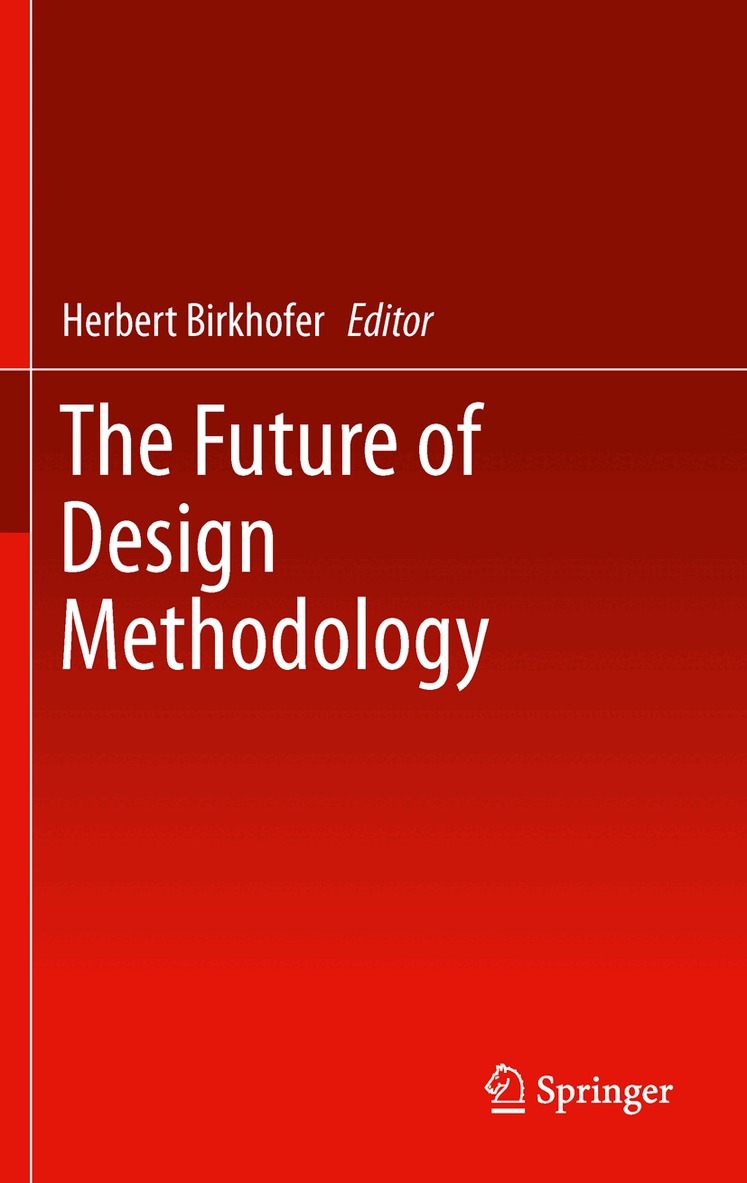
    Future of Design Methodology

    AvHerbert Birkhofer

    Inbunden, Engelska, 2011

    1 721 kr

    Beställningsvara. Skickas inom 10-15 vardagar. Fri frakt över 249 kr.

    Beskrivning

    The Future of Design Methodology gives a holistic overview of perspectives for design methodology, addresses trends for developing a powerful methodical support for design practice and provides a starting point for future design research. The chapters are written by leading scientists from around the world, who have great expertise in design methodology, as well as the farsightedness needed to develop design methodology further.The Future of Design Methodology is a detailed contribution to consolidated design methodology and design research. Instead of articulating the views of one scientist, it provides a comprehensive collection of perspectives and visions. The editor highlights the substantial deficiencies and problems of the current design methodology and summarizes the authors’ findings to draw future-oriented conclusions.  The comprehensive overview of the status of design methodology given in The Future of Design Methodology will help enhance the individual scientific development of junior researchers, while the authoritative perspectives on future design methodology will challenge the views of experts. It is suitable for readers working in a wide range of design fields, such as design methodology, engineering design and industrial design.

    Produktinformation

    • Utgivningsdatum:2011-04-15
    • Mått:155 x 235 x 21 mm
    • Vikt:641 g
    • Format:Inbunden
    • Språk:Engelska
    • Antal sidor:302
    • Upplaga:2011
    • Förlag:Springer London Ltd
    • ISBN:9780857296146

    Utforska kategorier

    • CAD-program inom Data och IT
    • Teknik: allmänt inom Naturvetenskap och teknik

    Mer om författaren

    Herbert Birkhofer was awarded a PhD from the Department of Mechanical Engineering at Technische Universität Braunschweig. He is currently Professor and Head of the Product Development and Machine Elements Institute at Technische Universität Darmstadt. He is a member of the Scientific Association for Machine Elements and Design Research and of Berliner Kreis (association for the advancement of product innovation in German industry). He co-edits the journal Zeitschrift Konstruktion and is Programme Chair of two events: the annual Applied Engineering Design Systems workshops in Czechoslovakia, and the biennial DESIGN conferences in Croatia. His main research interests are product development and design methodology, knowledge management in design, empirical design research, development of environmentally sound products, and lifetime theory of solid-lubricated bearings.

    Innehållsförteckning

    • 1. Introduction.- 2. Is Engineering Design Disappearing from Design Research?.- 3. Methodical Support for the Development of Modular Product Families.- 4. Risk-Driven Design Processes: Balancing Efficiency with Resilience in Product Design.- 5. Methodology and Computer-Aided Tools - A Powerful Interaction for Product Development.- 6. A Reuse Design Decision Support System Based on Self-Organizing Maps.- 7. Increasing Effectiveness and Efficiency of Product Development – A Challenge for Design Methodologies and Knowledge Management.- 8. Design Theory and Methodology – Contributions to the Computer Support of Product Development/Design Processes.- 9. Summary - Specific Ways to Further Develop Design Methodology.- 10. Boundary Conditions for a New Type of Design Task: Understanding Product/Service-Systems.- 11. Product/Service System Design and Beyond.- 12. Open Product Development.- 13. Managing Virtual Product Creation.- 14. Systems Engineering Versus Design Methodology.- 15. The Autogenetic Design Theory - Product Development as an Analogy to Biological Evolution.- 16. Towards a Designer-Centred Methodology - Descriptive Considerations and Prescriptive Reflections.- 17. A New Perspective on Product Engineering Overcoming Sequential Process Models.- 18. Summary - Holistic Ways to Supply, Extend or Replace Design Methodology.- 19. What Designers Can Learn from Leonardo, an Ingenious Artist, Scientist and Engineer.- 20. “Design … but of What”?.- 21. Transferring Design Methods into Practice.- 22. Towards a Taxonomy of Design Research Areas.- 23. Design Research and Education: A University Perspective.- 24. The Future of Design Research: Consolidation, Collaboration and Inter-Disciplinary Learning?.- 25. Summary - General Reflections on Design Methodology.- 26. Conclusions.