• Fri frakt över 249 kr
  • •
  • Snabba leveranser
  • •
  • Billiga böcker
Kundservice

Du är på sajten för privatpersoner.

Företag, bibliotek eller offentlig verksamhet?

Du handlar på classic.bokus.com, där alla dina funktioner finns intakta.
Till classic.bokus.com
Bokus logotyp. Gå till startsidan.
  • Erbjudanden
  • Nyheter
  • Student
  • Topplistor
  • Barn & ungdom
  • Bokus Play
  • E-böcker
  • Pocketböcker
  • Spel & pussel

10% rabatt på allt med kod: NYSTART10 →

Sidfot

Mina sidor

    Hjälp

    • Kundservice
    • Vanliga frågor och svar
    • Frakt och leverans
    • Retur vid ångerrätt
    • Reklamera vara
    • Betalning
    • Köpvillkor
    • Allmänna villkor
    • Information om webbplatsens tillgänglighet

    Om Bokus

    • Om oss
    • Pressrum
    • För studenter
    • För företag
    • För bibliotek och offentlig verksamhet
    • För leverantörer
    • Hållbarhet

    Populärt

    • Aktuella erbjudanden
    • Presentkort
    • Studentlitteratur
    • Nya böcker
    • Topplistor
    • Signerade böcker
    • Engelska böcker

    Inspiration

    • Boktips
    • BookTok
    • Populära bokserier
    • Barnbokskaraktärer
    • Populära författare
    Logotyp för Bokus
    Följ oss på Facebook (extern länk)Följ oss på Instagram (extern länk)Följ oss på YouTube (extern länk)Följ oss på TikTok (extern länk)
    bokus @ CookiesAnpassa cookiesIntegritetspolicyKöpvillkor
    Till Citymail hemsida (extern länk)Till Budbee hemsida (extern länk)Till Postnord hemsida (extern länk)Till Schenker hemsida (extern länk)Till Early Bird hemsida (extern länk)Till Walleys hemsida (extern länk)
    1. Samhälle och politik
    2. Samhälle och kultur
    3. Sociala grupper och identitet
    4. Genusvetenskap

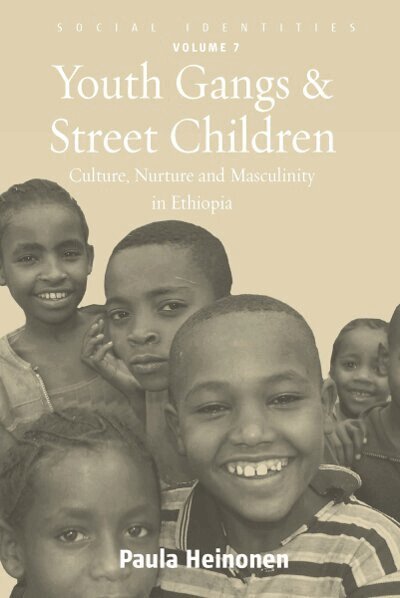
    Youth Gangs and Street Children

    Culture, Nurture and Masculinity in Ethiopia

    AvPaula Heinonen

    Inbunden, Engelska, 2011

    Del i serien Social Identities

    1 861 kr

    Beställningsvara. Skickas inom 5-8 vardagar. Fri frakt över 249 kr.

    Fler format och utgåvor

    E-bok

    284 kr

    Häftad

    440 kr

    Beskrivning

    The rapidly expanding population of youth gangs and street children is one of the most disturbing issues in many cities around the world. These children are perceived to be in a constant state of destitution, violence and vagrancy, and therefore must be a serious threat to society, needing heavy-handed intervention and ‘tough love’ from concerned adults to impose societal norms on them and turn them into responsible citizens. However, such norms are far from the lived reality of these children. The situation is further complicated by gender-based violence and masculinist ideologies found in the wider Ethiopian culture, which influence the proliferation of youth gangs. By focusing on gender as the defining element of these children’s lives — as they describe it in their own words — this book offers a clear analysis of how the unequal and antagonistic gender relations that are tolerated and normalized by everyday school and family structures shape their lives at home and on the street.

    Produktinformation

    • Utgivningsdatum:2011-07-01
    • Mått:152 x 229 x 16 mm
    • Vikt:413 g
    • Format:Inbunden
    • Språk:Engelska
    • Serie:Social Identities
    • Antal sidor:180
    • Förlag:Berghahn Books
    • ISBN:9780857450982

    Utforska kategorier

    • Genusvetenskap inom Samhälle och politik
    • Sociala grupper och identitet inom Samhälle och politik

    Mer om författaren

    Paula Heinonen (née Sinicco) is of Ethiopian/Italian parentage and grew up in Addis Ababa.  She is College Lecturer in Gender Studies and the Anthropology of Development at Hertford, University of Oxford. Previously, she was Tutor and Visiting Fellows Program Coordinator at the International Gender Studies Centre, University of Oxford and Senior Lecturer in Anthropology and Head of Research at the University of Addis Ababa, Ethiopia.

    Recensioner i media

    “Overall, Heinonen must be commended for tackling the complexities of the subject matter with tenacity and evident concern for the situation and condition of the lives of the people she observes. She does well to untangle the contradictions she encounters throughout.”  ·  Journal of the Royal Anthropological Institute“Paula Heinonen has written a remarkable book that deserves a wide readership… Altogether I would highly recommend this book, and I hope it finds a readership well beyond the narrow disciplinary and geographical confines that scholarship from the south too often ends up in. Finally, the book underscores the value of long term, and fairly open-ended ethnographic research.”  ·  Children's Geographies“The author’s relatively long period of field work enables her to follow-up on the longer term fates of the informants. Heinonen has taken great care to gather and categorise her data and to distil it down to its essence. [It] provides a great deal of insight into the complicated ways in which urban poverty is perpetuated in the developing world…[and] serves as an abundant source for those interested in gender, especially for understanding the real-life strategies employed by Ethiopian women and children to survive in a predominantly patriarchal society, and especially for following the way maleness is constructed.”  ·  Anthropological Notebooks“Heinonen’s cultural analysis of shame and her definition of a ‘wider Ethiopian culture’... open up an interesting methodological discussion on the relation between culture and practice, ethnographical analysis and cultural representation …Her work is an important start for an ethnography of the street, street dynamics and urban marginality – a contribution that the academic literature on Ethiopia has lacked until now.”  ·  Africa: The Journal of the International African Institute“The book constitutes an important contribution to ethnography, not only for its methodology but for the coherent analysis of the detailed empirical work used in this this excellent study of street children and youth gangs.”  ·  Revista Española de Sociología“The contents of the chapters …focus on impressive personal stories, while at the same time interpreting the social and cultural meanings of gender roles and yilunta in the political and economic environment of Ethiopia.”  ·  Rivista di Antropologia Post-Globale“Heinonen original use of yilunta (shame, honor and family pride) that she relates to male hegemony in the wider Ethiopian cultural context enables her to bring forth a unifying theme that connects street children with larger cultural values and how they experience it. Her work is indispensable to the study of street children and to childhood studies.”  ·  Lewis Aptekar, San Jose State University“Richly illustrated by quotes and life histories, this is an excellent ethnography of the ways in which young people develop resilience through continual reworking of webs of care, nurturance and interaction amongst themselves and with their families… The text is well written, comprehensive and based on a rich source of empirical material that is well analyzed and interpreted.”  ·  Tatek Abebe, Norwegian Centre for Child Research, Norwegian University of Sciences and Technology, Trondheim“The book is a unique study based on long –term detailed field research.   The author adopts the novel approach of analyzing gender   and masculinity from the perspective of children and their families  and how they experience it, and in the process offers a searing and  unsparing gaze on the plight of families and children living in difficult circumstances.  Dr. Heinonen’s findings have profound implications, not just for policy makers and NGOs but for our very conception of ‘street children’ and ‘youth gangs’.  It is a major contribution to African ethnography and gender studies.”  ·  Marieme S. Lo, PhD, University of Toronto

    Innehållsförteckning

    • AcknowledgementsIntroductionPoverty and Streetism in EthiopiaMethodologyCultureThe bookChapter 1. EthiopiaThe CountryEthnicityConsequences of famines in EthiopiaAddis AbabaHousingStreet People and OthersChapter 2. Yilunta:  Shame, Honour and Family prideMasculinityYiluntaSocializationParenting among the PoorChildren’s role in Parenting their Siblings and Parents.Chapter 3. Son of a WomanMulu’s StoryLemlem’s StoryThe Economics of Street lifeHome LifeSocial NetworksMotherhoodFatherhoodPlaytimeEducationHealthParenting the ParentsThe Next GenerationChapter 4. Borco: The Give and Take of Gang MembershipThe Borcos and their kindTerritoryGroup formationGang LifeStreet WorkSharingFriendship and CooperatingUnrequited LoveUnrequited Reciprocity‘Imediatismo’Health and DeathCrimeViolenceMaturing out of the street Chapter 5. Girls, Sex, and Gang LifeNo Home to go toNot Homeless but Jobless: The BozeneGirls, Sex, and Gang lifeSlow Descent into HellDiscussion and ConclusionBibliography