• Fri frakt över 249 kr
  • •
  • Snabba leveranser
  • •
  • Billiga böcker
Kundservice

Du är på sajten för privatpersoner.

Företag, bibliotek eller offentlig verksamhet?

Du handlar på classic.bokus.com, där alla dina funktioner finns intakta.
Till classic.bokus.com
Bokus logotyp. Gå till startsidan.
  • Erbjudanden
  • Nyheter
  • Student
  • Topplistor
  • Barn & ungdom
  • Bokus Play
  • E-böcker
  • Pocketböcker
  • Spel & pussel

10% rabatt på allt med kod: NYSTART10 →

Sidfot

Mina sidor

    Hjälp

    • Kundservice
    • Vanliga frågor och svar
    • Frakt och leverans
    • Retur vid ångerrätt
    • Reklamera vara
    • Betalning
    • Köpvillkor
    • Allmänna villkor
    • Information om webbplatsens tillgänglighet

    Om Bokus

    • Om oss
    • Pressrum
    • För studenter
    • För företag
    • För bibliotek och offentlig verksamhet
    • För leverantörer
    • Hållbarhet

    Populärt

    • Aktuella erbjudanden
    • Presentkort
    • Studentlitteratur
    • Nya böcker
    • Topplistor
    • Signerade böcker
    • Engelska böcker

    Inspiration

    • Boktips
    • BookTok
    • Populära bokserier
    • Barnbokskaraktärer
    • Populära författare
    Logotyp för Bokus
    Följ oss på Facebook (extern länk)Följ oss på Instagram (extern länk)Följ oss på YouTube (extern länk)Följ oss på TikTok (extern länk)
    bokus @ CookiesAnpassa cookiesIntegritetspolicyKöpvillkor
    Till Citymail hemsida (extern länk)Till Budbee hemsida (extern länk)Till Postnord hemsida (extern länk)Till Schenker hemsida (extern länk)Till Early Bird hemsida (extern länk)Till Walleys hemsida (extern länk)
    1. Historia och arkeologi
    2. Historia
    3. Historia: särskilda händelser och ämnen
    4. Socialhistoria och kulturhistoria

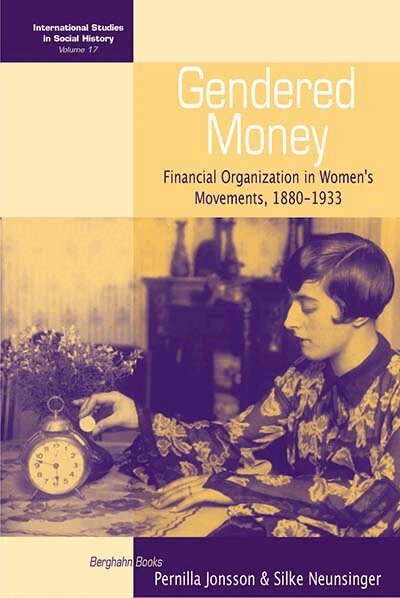
    Gendered Money

    Financial Organization in Women's Movements, 1880-1933

    AvPernilla Jonsson,Silke Neunsinger

    Inbunden, Engelska, 2011

    Del i serien International Studies in Social History

    1 916 kr

    Beställningsvara. Skickas inom 5-8 vardagar. Fri frakt över 249 kr.

    Beskrivning

    As economic citizenship was a pre-condition of full citizenship, the lack of economic autonomy was an important motivation during the early stages of the women’s movement. Independent of their class background, women had less access to not only financial resources but also social and cultural capital, i.e., member’s commitment. Resources are therefore of particular interest from a gender perspective, and this book sheds light on the importance of resources for women’s struggles for political rights. Highlighting the financial strategies of the first wave of Swedish middle-class and socialist women’s movements and comparing them with similar organizations in Germany, England, and Canada, the authors show the importance of class, gender, age, and the national context, offering a valuable contribution to the discussion of resource mobilization theories in the context of social movements.

    Produktinformation

    • Utgivningsdatum:2011-12-01
    • Mått:152 x 229 x 21 mm
    • Vikt:499 g
    • Format:Inbunden
    • Språk:Engelska
    • Serie:International Studies in Social History
    • Antal sidor:278
    • Förlag:Berghahn Books
    • ISBN:9780857452719

    Utforska kategorier

    • Socialhistoria och kulturhistoria inom Historia och arkeologi
    • Genusvetenskap inom Samhälle och politik

    Mer om författaren

    Pernilla Jonsson is Associate Professor in economic history and is currently working at The Swedish National Audit Office. She has been a researcher at the Department of Economic History at Uppsala University, Sweden. Her research deals with the influence of resources, financial strategies, and international networks on organizing and goal achievements in the first-wave women’s movement. She has also published on gender and the social reproduction of Swedish elites, as well as industrialization and marketing in 19th-century Sweden.

    Recensioner i media

    “This richly-documented volume raises questions of great interest to feminist historians and students of social movements. It employs a variety of sources that historians will appreciate and demonstrates a familiarity with the literature on social mobilization and on feminism that will appeal to sociologists and political scientists. It contributes to ongoing scholarly discussions and provides an important comparative perspective.”  ·  Michael Hanagan, Vassar College

    Innehållsförteckning

    • List of Figures and TablesAcknowledgementsForewordIntroduction: Funding women’s political struggle – a matter of gender and class?Collective action and resources – earlier researchWomen’s mobilising, class, resources and political opportunities – our theoretical point of departureComparing the Swedish caseEconomic and politic citizenship in SwedenSourcesDispositionChapter 1. The Fredrika Bremer Association 1884-1925The start upIdeas and agendasNew leadership and new directionsSummaryChapter 2. A ‘Bourgeois’ pioneer’s purseIncomeMembership feesBequests and donationsFundraising salesLotteriesState subsidies and supporting organisationsOutlaysPremisesMeetingsAdministration, political work and enlightenmentThe voice of the organisationA periodical as a philanthropic projectManifestationsAssets and liabilitiesLoan fundsBonds, real estates and sharesSummarising conclusionChapter 3. Human resources in the Fredrika Bremer AssociationMobilising – the value of membersGiving their time, commitment and skillsUseful contacts in Parliament and GovernmentPublicityFeminist and philanthropic networks within SwedenFeminist networks outside SwedenSummarising conclusionsChapter 4. Social democratic womenThe road to integrated separatism - women in the Swedish SAPEarlier researchForms and phases of the Swedish social democratic movement1880-1906: the paradox of gender unity and the mobilization of consensus1906-1930: organising separatelyBreaktrough from 1933Agendas and strategiesSummaryChapter 5. The price of turning women into socialistsSources of incomeContributions from the labour movementMembership feesExtra incomeSpendingMobilising members and votersInvestments in educationMorgonbris - the voice of social democratic women in Sweden- nearly an affiliated companyAdministrationGetting together - meetingsLabour Day, Birthdays and Funerals - Times for manifestationsAllocating moneyFinancial strategies: a summaryClass, gender and separatism - three factors in the financial strategies of socialist women’s movementsChapter 6. Human resources in social democratic women’s organizationsThe magic of numberGiving their time, commitment and skillsAccess to parliaments and governmentPublicityCross-class sisters? Cooperation among Swedish women’s organisationsInternational connectionsCompensating lack of education and moneyThe price of organising separately and the income from being integratedConclusion: Gendered MoneyIncomeIndependence through membership feesDonations, bequests and successful coalitionsFrom needle-works to lotteriesSpendingFeminist activists as economic agentsCompensating the lack of money to keep the organization goingHow did resources matter for Swedish Feminist politics?The costs of gendered citizenship?The resources mobilization theory and women’s organisingBibliographyIndex