• Fri frakt över 249 kr
  • •
  • Snabba leveranser
  • •
  • Billiga böcker
Kundservice

Du är på sajten för privatpersoner.

Företag, bibliotek eller offentlig verksamhet?

Du handlar på classic.bokus.com, där alla dina funktioner finns intakta.
Till classic.bokus.com
Bokus logotyp. Gå till startsidan.
  • Erbjudanden
  • Nyheter
  • Student
  • Topplistor
  • Barn & ungdom
  • Bokus Play
  • E-böcker
  • Pocketböcker
  • Spel & pussel

10% rabatt på allt med kod: NYSTART10 →

Sidfot

Mina sidor

    Hjälp

    • Kundservice
    • Vanliga frågor och svar
    • Frakt och leverans
    • Retur vid ångerrätt
    • Reklamera vara
    • Betalning
    • Köpvillkor
    • Allmänna villkor
    • Information om webbplatsens tillgänglighet

    Om Bokus

    • Om oss
    • Pressrum
    • För studenter
    • För företag
    • För bibliotek och offentlig verksamhet
    • För leverantörer
    • Hållbarhet

    Populärt

    • Aktuella erbjudanden
    • Presentkort
    • Studentlitteratur
    • Nya böcker
    • Topplistor
    • Signerade böcker
    • Engelska böcker

    Inspiration

    • Boktips
    • BookTok
    • Populära bokserier
    • Barnbokskaraktärer
    • Populära författare
    Logotyp för Bokus
    Följ oss på Facebook (extern länk)Följ oss på Instagram (extern länk)Följ oss på YouTube (extern länk)Följ oss på TikTok (extern länk)
    bokus @ CookiesAnpassa cookiesIntegritetspolicyKöpvillkor
    Till Citymail hemsida (extern länk)Till Budbee hemsida (extern länk)Till Postnord hemsida (extern länk)Till Schenker hemsida (extern länk)Till Early Bird hemsida (extern länk)Till Walleys hemsida (extern länk)
    1. Samhälle och politik
    2. Samhälle och kultur
    3. Kultur och medier
    4. Referensverk och tvärvetenskap

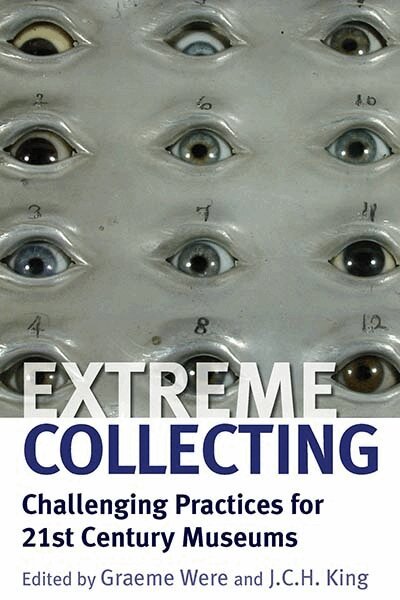
    Extreme Collecting

    Challenging Practices for 21st Century Museums

    AvGraeme Were,J. C. H. King

    Inbunden, Engelska, 2012

    1 834 kr

    Beställningsvara. Skickas inom 5-8 vardagar. Fri frakt över 249 kr.

    Beskrivning

    By exploring the processes of collecting, which challenge the bounds of normally acceptable practice, this book debates the practice of collecting ‘difficult’ objects, from a historical and contemporary perspective; and discusses the acquisition of objects related to war and genocide, and those purchased from the internet, as well as considering human remains, mass produced objects and illicitly traded antiquities. The aim is to apply a critical approach to the rigidity of museums in maintaining essentially nineteenth-century ideas of collecting; and to move towards identifying priorities for collection policies in museums, which are inclusive of acquiring ‘difficult’ objects. Much of the book engages with the question of the limits to the practice of collecting as a means to think through the implementation of new strategies.

    Produktinformation

    • Utgivningsdatum:2012-03-01
    • Mått:152 x 229 x 18 mm
    • Vikt:463 g
    • Format:Inbunden
    • Språk:Engelska
    • Antal sidor:248
    • Förlag:Berghahn Books
    • ISBN:9780857453631

    Utforska kategorier

    • Referensverk och tvärvetenskap inom Samhälle och politik

    Mer om författaren

    Graeme Were is Chair of Anthropology at the University of Bristol. His current research focuses on material culture and ethnographic museums; digital heritage and source community engagement; and, ethnomathematics in the Pacific. His recent publications include Lines that Connect: Rethinking Pattern and Mind in the Pacific (University of Hawai’i Press, 2010), and Pacific Pattern, with S. Küchler (Thames & Hudson, 2005). He is a Fellow of the Royal Anthropological Institute and an editor of the Journal of Material Culture.

    Recensioner i media

    “The book takes the study of materials innovation and design outside the prevalent focus on Western technoscience. Its focus on Pacific societies also raises the issue of digital return and, furthermore, digital technologies in the museum and heritage sector more broadly. In this connection, Were pushes beyond debates on authenticity and instead highlights digital technology’s productive potentials.” • Social Anthropology“…the chapters are well written and informative…this volume brings us back to the persistent relevance of objects and collecting to museums. Although architecture and community building have taken center stage in museum discourse, this volume reminds us of what museums continue to do: collect. The primacy of objects in making places, museums, memories, and history remains central to their endeavor.” • Visual Anthropology Review“This collection is an interesting concept, composed of telling case studies over a satisfying range of collecting topics... with some consideration of philosophical and theoretical perspectives.” • Linda Young, Deakin University

    Innehållsförteckning

    • List of FiguresExtreme Collecting: Dealing with Difficult ObjectsGraeme WerePart I: Dificult ObjectsChapter 1. The Material Culture of Persecution: Collecting for the Holocaust Exhibition at the Imperial War MuseumSuzanne BardgettChapter 2. Lyricism and Offence in Egyptian Archaeology CollectionsStephen QuirkeChapter 3. Contested Human RemainsJack LohmanChapter 4. Extreme or Commonplace: The Collecting of Unprovenanced AntiquitiesKathryn Walker TubbChapter 5. Unfit for Society? The Case of the Galton Collection at University College LondonNatasha McEnroePart II: Mass ProducedChapter 6. Knowing the NewSusan PearceChapter 7. T he Global Scope of Extreme Collecting: Japanese Woodblock Prints on the InternetRichard WilkChapter 8. A wkward Objects: Collecting, Deploying and Debating RelicsJan GeisbuschChapter 9. Great Expectations and Modest Transactions: Art, Commodity and CollectingHenrietta LidchiPart III: Extreme MattersChapter 10. Extremes of Collecting at the Imperial War Museum 1917–2009: Struggles with the Large and the EphemeralPaul CornishChapter 11. Plastics – Why Not? A Perspective from the Museum of Design in PlasticsSusan LambertChapter 12. T ime Capsules as Extreme CollectingBrian DurransChapter 13. Canning Cans – a Brand New Way of Looking at HistoryRobert Opie in conversation with J.C.H. KingNotes on ContributorsIndex