• Fri frakt över 249 kr
  • •
  • Snabba leveranser
  • •
  • Billiga böcker
Kundservice

Du är på sajten för privatpersoner.

Företag, bibliotek eller offentlig verksamhet?

Du handlar på classic.bokus.com, där alla dina funktioner finns intakta.
Till classic.bokus.com
Bokus logotyp. Gå till startsidan.
  • Erbjudanden
  • Student
  • Topplistor
  • Barn & ungdom
  • Bokus Play
  • E-böcker
  • Ljudböcker
  • Pocketböcker
  • Spel och pussel

5% studentrabatt – använd koden KURSBOK27 →

Sidfot

Mina sidor

    Hjälp

    • Kundservice
    • Vanliga frågor och svar
    • Frakt och leverans
    • Retur vid ångerrätt
    • Reklamera vara
    • Betalning
    • Köpvillkor
    • Allmänna villkor
    • Information om webbplatsens tillgänglighet

    Om Bokus

    • Om oss
    • Pressrum
    • För studenter
    • För företag
    • För bibliotek och offentlig verksamhet
    • För leverantörer
    • Hållbarhet

    Populärt

    • Aktuella erbjudanden
    • Presentkort
    • Studentlitteratur
    • Nya böcker
    • Topplistor
    • Signerade böcker
    • Engelska böcker

    Inspiration

    • Boktips
    • BookTok
    • Barnbokskaraktärer
    • Populära författare
    Logotyp för Bokus
    Följ oss på Facebook (extern länk)Följ oss på Instagram (extern länk)Följ oss på YouTube (extern länk)Följ oss på TikTok (extern länk)
    bokus @ CookiesAnpassa cookiesIntegritetspolicyKöpvillkor
    Till Citymail hemsida (extern länk)Till Budbee hemsida (extern länk)Till Postnord hemsida (extern länk)Till Schenker hemsida (extern länk)Till Early Bird hemsida (extern länk)Till Walleys hemsida (extern länk)
    1. Kultur
    2. Scenkonst och film
    3. Film

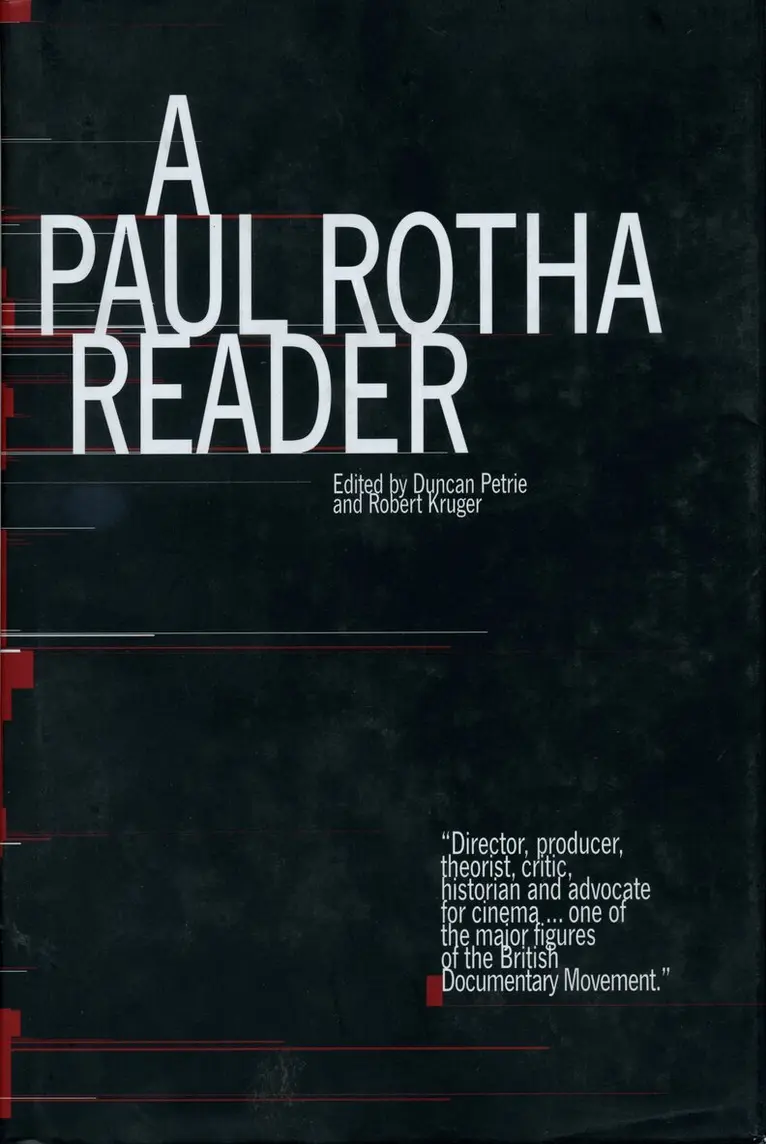
    Paul Rotha Reader

    AvDuncan Petrie,Robert Kruger

    Inbunden, Engelska, 1999

    Del i serien Exeter Studies in Film History

    1 021 kr

    Tillfälligt slut

    Beskrivning

    Paul Rotha was one of the major figures of the British Documentary Movement, second only to John Grierson. He was also a prolific writer, beginning with his celebrated book The Film Till Now, published in 1930. This volume brings together an edited collection of some of his most important writings and addresses a variety of topics including the theoretical basis of cinema, the emergence of an intellectual film culture in Britain, the state of the British film industry and his own experience of directing and producing films.A Paul Rotha Reader marks a major reappraisal of Rotha's significance as a theorist, critic and advocate for cinema as the most important form of mass communication in the modern world. It will be essential reading for anyone seriously interested in British cinema history.

    Produktinformation

    • Utgivningsdatum:1999-12-01
    • Mått:156 x 234 x 27 mm
    • Vikt:632 g
    • Format:Inbunden
    • Språk:Engelska
    • Serie:Exeter Studies in Film History
    • Antal sidor:304
    • Förlag:University of Exeter
    • ISBN:9780859896269

    Utforska kategorier

    • Film inom Kultur

    Mer om författaren

    Duncan Petrie is Professor in the Department of Theatre, Film and Television at the University of York. He was Director of the Bill Douglas Centre for the History of Cinema and Popular Culture. His books include Creativity and Constraint in the British Film Industry (Macmillan, 1991), New Questions of British Cinema (BFI, 1992), The British Cinematographer (BFI, 1996). Robert Kruger has worked as an editor, director and producer, mainly within the British documentary movement, and set up the TSW Film and Video Archive, now largest regional archive in the country. He started his working life with Paul Rotha's 'Films of Fact' company and edited Rotha's final two films.

    Recensioner i media

    "Rotha's writing itself seems incredibly fresh and vibrant. A no-nonsense, clearly written personal view of filmmaking, the book is a pleasure to read and triggers off many a train of thought about the nature of documentary filmmaking . . . As a starting-point for discussion about the thinking behind documentary and the effect it can have on the viewer, it is a highly stimulating collection . . . The introductory chapters pull into focus Rotha's aims and intentions which remind the reader what documentary has the potential to do. To make us think." (Journal of Popular British Cinema, Vol. 4, 2001)