• Fri frakt över 249 kr
  • •
  • Snabba leveranser
  • •
  • Billiga böcker
Kundservice

Du är på sajten för privatpersoner.

Företag, bibliotek eller offentlig verksamhet?

Du handlar på classic.bokus.com, där alla dina funktioner finns intakta.
Till classic.bokus.com
Bokus logotyp. Gå till startsidan.
  • Erbjudanden
  • Nyheter
  • Student
  • Topplistor
  • Barn & ungdom
  • Bokus Play
  • E-böcker
  • Pocketböcker
  • Spel & pussel

10% rabatt på allt med kod NYSTART10 →

Sidfot

Mina sidor

    Hjälp

    • Kundservice
    • Vanliga frågor och svar
    • Frakt och leverans
    • Retur vid ångerrätt
    • Reklamera vara
    • Betalning
    • Köpvillkor
    • Allmänna villkor
    • Information om webbplatsens tillgänglighet

    Om Bokus

    • Om oss
    • Pressrum
    • För studenter
    • För företag
    • För bibliotek och offentlig verksamhet
    • För leverantörer
    • Hållbarhet

    Populärt

    • Aktuella erbjudanden
    • Presentkort
    • Studentlitteratur
    • Nya böcker
    • Topplistor
    • Signerade böcker
    • Engelska böcker

    Inspiration

    • Boktips
    • BookTok
    • Populära bokserier
    • Barnbokskaraktärer
    • Populära författare
    Logotyp för Bokus
    Följ oss på Facebook (extern länk)Följ oss på Instagram (extern länk)Följ oss på YouTube (extern länk)Följ oss på TikTok (extern länk)
    bokus @ CookiesAnpassa cookiesIntegritetspolicyKöpvillkor
    Till Citymail hemsida (extern länk)Till Budbee hemsida (extern länk)Till Postnord hemsida (extern länk)Till Schenker hemsida (extern länk)Till Early Bird hemsida (extern länk)Till Walleys hemsida (extern länk)
    1. Historia och arkeologi
    2. Arkeologi
    3. Arkeologiska perioder och områden

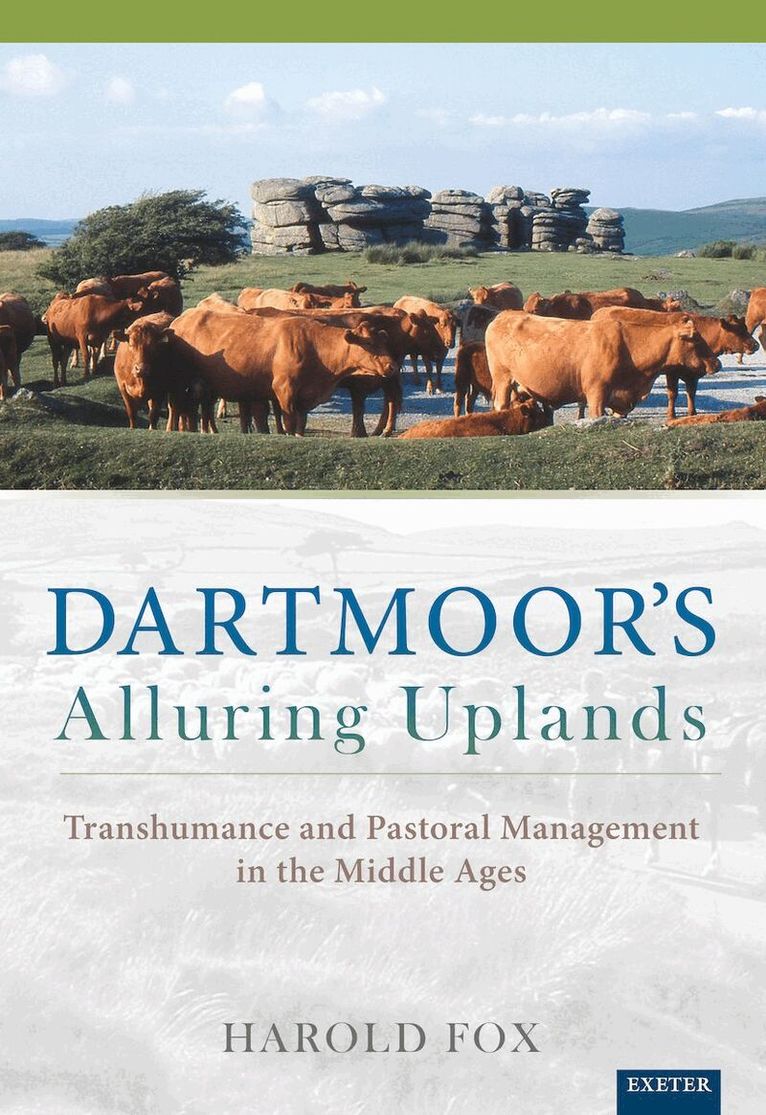
    Dartmoor's Alluring Uplands

    Transhumance and Pastoral Management in the Middle Ages

    AvHarold Fox,Matthew Tompkins

    Inbunden, Engelska, 2012

    1 153 kr

    Beställningsvara. Skickas inom 5-8 vardagar. Fri frakt över 249 kr.

    Fler format och utgåvor

    Häftad

    513 kr

    E-bok

    534 kr

    Beskrivning

    A striking and famous feature of the English landscape, Dartmoor is a beautiful place, with a sense of wildness and mystery. This book provides a new perspective on an important aspect of Dartmoor’s past. Its focus is transhumance: the seasonal transfer of grazing animals to different pastures.In the Middle Ages, intensive practical use was made of Dartmoor’s resources. Its extensive moorlands provided summer pasture for thousands of cattle from the Devon lowlands, which flowed in a seasonal tide, up in the spring and down in the autumn. This book describes, for the first time, the social organisation and farming practices associated with this annual transfer of livestock. It also presents evidence for a previously unsuspected Anglo-Saxon pattern of transhumance in which lowland farmers spent the summers living with their cattle on the moor.Winner of the Devon Book of the Year Award 2013.

    Produktinformation

    • Utgivningsdatum:2012-02-20
    • Mått:173 x 246 x 25 mm
    • Vikt:784 g
    • Format:Inbunden
    • Språk:Engelska
    • Antal sidor:320
    • Förlag:University of Exeter
    • ISBN:9780859898645

    Utforska kategorier

    • Arkeologiska perioder och områden inom Historia och arkeologi

    Mer om författaren

    The late Harold Fox was born and brought up in South Devon, and was Professor of Social and Landscape History at the Centre for English Local History, University of Leicester. He was a recognised authority on late-medieval landscape, agrarian and social history, particularly in the South-West and Midlands, and had served as president of the Medieval Settlement Research Group, chairman of the Society for Landscape Studies, vice-president of the English Place-Names Society and president of the Devon History Society.Sadly he died before completing the final stages of this book, but two colleagues from the University of Leicester’s Centre for English Local History have brought it to the point of publication.Matthew Tompkins is Honorary Visiting Fellow at the Centre for English Local History, University of Leicester. Christopher Dyer is Emeritus Professor at the Centre for English Local History, University of Leicester.

    Recensioner i media

    “His scholarship is meticulous; his knowledge of medieval documents, his skill in reading them (literally and in a deeper sense), and his understanding of context are skilfully deployed to answer a series of questions germane to his overall theme. This book is his masterwork; it is without question one of the most original contributions to the medieval history – and landscape history – of Dartmoor and Devon written in recent years. It is also an important contribution to the study of medieval transhumance in Britain.”Andrew Fleming, Emeritus Professor of Archaeology, University of Lampeter, Wales‘...written in a typical Fox style’‘...both elegant and richly learned. The reader is quickly aware of deep currents of knowledge that lie beneath a sparkling, bubbling flow of fascinating chapters.’‘His vivid writing brings the hills and rivers to life and fills them with fascinating characters.’‘I found this a compelling read.’‘We must remember and thank Harold Fox for leading us along new roads to Dartmoor and beyond’.(Medieval Settlement Research, No 27, Autumn 2012,Sam Turner)‘his last publication, typically questioning and skilfully executed’(The Local Historian, Volume 42, Number 4, November 2012)‘Fox’s study is brilliant, speculative, insightful and infuriating by turns. It is exemplary landscape history in the hands of a skilled practitioner who walked the drove roads and read the documents’(British Archaeology, July/August 2012, Mark Gardiner)‘His affection for its community meant he wrote more for pragmatic Devonshire people and practical historians than for outsiders with romanticised views of Dartmoor. He wished to encourage and support local farmers by preparing an authoritative account of their history, regarding them as the wisest of Dartmoor’s ecologists, defending customs and grazings developed over many generations. The Moor, marginal to many, is in Fox’s hands in Devon’s enormous pool of available common pasture.’‘Harold Fox, in his final work, encourages all with an interest in our historic landscape to acknowledge the possibility that their own local patterns, colours and character were shaped by accommodation and servicing of seasonal movements of people and livestock…’ (Landscape History, 2013, Vol. 34 No.1, Peter Herring)‘The book, which has been completed with clarity by its editors to form a compelling read, makes the best-possible case for the profound inter-dependence in history of the area we now call Dartmoor, and surrounding lowland Devon.’(Devonshire Association’s Transactions, 2012, Vol.144)“Fox weaves [...] diverse fragments of evidence into a compelling and convincing reconstruction of the economy and society of medieval Dartmoor. This is a magisterial work, characterised by excellent judgement and scholarship.” (Mark Bailey, The English Historical Review, Volume CXXIX No. 538, June 2014)

    Innehållsförteckning

    • List of Colour PlatesList of FiguresList of TablesEditors’ AcknowledgementsAbbreviations Introduction by Christopher Dyer and Matthew Tompkins1. Definitions and limitationsDefining Dartmoor’s resourcesDartmoor and its partsTranshumance and its typesLimitations of this book2. The red tides: impersonal transhumance and the central moorThe central moor: ownership and commonersDistances travelled and middlemenPastoral management: the herdsman’s yearLivestock: numbers and types3. The red tides: impersonal transhumance and the outer moorsOwnership and commonersPastoral management: drifts, structures, straysPerambulation and dispute resolutionOrder and disorder: outer moors and the central moor4. Personal transhumance: distant detachmentsCockington and DewdonIpplepen, Abbotskerswell and their linksDetached parts of the hundreds of Exminster, Wonford and KerswellKenton with HeatreePaignton and its partsLifton and SourtonNorthlew, Venn and LettafordTavistock and CudlippBickleigh and SheepstorThe significance of the detachments5. Personal transhumance: archaeology, topography, place-namesand history Archaeology and topographyPlace-names and history: economy and society6. Domesday Book and beyond: the transition from personal to impersonal transhumanceThe role of colonistsThe role of lordsThe role of the Crown7. Dartmoor and beyondDrovewaysPastoral husbandryThe implications of transhumance for lowland farmingConclusion by Christopher Dyer and Matthew TompkinsNotesBibliographyIndex