• Fri frakt över 249 kr
  • •
  • Snabba leveranser
  • •
  • Billiga böcker
Kundservice

Du är på sajten för privatpersoner.

Företag, bibliotek eller offentlig verksamhet?

Du handlar på classic.bokus.com, där alla dina funktioner finns intakta.
Till classic.bokus.com
Bokus logotyp. Gå till startsidan.
  • Erbjudanden
  • Nyheter
  • Student
  • Topplistor
  • Barn & ungdom
  • Bokus Play
  • E-böcker
  • Pocketböcker
  • Spel & pussel

10% rabatt på allt med kod NYSTART10 →

Sidfot

Mina sidor

    Hjälp

    • Kundservice
    • Vanliga frågor och svar
    • Frakt och leverans
    • Retur vid ångerrätt
    • Reklamera vara
    • Betalning
    • Köpvillkor
    • Allmänna villkor
    • Information om webbplatsens tillgänglighet

    Om Bokus

    • Om oss
    • Pressrum
    • För studenter
    • För företag
    • För bibliotek och offentlig verksamhet
    • För leverantörer
    • Hållbarhet

    Populärt

    • Aktuella erbjudanden
    • Presentkort
    • Studentlitteratur
    • Nya böcker
    • Topplistor
    • Signerade böcker
    • Engelska böcker

    Inspiration

    • Boktips
    • BookTok
    • Populära bokserier
    • Barnbokskaraktärer
    • Populära författare
    Logotyp för Bokus
    Följ oss på Facebook (extern länk)Följ oss på Instagram (extern länk)Följ oss på YouTube (extern länk)Följ oss på TikTok (extern länk)
    bokus @ CookiesAnpassa cookiesIntegritetspolicyKöpvillkor
    Till Citymail hemsida (extern länk)Till Budbee hemsida (extern länk)Till Postnord hemsida (extern länk)Till Schenker hemsida (extern länk)Till Early Bird hemsida (extern länk)Till Walleys hemsida (extern länk)
    1. Kultur
    2. Scenkonst och film
    3. Film

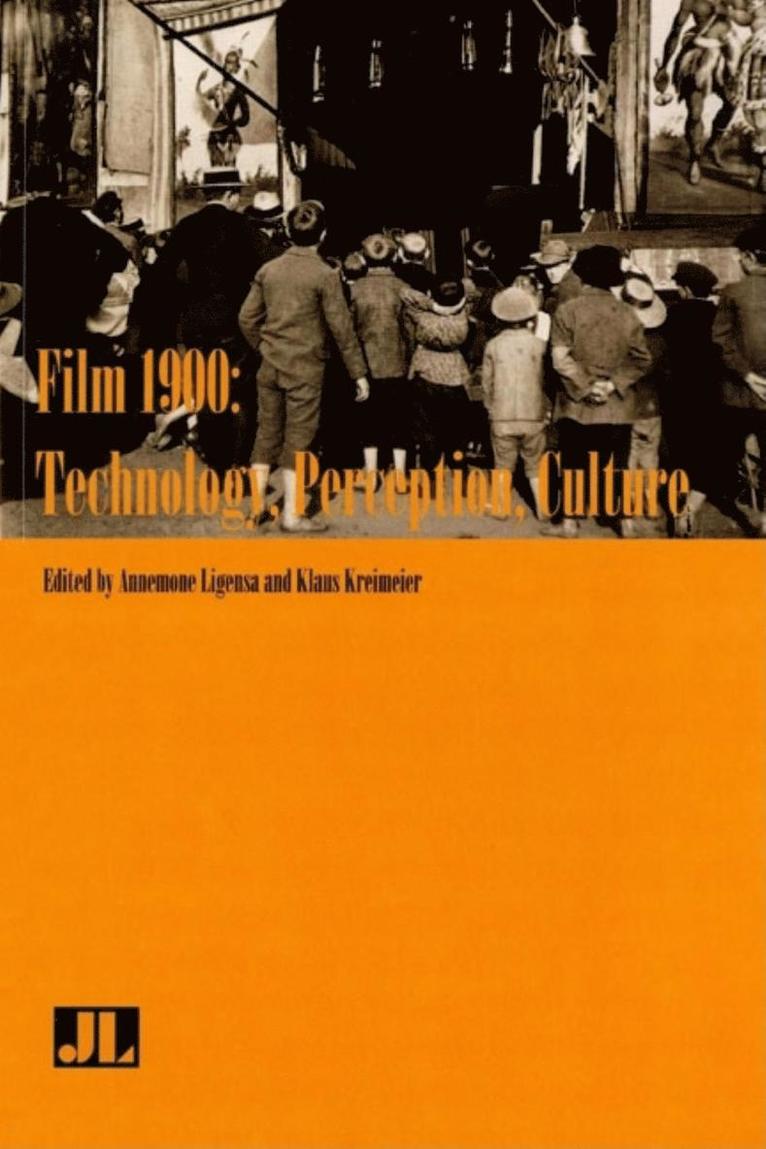
    Film 1900

    Technology, Perception, Culture

    AvKlaus Kreimeier,Annemone Ligensa

    Häftad, Engelska, 2009

    Del i serien Indiana University Press (IPS)

    298 kr

    Beställningsvara. Skickas inom 5-8 vardagar. Fri frakt över 249 kr.

    Beskrivning

    The current digital revolution has sparked a renewed interest in the origins and trajectory of modern media, particularly in the years around 1900 when the technology was rapidly developing. This collection aims to broaden our understanding of early cinema as a significant innovation in media history. Joining traditional scholarship with fresh insights from a variety of disciplines, this book explains the aesthetic and institutional characteristics in early cinema within the context of the contemporary media landscape. It also addresses transcultural developments such as scientific revolutions, industrialization, urbanization, and globalization, as well as differing attitudes toward modernization. Film 1900 is an important reassessment of early cinema's position in cultural history.

    Produktinformation

    • Utgivningsdatum:2009-10-05
    • Mått:152 x 229 x 14 mm
    • Vikt:435 g
    • Format:Häftad
    • Språk:Engelska
    • Serie:Indiana University Press (IPS)
    • Antal sidor:256
    • Förlag:John Libbey & Co
    • ISBN:9780861966967

    Utforska kategorier

    • Film inom Kultur

    Mer om författaren

    Klaus Kreimeier is Professor Emeritus of Media Studies at the University of Siegen, Germany. Annemone Ligensa received her M.A. in Theater, Film, and Television Studies from the University of Cologne, Germany, where she also worked as a lecturer in Media Psychology.

    Recensioner i media

    "The capable Ligensa and Kreimeier invited a coterie of renowned Continental scholars and thinkers to reflect on issues of modernity and cinema by harking back to the fin de siècle. Such archeological excavations into the cinema of attractions enable one to critique the specific predicament in the 21st century. Using a concept of 'triangulation,' the contributors look at the interrelationships between film, culture, and spectators (i.e., how they construed the emerging film apparatus of early silent film as it both shaped and was itself transformed by culture): for example, the eminent Thomas Elsaesser plays with the trope of the naïve rube spectator who pops up throughout the history of media. Though technical and complex, the essays are not too abstruse for those fascinated with the moments of modernity (e.g., industrialization, urbanization, synchronicity, medical psychology, and so on) and the dynamics of perceptions (even, curiously enough, hypnosis). Particularly noteworthy for its richness is Kreimeier and Tom Gunning's foray into the energetic, thrilling spectacle of truly sensational motion (as in the phantom rides), where heightened consciousness of spatial landscapes challenges perception. Summing Up: Highly recommended. Graduate students, researchers, faculty. — Choice"—T. Lindval, Virginia Wesleyan College, March 2010

    Innehållsförteckning

    • Introduction: Triangulating a Turn: Film 1900 as Technology, Perception and CultureAnnemone Ligensa1. Archaeologies of Interactivity: Early Cinema, Narrative and SpectatorshipThomas Elsaesser2. Viewing Change, Changing Views: The 'History of Vision'-DebateFrank Kessler3. The Ambimodernity of Early Cinema Problems and Paradoxes in the Film-and-Modernity DiscourseBen Singer4. Mind, the Gap: The Discovery of Physiological TimeHenning Schmidgen5. 'Is Everything Relative?': Cinema and the Revolution of Knowledge Around 1900Harro Segeberg6. The Aesthetic Idealist as Efficiency Engineer: Hugo Munsterberg's Theories of Perception, Psychotechnics and CinemaJörg Schweinitz7. Between Observation and Spectatorship: Medicine, Movies and Mass Culture in Imperial GermanyScott Curtis8. The Scene of the Crime: Psychiatric Discourse on the Film Audience in Early Twentieth Century GermanyAndreas Killen9. Seen Through the Eyes of Simmel: The Cinema Programme as a 'Modern' ExperienceAndrea Haller10. 'Under the Sign of the Cinematograph': Urban Mobility and Cinema Location in Wilhelmine BerlinPelle Snickars12. Perceptual Environments for Films: The Development of Cinema in Germany, 1895-1914Joseph Garncarz12. 'Fumbling Towards Some New Form of Art': The Changing Composition of Film Programmes in Britain, 1908-1914Ian Christie and John Sedgwick13. The Attraction of Motion: Modern Representation and the Image of MovementTom Gunning14. 'Dashing Down Upon the Audience': Notes on the Genesis of Filmic PerceptionKlaus Kreimeier15. German Tonbilder of the 1900s: Advanced Technology and National BrandMartin Loiperdinger16. Sculpting with Light: Early Film Style, Stereoscopic Vision and the Idea of a 'Plastic Art In Motion'Michael Wedel17. 'A Cinematograph of Feminine Thought': The Dangerous Age, Cinema and Modern WomenAnnemone Ligensa14. Cinema as a Mode(l) of Perception: Dorothy Richardson's Novels and EssaysNicola GlaubitzBiographies of the Authors