• Fri frakt över 249 kr
  • •
  • Snabba leveranser
  • •
  • Billiga böcker
Kundservice

Du är på sajten för privatpersoner.

Företag, bibliotek eller offentlig verksamhet?

Du handlar på classic.bokus.com, där alla dina funktioner finns intakta.
Till classic.bokus.com
Bokus logotyp. Gå till startsidan.
  • Erbjudanden
  • Nyheter
  • Student
  • Topplistor
  • Barn & ungdom
  • Bokus Play
  • E-böcker
  • Pocketböcker
  • Spel & pussel

10% rabatt på allt med kod: NYSTART10 →

Sidfot

Mina sidor

    Hjälp

    • Kundservice
    • Vanliga frågor och svar
    • Frakt och leverans
    • Retur vid ångerrätt
    • Reklamera vara
    • Betalning
    • Köpvillkor
    • Allmänna villkor
    • Information om webbplatsens tillgänglighet

    Om Bokus

    • Om oss
    • Pressrum
    • För studenter
    • För företag
    • För bibliotek och offentlig verksamhet
    • För leverantörer
    • Hållbarhet

    Populärt

    • Aktuella erbjudanden
    • Presentkort
    • Studentlitteratur
    • Nya böcker
    • Topplistor
    • Signerade böcker
    • Engelska böcker

    Inspiration

    • Boktips
    • BookTok
    • Populära bokserier
    • Barnbokskaraktärer
    • Populära författare
    Logotyp för Bokus
    Följ oss på Facebook (extern länk)Följ oss på Instagram (extern länk)Följ oss på YouTube (extern länk)Följ oss på TikTok (extern länk)
    bokus @ CookiesAnpassa cookiesIntegritetspolicyKöpvillkor
    Till Citymail hemsida (extern länk)Till Budbee hemsida (extern länk)Till Postnord hemsida (extern länk)Till Schenker hemsida (extern länk)Till Early Bird hemsida (extern länk)Till Walleys hemsida (extern länk)
    1. Filosofi och religion
    2. Religion och tro
    3. Islam

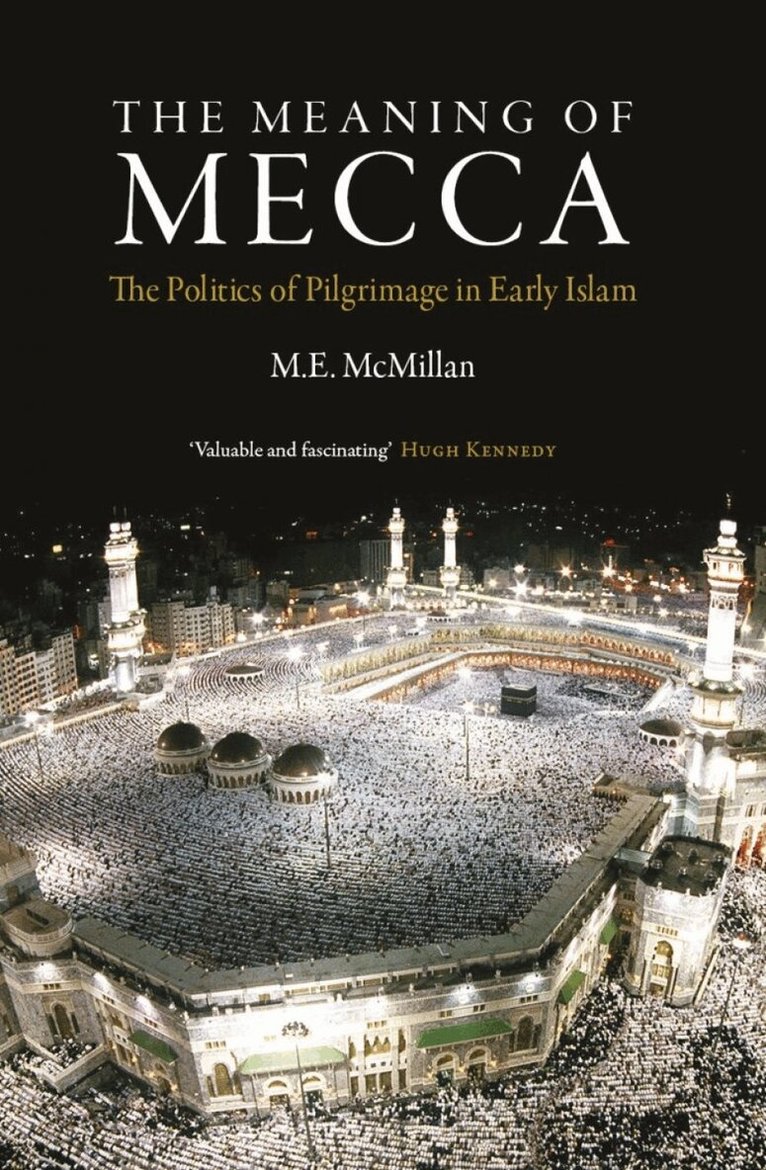
    Meaning of Mecca

    The Politics of Pilgrimage in Early Islam

    AvM. E. McMillan

    Inbunden, Engelska, 2011

    290 kr

    Beställningsvara. Skickas inom 5-8 vardagar. Fri frakt över 249 kr.

    Beskrivning

    The hajj, the fifth pillar of Islam, is a religious duty to be performed once in a lifetime by all Muslims who are able. The Prophet Muhammad set out the rituals of hajj when he led what became known as the Farewell Hajj in 10 AH / 632AD. This set the seal on Muhammad's career as the founder of a religion and the leader of a political entity based on that religion. The convergence of the Prophet with the politician infuses the hajj with political, as well as religious, significance. For the caliphs who led the Islamic community after Muhammad's death, leadership of the hajj became a position of enormous political relevance as it presented them with an unrivalled opportunity to proclaim their pious credentials and reinforce their political legitimacy.

    Produktinformation

    • Utgivningsdatum:2011-09-20
    • Mått:160 x 240 x 27 mm
    • Vikt:424 g
    • Format:Inbunden
    • Språk:Engelska
    • Antal sidor:300
    • Förlag:Saqi Books
    • ISBN:9780863564376

    Utforska kategorier

    • Islam inom Filosofi och religion
    • Religion: allmänt inom Filosofi och religion

    Mer om författaren

    ME McMillan earned a PhD in Islamic History at the University of St Andrews, and has worked for the UN Security Council as a translator. The author lives in Belfast, Northern Ireland.

    Recensioner i media

    Endorsements: 'The history of the pilgrimage to Mecca stands out as the most important understudied topic in Islamic history, particularly for the pre-Ottoman period. M.E. McMillan has written an impressive foundational study covering the Rashidun and Umayyad periods. Hopefully it will inspire further work of an equally high standard.' Richard W. Bulliet, Professor of History, Columbia University "The Hajj is central to the Muslim experience and yet the history of this great institution has been very little studied. This book provides a valuable and fascinating insight into the experience of the Hajj in the early Islamic period and how the leadership of the pilgrims came to acquire a major political importance in the Umayyad caliphate. This new approach will be of great interest both to historians of the early Islamic world and those who want to understand the evolution of this great religious event." Hugh Kennedy, professor of Arabic, School of Oriental and African Studies

    Innehållsförteckning

    • Contents Acknowledgements 13 Introduction: The Politics of Pilgrimage 15 1. The prophet's precedent: the farewell ?ajj of 10/632 The Prophet and The Pilgrimage 19 The Rituals of the ?ajj 21 The Meaning of Mecca for the Muslim Community 25 2. Following in the prophet's footsteps: the era of the rightly guided caliphs Table 1 29 Abu Bakr: Leadership of the ?ajj and the Nature of Authority in Islam 32 'Umar and 'Uthman: The ?ajj as a Channel of Communication 35 'Ali b. Abi ?alib: All Roads Do Not Lead to Mecca 39 The ?ajj as a Platform for Rebellion 41 Conspicuous by Their Absence: Who Did Not Lead the ?ajj 43 3. Mu'awiyah b. abi sufyan: a new regime and a new ?ajj policy Table 2 45 Mu'awiyah and Leadership of the ?ajj 47 Political Choreography: The ?ajj of the Caliph's Successor Son 51 The Ruling Family and Leadership of the ?ajj 54 Leading the ?ajj by Proxy: The Governorship of Medina and the Politics of Martyrdom 56 Conspicuous by Their Absence: Who Did Not Lead the ?ajj 60 4. The caliphate in transition: the ?ajj as a barometer of political change Table 3 63 Yazid and Leadership of the ?ajj: The ?aram as an Ideological Battleground 65 Ibn al-Zubayr: Rebel or Ruler? 70 10 The meaning of mecca Alternative Uses of the ?ajj: The ?aram as the Centre of an Information Network 73 The ?ajj of 68 AH: A Platform for Rebellion 75 5. The return of the umayyads and the reintroduction of the sufyanid ?ajj policy Table 4 77 A Tale of Two Holy Cities: Mecca, Jerusalem and the ?ajj 79 The ?ajj of 72 AH: A Barometer of Political Change 81 Restoring Precedent: The Caliph's Victory ?ajj of 75 AH 84 The Issue of Succession: The ?ajj Seasons of 78 AH and 81 AH 86 The Governors of Medina and Leadership of the ?ajj: The Sufyanid Model Revisited 89 6. A house dividing: the successor sons of 'abd al-malik: al-walid and sulayman Table 5 95 Power and Patronage: The Caliphal ?ajj of 91 AH 97 Following in His Predecessors' Footsteps: Al-Walid's Succession Policy and Leadership of the ?ajj 100 Following in His Predecessors' Footsteps II: Al-Walid's Governors of Medina and Leadership of the ?ajj 102 The Caliphal Pilgrimage of 97 AH: ?ajj and Jihad in the Same Year 106 The Politics of Protest: Sulayman's Governors of the Holy Cities and Leadership of the ?ajj 110 7. 'Umar ii and yazid ii: a different approach to the ?ajj Table 6 115 'Umar II: A ?ajj Policy Based in the ?ijaz 116 Yazid II: Another ?ajj Policy Based in the ?ijaz 119 'Umar II, Yazid II and Leadership of the ?ajj: Some Unanswered Questions 123 8. The last of a line: hisham b. 'abd al-malik Table 7 127 Restoring Precedent: The Caliphal ?ajj of 106 AH 130 The ?ajj of the Heir Apparent in 116 AH 134 contents 11 The ?ajj of the Would-Be Heir Apparent in 119 AH 136 Keeping it in the Family: Hisham's Governors of the Holy Cities and Leadership of the ?ajj 139 All Roads Lead to Mecca: The ?ajj as a Platform for Rebellion 141 9. The third and final generation: al-walid ii to marwan ii Table 8 143 The ?ajj of 125 AH: The Politics of Reprisal Revisited 145 The ?ajj of 126 AH: The Search for Umayyad Unity 149 The Ongoing Search for Umayyad Unity: The ?ajj Seasons of 127 AH and 128 AH 153 The ?ajj Seasons 129 AH to 131 AH: Power Slips Away 155 10. Summary: the meaning of mecca Power and Patronage at the Pilgrimage 161 Governing Islam's First Cities and Leadership of the ?ajj 162 The Politics of Protest: Alternative Uses of the ?ajj 164 The Politics of Pilgrimage 165 Appendix A: The Sources and Their Challenges 167 Appendix B: Further Reading on the ?ajj and the Umayyads 177 Bibliography 183 Index 191