• Fri frakt över 249 kr
  • •
  • Snabba leveranser
  • •
  • Billiga böcker
Kundservice

Du är på sajten för privatpersoner.

Företag, bibliotek eller offentlig verksamhet?

Du handlar på classic.bokus.com, där alla dina funktioner finns intakta.
Till classic.bokus.com
Bokus logotyp. Gå till startsidan.
  • Erbjudanden
  • Nyheter
  • Student
  • Topplistor
  • Barn & ungdom
  • Bokus Play
  • E-böcker
  • Pocketböcker
  • Spel & pussel

10% rabatt på allt med kod: NYSTART10 →

Sidfot

Mina sidor

    Hjälp

    • Kundservice
    • Vanliga frågor och svar
    • Frakt och leverans
    • Retur vid ångerrätt
    • Reklamera vara
    • Betalning
    • Köpvillkor
    • Allmänna villkor
    • Information om webbplatsens tillgänglighet

    Om Bokus

    • Om oss
    • Pressrum
    • För studenter
    • För företag
    • För bibliotek och offentlig verksamhet
    • För leverantörer
    • Hållbarhet

    Populärt

    • Aktuella erbjudanden
    • Presentkort
    • Studentlitteratur
    • Nya böcker
    • Topplistor
    • Signerade böcker
    • Engelska böcker

    Inspiration

    • Boktips
    • BookTok
    • Populära bokserier
    • Barnbokskaraktärer
    • Populära författare
    Logotyp för Bokus
    Följ oss på Facebook (extern länk)Följ oss på Instagram (extern länk)Följ oss på YouTube (extern länk)Följ oss på TikTok (extern länk)
    bokus @ CookiesAnpassa cookiesIntegritetspolicyKöpvillkor
    Till Citymail hemsida (extern länk)Till Budbee hemsida (extern länk)Till Postnord hemsida (extern länk)Till Schenker hemsida (extern länk)Till Early Bird hemsida (extern länk)Till Walleys hemsida (extern länk)
    1. Naturvetenskap och teknik
    2. Matematik och naturvetenskap
    3. Matematik
    4. Matematikens filosofi

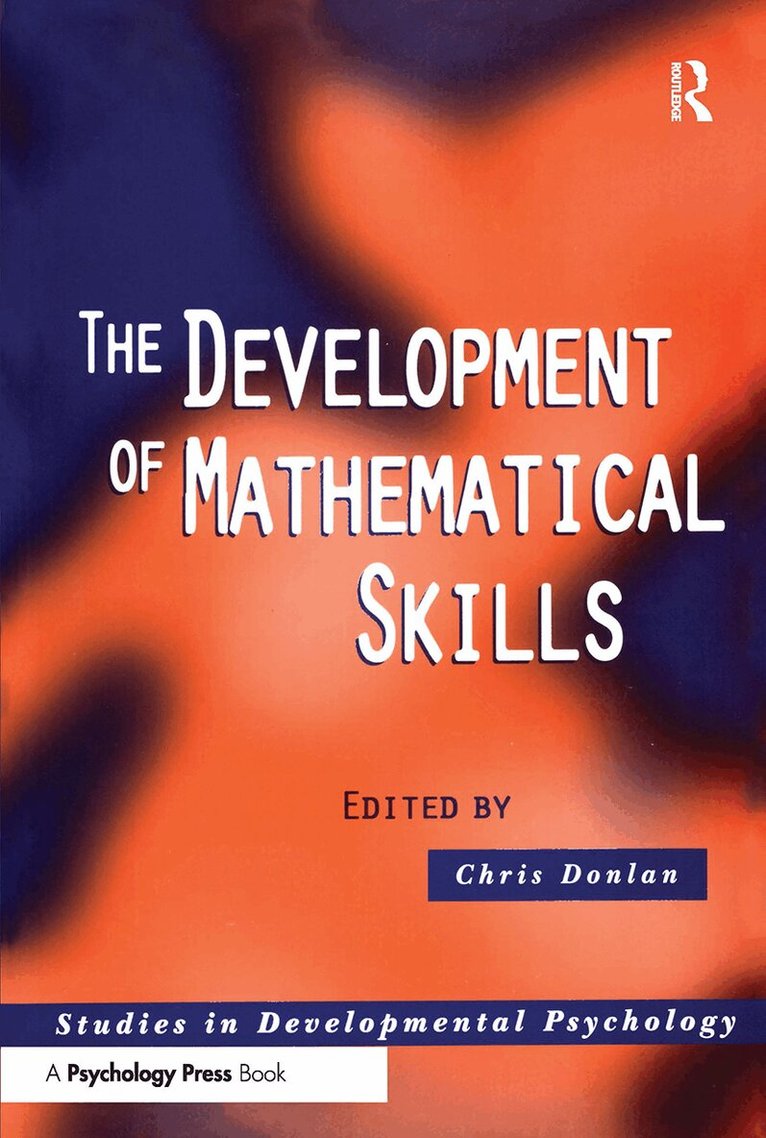
    Development of Mathematical Skills

    AvChris Donlan

    Häftad, Engelska, 2000

    Del i serien Studies in Developmental Psychology

    709 kr

    Beställningsvara. Skickas inom 10-15 vardagar. Fri frakt över 249 kr.

    Beskrivning

    Current research into the psychology of children's mathematics is extremely diverse. The present volume reflects this diversity; it is unique in its breadth, bringing together accounts of cutting-edge research from widely differing, sometimes opposing viewpoints. The reader with a grounding in developmental psychology but no knowledge of mathematical development will enjoy a wide ranging and challenging summary of current trends. Those already familiar with some of the work may take the opportunity to broaden their knowledge and to evaluate new methodologies and the insights they offer.The book is an invitation to explore a complex set of phenomena for which no unitary explanation can be offered. It aims to show that apparently disparate research perspectives may be complementary to each other; and to suggest that progress towards a comprehensive account of mathematical skills may require a broad-based understanding of research from more than one viewpoint.

    Produktinformation

    • Utgivningsdatum:2000-03-02
    • Mått:156 x 234 x 19 mm
    • Vikt:612 g
    • Format:Häftad
    • Språk:Engelska
    • Serie:Studies in Developmental Psychology
    • Antal sidor:352
    • Förlag:Taylor & Francis Ltd
    • ISBN:9780863778179

    Utforska kategorier

    • Matematikens filosofi inom Naturvetenskap och teknik
    • Barnpsykologi och utvecklingspsykologi inom Psykologi och pedagogik

    Mer om författaren

    Chris Donlan

    Innehållsförteckning

    • Section 1: Pre-school mathematical understanding. Numerical competence in infants. A developmental perspective on children's counting. Symbolic function in pre-schoolers. Section 2: Mathematical understanding and mathematical performance. The relationship between conceptual and procedural knowledge in learning mathematics: A review. Doing mathematics as situated practice. Mathematics across national boundaries: Cultural and linguistic perspectives on numerical competence. Section 3: Working memory and mental calculation: Effects of age and anxiety. Children's mental arithmetic and working memory. On the cognitive consequences of mathematics anxiety. Section 4: Sources of individual difference in mathematical development. Cognitive neuropyschology and developmental dyscalculia. Is hearing impairment a cause of difficulties in learning mathematics? Number without language? Studies of children with specific language impairments. Individual differences in normal arithmetical development.