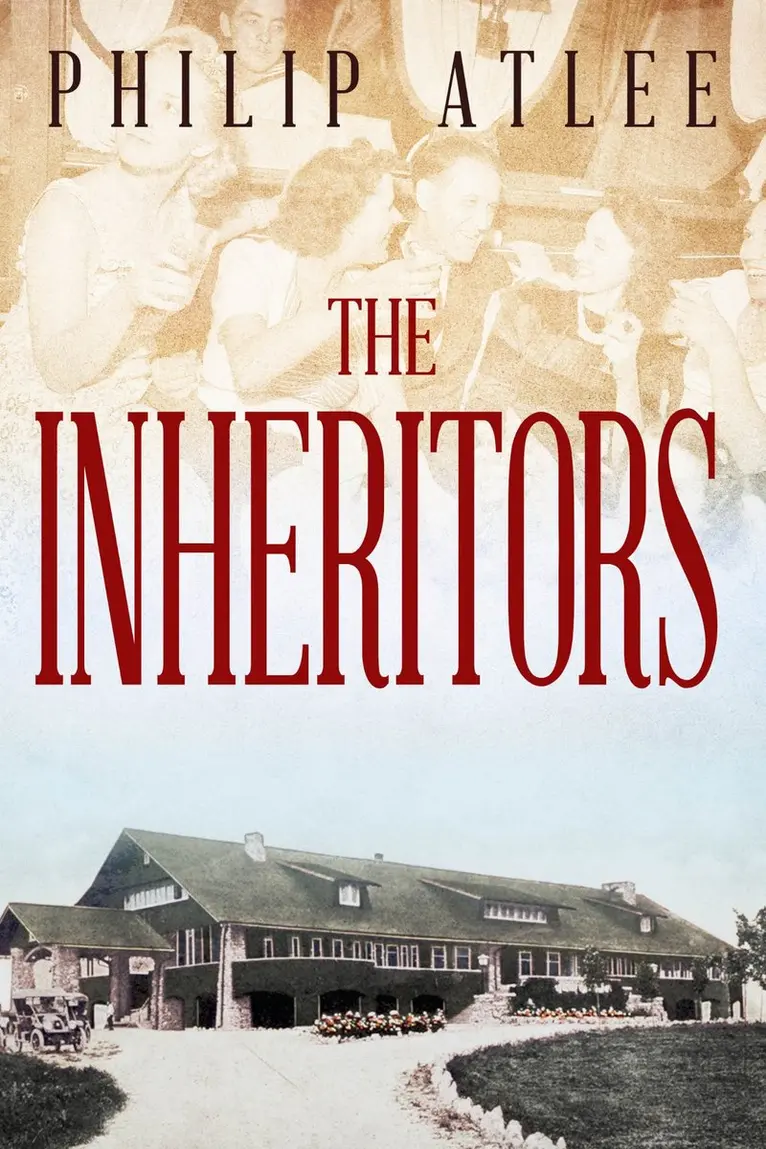
Häftad, Engelska, 2026
The Inheritors
Av Philip Atlee
337 kr
Beställningsvara. Skickas inom 10-15 vardagar. Fri frakt över 249 kr.
Beskrivning
Produktinformation
- Utgivningsdatum: 2026-09-15
- Mått: 152 x 229 x 14 mm
- Vikt: 322 g
- Format: Häftad
- Språk: Engelska
- Antal sidor: 208
- Förlag: Texas Christian University Press
- Medarbetare: E.R. Bills
- ISBN: 9780875659695
Utforska kategorier
Mer om författaren
James Young Phillips was born on Jan. 8, 1915, in Fort Worth. His father was a lawyer for members of the River Crest Country Club’s big oil families and the family was quite well off. Phillips’s father was a prominent member of a major law firm, the director of a local bank and the president of the prestigious Fort Worth Club. He was well-connected and the family enjoyed a mansion right off one of the greens of the exclusive River Crest Country Club golf course. James and his three brothers led a charmed existence until his father succumbed to pneumonia in the late summer of 1928. The elder Phillips’s affairs were in order, but the 1929 stock market crash wiped out the family’s fortune. Practically destitute, James’s mother sold what she could from their big house and went to work for the Fort Worth Independent School District. She and her sons were suddenly poor in a stately home located in one of the wealthiest neighborhoods in the nation. This turn of events no doubt shaped how James Young Phillips and “Philip Atlee” would come to view what is referred to in The Inheritors as the “dollar aristocracy,” but it doesn’t diminish the power or the acuity of the perspective. Phillips may have melodramatically envisioned himself a “Threadbare Galahad” (one of the original working titles for this book), but the pages evidence the virility of a Hemingway, the poetic sense of Fitzgerald and the intellectual vitality of a Steinbeck.
Recensioner i media
"On this score Mr. Atlee's publishers reassure us by attesting that he was born in Fort Worth, Texas, in 1915, yet such reassurance was hardly necessary. Here, obviously, is no academic study of Country Club younger set members, but a portrayal by a writer whose familiarity with his subject is that of a very recent ex-member. If Fort Worth's fast younger set of 1935 had a corporate existence, no doubt they would sue Mr. Atlee for defamation, unmollified by his prefatory declaration that conditions described in the story are not typical of youth in the middle Thirties. While one might agree that similar conditions existed in many urban centers, some readers will, with excusable acerbity, deny that 'the story could have been told anywhere in America, about any place that had a country club.' Comparing The Inheritors with its congeners of the Scott Fitzgerald succession, one notes among the similarities an inclination to place the blame for the follies of youth on the fathers—neglectful fathers too occupied with pleasure or business to give proper attention to the guidance of their offspring. Paternal neglect, so often assumed to be a peculiarly American failing, is no doubt a universal error. One suspects that the prodigal son would have been handed a cold boiled potato had not his father sought to compound with a guilty conscience; and had Pericles not devoted all his time and thought to the public affairs of Athens and the construction of the Parthenon his sons would certainly not have turned out such a disreputable lot. Fort Worth's "Inheritors" are the grandsons of the oil operators and cattle barons of the late nineteenth century. The neglected sons of those lusty men of action spent their inheritances in luxurious living, giving their children little beyond the college education which the mores of our times demand of even the most neglectful well-to-do parents. At home there was no attempt to prepare the boys for the hard knocks of life, no inculcation of the copybook virtues, no implanting of the idea of social responsibility. Either they would inherit a fortune, in which case there would be no need to worry, since money can solve all problems, or they would be expected to replenish depleted family coffers by the most practical means short of highway robbery. When the Depression threw many of these young hedonists on their own resources they generally made a sad mess of affairs. George Bellamy Jimble 3rd, who with his friend, Cavin Jarvis, started a small business venture, tells what happened to him and his circle. This tale of a social group “indoctrinated with the virus of dollar aristocracy" is far from edifying. The men are chiefly concerned with drink, gambling and seduction; the women are, for the most part, as unprincipled as the men. Business dishonesty is applauded if it can be managed with safety. To be sure there are some hilariously funny scenes; the characterizations are well done and the story moves along with the driving force of a virile style; but the cumulative effect on the reader of this highly sensational variety of social criticism is of having spent an evening in most uncongenial company. It is to be hoped that in his next book Mr. Atlee will use his gifts of humor and narrative skill to portray a more normal and saner circle than that of Messrs. Jimble and Jarvis." —The New York Times Book Review, November 10, 1940."This is a book that will appeal to those who started on Fitzgerald and followed through to O'Hara, and who demand the best in that particular genre. It is even tougher than O'Hara; there's son of James Cain's sadistic side; it is a full- blooded job, written in a virile, vital, prose style which makes a terrific impact. A 'bare, transcripted tale of youth', such a youth as you might meet in any middle-sized town (though Fort Worth is the setting). There are country clubs, swimming pools, dollar conscious fathers and culture conscious mothers, with their 'inheritors' who 'don't even like themselves'. They are a well-groomed, well-educated, surface smooth group, dividing their time between sex and drinks, with a bit of arson and rat hunting thrown in. Not a pretty story at all, but it has humor and imagination and vitality. Sell judiciously and leave it out of public libraries." —Kirkus June 15, 1940
Betyg & recensioner
0 recensioner
Inga recensioner tillgängliga.