• Fri frakt över 249 kr
  • •
  • Snabba leveranser
  • •
  • Billiga böcker
Kundservice

Du är på sajten för privatpersoner.

Företag, bibliotek eller offentlig verksamhet?

Du handlar på classic.bokus.com, där alla dina funktioner finns intakta.
Till classic.bokus.com
Bokus logotyp. Gå till startsidan.
  • Erbjudanden
  • Nyheter
  • Student
  • Topplistor
  • Barn & ungdom
  • Bokus Play
  • E-böcker
  • Pocketböcker
  • Spel & pussel

10% rabatt på allt med kod: NYSTART10 →

Sidfot

Mina sidor

    Hjälp

    • Kundservice
    • Vanliga frågor och svar
    • Frakt och leverans
    • Retur vid ångerrätt
    • Reklamera vara
    • Betalning
    • Köpvillkor
    • Allmänna villkor
    • Information om webbplatsens tillgänglighet

    Om Bokus

    • Om oss
    • Pressrum
    • För studenter
    • För företag
    • För bibliotek och offentlig verksamhet
    • För leverantörer
    • Hållbarhet

    Populärt

    • Aktuella erbjudanden
    • Presentkort
    • Studentlitteratur
    • Nya böcker
    • Topplistor
    • Signerade böcker
    • Engelska böcker

    Inspiration

    • Boktips
    • BookTok
    • Populära bokserier
    • Barnbokskaraktärer
    • Populära författare
    Logotyp för Bokus
    Följ oss på Facebook (extern länk)Följ oss på Instagram (extern länk)Följ oss på YouTube (extern länk)Följ oss på TikTok (extern länk)
    bokus @ CookiesAnpassa cookiesIntegritetspolicyKöpvillkor
    Till Citymail hemsida (extern länk)Till Budbee hemsida (extern länk)Till Postnord hemsida (extern länk)Till Schenker hemsida (extern länk)Till Early Bird hemsida (extern länk)Till Walleys hemsida (extern länk)
    1. Filosofi och religion
    2. Religion och tro
    3. Judendom

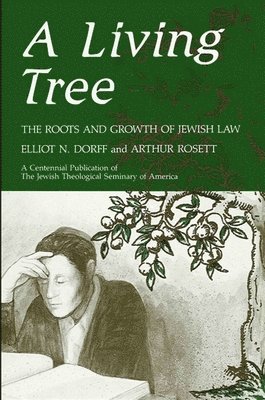
    Living Tree

    The Roots and Growth of Jewish Law

    AvElliot N. Dorff,Arthur Rossett

    Häftad, Engelska, 1987

    520 kr

    Beställningsvara. Skickas inom 5-8 vardagar. Fri frakt över 249 kr.

    Beskrivning

    This book examines biblical and rabbinic law as a coherent, continuing legal tradition. It explains the relationship between religion and law and the interaction between law and morality. Abundant selections from primary Jewish sources, many newly translated, enable the reader to address the tradition directly as a living body of law with emphasis on the concerns that are primary for lawyers, legislators, and judges. Through an in-depth examination of personal injury law and marriage and divorce law, the book explores jurisprudential issues important for any legal system and displays the primary characteristics of Jewish law.A Living Tree will be of special interest to students of law and to Jews curious about the legal dimensions of their tradition. The authors provide sufficient explanations of the sources and their significance to make it unnecessary for the reader to have a background in either Jewish studies or law.

    Produktinformation

    • Utgivningsdatum:1987-12-15
    • Mått:152 x 229 x 36 mm
    • Vikt:699 g
    • Format:Häftad
    • Språk:Engelska
    • Antal sidor:618
    • Förlag:State University of New York Press
    • ISBN:9780887064609

    Utforska kategorier

    • Judendom inom Filosofi och religion

    Mer om författaren

    Elliot N. Dorff is Provost and Professor of Philosophy at the University of Judaism. Arthur Rosett is Professor of Law at the University of California at Los Angeles.

    Recensioner i media

    "This book is terrific. It provides the relevant legal sources for comprehending Jewish law and additional information (historical, sociological, etc.) for understanding the evolution of Jewish Law. The authors' comments are invariably clear and helpful and frequently insightful. The book is not only interesting but it is exciting. The topic is important to Judaic studies and to historical studies in general. It is the best collection of material on Jewish law available in the United States." — Martin Edelman, State University of New York at Albany"What I like most about this book is the breadth of treatment without sacrifice of depth or sophistication. This is a fine English language introduction to Jewish law"— David Goodblatt, University of Maryland at College Park"A Living Tree is, in our opinion, from both a pedagogical and a scholarly perspective, the finest book of its kind available today. The unique features of this book make it a valuable contribution to the scholarship of the field. Indeed, in many ways, we would expect that this book will become the standard English work on Jewish law."— Rabbi David Saperstein and Sherman L. Cohn, Georgetown University Law Center

    Innehållsförteckning

    • PREFACEACKNOWLEDGMENTSPart I: The Literature and Methods of Jewish LawINTRODUCTION A. The Origins and Aims of This BookB. The Structure and Methods of This BookC. Who Are the Jews?D. Common Misconceptions About Jewish LawTopic One: Biblical LawA. The Biblical WorldB. Fundamentalist and Historical Approaches to the BibleC. The Structure and Contents of the BibleD. The Biblical Law CodesTopic Two: The Biblical Law of InjuryA. The Covenant Code's Treatment of Personal InjuryB. The Code pf HammurabiC. The Hittite LawsTopic Three: Biblical Jurisprudence A. Law and World ViewB. Biblical Methods of Resolving DisputesC. The Source of the Law and Legal Obedience: The CovenantD. Reasons for Obeying the LawE. Law and Justice in the Bible: The Relationship Between Moral Norms and God's WorldF. Biblical Law and Change: Adapting Divine Law to New CircumstancesTopic Four: Rabbinic Law of InjuriesA. An Overview of the History and Literature of the Second Temple and Rabbinic PeriodsB. Midrash HalakhahC. MishnahD. California Jury InstructionsE. Gemara on InjuriesF. Sectarian Laws of InjuriesTopic Five: The Oral Torah: Rabbinic Exegesis and Oral TraditionsA. Two Ways of Dealing with a Fixed Text I: Exegesis and Its JustificationB. Two Ways of Dealing with a Fixed Text I: The Methods and Uses of ExegesisC. Two Ways of Dealing with a Fixed Text II: The Oral TraditionD. Continuity and ChangeE. The Limits of the Flexibility of the Text and the Tradition: Opposition Movements in Jewish Legal HistoryTopic Six: The Authority and Morality of the Tradition A. The Basis for Obedience of the LawB. Law and MoralityTopic Seven: Rabbinic Court Procedures A. The Structure and Jurisdiction of CourtsB. Systems of Proof and Rules of EvidenceC. Problems with Using CourtsD. Alternatives to CourtsTopic Eight: The Repsonsa LiteratureA. The Talmudic and Geonic Periods: Hesitant BeginningsB. The Eleventh to Fifteenth Centuries: Franco-Germany and the Spain-North AfricaC. The Sixteenth to Twentieth Centuries: The Aharonim of the Eastern Mediterranean and Eastern EuropeD. World War II - Present: America: Four Movements, Four Conceptions of Jewish LawE. World War II - Present: IsraelTopic Nine: CodesA. The Types of Codes and Their UseB. The Literature of Jewish CodificationC. Pros and Cons of CodificationD. Example of Codification: Maimonides on Personal InjuriesTopic Ten: Legislation (Takkanot)A. The Nature, Development and Justification of Legislation in Jewish LawB. Maimonides on Legislation: Mishneh Torah, Laws of Rebels (Mamrim)C. Takkanot of Rabbenu Tam (R. Jacob B. Meir)Topic Eleven: Custom (Minhag)A. The Recognition of Binding Customs in Jewish and Common LawB. The Interactions Between Custom and LawC. Justifying the Authority of CustomTopic Twelve: The Interaction Between Jewish Law and Common LawPart II: Marriage Topic Thirteen: The Nature of Marriage in Jewish and American Law A. The Contractural Element in Jewish MarriageB. The Contractural Element of Marriage in Civil LawC. The Social Element in Jewish MarriageD. The Sacred Element in Jewish MarriageTopic Fourteen: Conflicts and Choice of Law I: Jewish Recognition of Civil Marriage and DivorceA. Choice of Law in the Common LawB. Rabbinic Choice of LawC. Dina De-Malkhuta Dina and the Traditional Refusal to Recognize Civil DivorceD. The Operation of Jewish Marital Law Within the Context of Binding, Civil Marital LawTopic Fifteen: Conflicts and Choice of Law II: Civil Recognition of Jewish Marriage and DivorceTopic Sixteen: Epilogue: The Future of Jewish Law A. Jewish Law in IsraelB. The United StatesC. Limits on Jewish LawAppendix A: Time-Line on Jewish LawAppendix B: Books of the Hebrew BibleAppendix C: The Structure of the Mishnah INDEX OF SUBJECTSINDEX OF SOURCES