• Fri frakt över 249 kr
  • •
  • Snabba leveranser
  • •
  • Billiga böcker
Kundservice

Du är på sajten för privatpersoner.

Företag, bibliotek eller offentlig verksamhet?

Du handlar på classic.bokus.com, där alla dina funktioner finns intakta.
Till classic.bokus.com
Bokus logotyp. Gå till startsidan.
  • Erbjudanden
  • Nyheter
  • Student
  • Topplistor
  • Barn & ungdom
  • Bokus Play
  • E-böcker
  • Pocketböcker
  • Spel & pussel

10% rabatt på allt med kod NYSTART10 →

Sidfot

Mina sidor

    Hjälp

    • Kundservice
    • Vanliga frågor och svar
    • Frakt och leverans
    • Retur vid ångerrätt
    • Reklamera vara
    • Betalning
    • Köpvillkor
    • Allmänna villkor
    • Information om webbplatsens tillgänglighet

    Om Bokus

    • Om oss
    • Pressrum
    • För studenter
    • För företag
    • För bibliotek och offentlig verksamhet
    • För leverantörer
    • Hållbarhet

    Populärt

    • Aktuella erbjudanden
    • Presentkort
    • Studentlitteratur
    • Nya böcker
    • Topplistor
    • Signerade böcker
    • Engelska böcker

    Inspiration

    • Boktips
    • BookTok
    • Populära bokserier
    • Barnbokskaraktärer
    • Populära författare
    Logotyp för Bokus
    Följ oss på Facebook (extern länk)Följ oss på Instagram (extern länk)Följ oss på YouTube (extern länk)Följ oss på TikTok (extern länk)
    bokus @ CookiesAnpassa cookiesIntegritetspolicyKöpvillkor
    Till Citymail hemsida (extern länk)Till Budbee hemsida (extern länk)Till Postnord hemsida (extern länk)Till Schenker hemsida (extern länk)Till Early Bird hemsida (extern länk)Till Walleys hemsida (extern länk)
    1. Kultur
    2. Musikböcker
    3. Musik: stilar och genrer
    4. Religiös och sakral musik

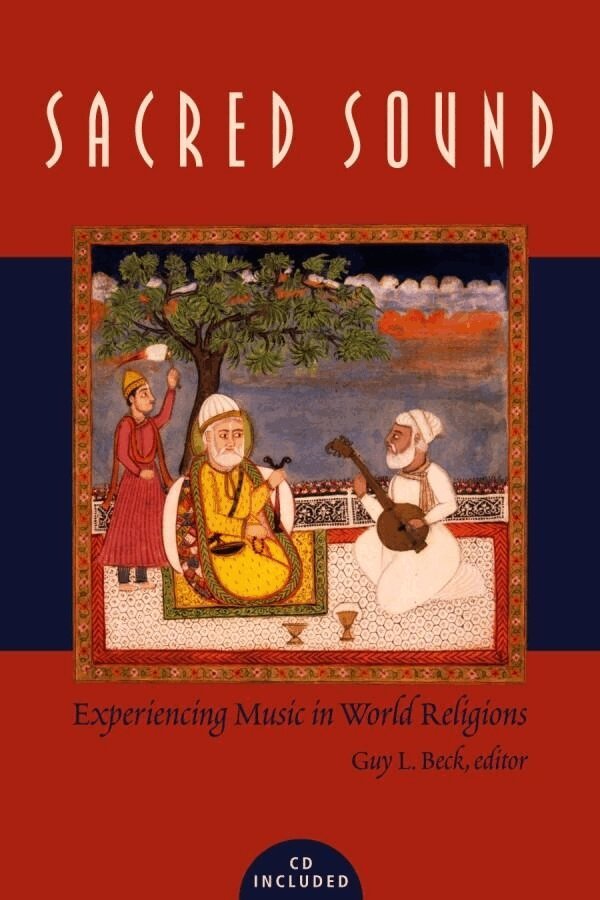
    Sacred Sound

    Experiencing Music in World Religions

    AvGuy L. Beck

    Häftad, Engelska, 2006

    536 kr

    Beställningsvara. Skickas inom 10-15 vardagar. Fri frakt över 249 kr.

    Beskrivning

    This innovative book explores religion through music, one of the most universally recognized forms of human experience. The only art form named after a divinity, music has been documented from prehistory to the present age in virtually all known cultures. For many, music is a vehicle for spiritual growth and community empowerment, whether it's understood as a gift of the gods or simply a practice for achieving mental states conducive to enlightenment.Traditionally, when religious scholars talk about music, it's as a kind of aesthetic supplement to the important spiritual content of a religion, analogous to stained-glass windows or temple paintings. In contrast, Sacred Sound: Experiencing Music in World Religions acknowledges the critical role of musical activity in religious life. Music, including chant and vocal utterance, is not incidental in religious practice but a sacred treasure that is central to the growth and sustenance of religions throughout the world. Musical sound is sacred in most religions because it embodies the divine and can be shared by all participants, enduring among diverse communities of people despite theological differences. Covering six of the major world religionsJudaism, Christianity, Islam, Hinduism, Sikhism, and Buddhism - the book is accompanied by forty selections of music and chant. Contributors are respected scholars in religious studies and musicology and provide insight from both disciplines. The first book of its kind, Sacred Sound is a milestone in the growing cross-disciplinary study of religion and music. Audio files available at https://www.wlupress.wlu.ca/Books/S/Sacred-Sound

    Produktinformation

    • Utgivningsdatum:2006-07-30
    • Mått:152 x 229 x 15 mm
    • Vikt:406 g
    • Format:Häftad
    • Språk:Engelska
    • Antal sidor:232
    • Förlag:Wilfrid Laurier University Press
    • ISBN:9780889204218

    Utforska kategorier

    • Religiös och sakral musik inom Kultur

    Mer om författaren

    Guy L. Beck spent over six years in India researching Indian religions and music. Holding degrees in both religious studies and musicology, he currently teaches at Tulane University, New Orleans, and was recently a visiting fellow at Oxford University. A scholar and musician, he is the author of Sonic Theology: Hinduism and Sacred Sound (1993) as well as numerous articles on Indian religions and music and has also released two CDs of Indian vocal music.

    Recensioner i media

    "Guy L. Beck's scholarly and innovative book explores religion through music. It elevates and emphasizes the critical role of musical activity in religious life. Rather than discussing music as an aesthetic supplement to religion, Beck's book takes the approach that music is not incidental in religious practice but is a sacred treasure central to the growth and sustenance of world religions.Sacred Sound promises to be a milestone in the growing cross-disciplinary study of religion and music." -- Greg Hansen -- BYU Studies (Brigham Young University), 47:1, 201005

    Innehållsförteckning

    • Sacred Sound: Experiencing Music in World Religions, edited by Guy L. BeckAcknowledgmentsIntroduction Guy L. BeckJudaism and Music Joseph A. LevineChristianity and Music Gerald HobbsIslam and Music Regula QureshiHinduism and Music Guy L. BeckSikhism and Music Pashaura SinghBuddhism and Music Sean WilliamsGlossaryCD Track ListingContributorsDiscographyIndexCD Track PlaylistJudaism1. 1st Question of Passover (ex 1) Sung by Joseph A. Levine2. High Holiday Prayer (ex 4)) Sung by Joseph A. Levine3. Shema (ex 5)) Sung by Joseph A. Levine4. Torah (ex 6)) Sung by Joseph A. Levine5. Passover Haggadah (ex 7)) Sung by Joseph A. Levine6. Night Prayer (ex 8)) Sung by Joseph A. Levine7. Priestly Blessing (ex 9)) Sung by Joseph A. LevineChristianity8. Kyrie, Sanctus, Agnus Dei (ex 1)) Sung by Richard L. Crocker9. A Mighty Fortress (ex 2)10. Salve Regina (ex 3)) Sung by Richard Crocker11. I'll Praise My Maker (ex 4)) Sung by Gerald Hobbs12. Holy Holy Holy (ex 5)13. All Things Bright and Beautiful (ex 6)) Sung by Gerald Hobbs14. Amazing Grace (ex 7)Islam15. Call to Prayer: Adhãn (ex 1)16. Qur'ãn: Al-Fãtiha (ex 2)) Recited by Hafiz Kani Karaca17. Ai Nasim e-ku-e (ex 3)) Sung by Regula Qureshi18. Allãh Allãh Allãhu (ex 4)) Sung by Regula Qureshi19. Mujrayi Shah (ex 5)) Sung by Regula Qureshi20. Ai wa-e-nahr-e alquaman (ex 6)) Sung by Regula QureshiHinduism21. Gãyatri Mantra (ex 1)) Chanted by Guy L. Beck22. Rig Veda: Purusha Suktam (ex 2)) Chanted by Sri Hariswamy and Vedaparayanar23. Bhagavad Gitã 18.65-66 (ex 3)) Chanted by Guy L. Beck24. Dhrupad: Dekho Sakhi Vrindãbana (ex 4)) Sung by Pandit Bidur Mallik and Family25. Padãvali Kirtan: Sri Nanda Nandana (ex 5)) Sung by Guy L. Beck26. Bhajan of Sur Dãs: Aba Meri Rãkho Lãja Hari (ex 6)) Sung by Guy L. Beck27. Raghupati Rãghava (ex 8) Sung by Sonu NigamSikhism28. Japji Prayer (ex 1)) Chanted by Ragi Bhai Tirlochan Singh Ji29. Shabad of Guru Arjan: Har Kirtan Sune (ex 2)) Sung by Bhai Nirmal Singh Ji30. Shabad of Kabir Har Kã Bilovanã (ex 3)) Sung by Bhai Harjinder Singh Ji31. Kaisi Ãrati Hoye (ex 4)) Sung by Bhai Harbans Singh Ji32. So Dar (ex 5)) Sung by Pashaura Singh33. Anand (ex 6)) Sung by Pashaura SinghBuddhism34. Drum Invocation35. Invocation: Mangalacharanam, Three Gems: Trisaraam (ex 1)) Chanted by Theravãda monks36. Five Precepts: Pañchasila (ex 2)) Chanted by Theravãda monks37. Four Noble Truths: Dhamma Chakka Sutta (ex 3)38. Tibet Mantra: Om Mani Padme Hum (ex 5)) Chanted by Tibetan monks of the Drepung Monastery39. Tibet Contour Chant (ex 6)) Chanted by Tibetan monks of the Drepung Monastery40. Japanese Heart Sutra: Hannya-Shingyo (ex 7)) Chanted by women of the Jádá sect in Kyoto, JapanContributors' BiosGuy L. Beck has spent over six years in India studying and researching Indian music and religion, receiving support from both Fulbright and aiis (American Institute of Indian Studies) research grants for his work. He holds an MA in musicology and a PhD in religion from Syracuse University, as well as degrees in Indian music from institutions in India. His book Sonic Theology: Hinduism and Sacred Sound (1993) won wide acclaim from scholars for its presentation of the theoretical dimensions of sacred sound and music in Hinduism. He also has published numerous articles on various aspects of Indian religion and music, as well as releasing a CD, Sacred Raga (1999), which demonstrates his performative expertise in Indian vocal music. As a result, he has received invitations from many universities, including Indiana and Princeton, to give lectures and demonstrations. In 2001, he was invited to be a Visiting Fellow by the Oxford Centre for Hindu Studies at Oxford University (UK), where he taught courses in Hinduism and music, and received additional support from the Infinity Foundation for research on the contributions of Indic traditions to world music. He has taught courses in religious studies and music at Tulane University, in New Orleans, and is currently teaching at the University of North Carolina-Wilmington.Gerald Hobbs is vice-principal of the Vancouver School of Theology. He holds a BA (Hon.) from the University of Toronto, a BD from Emmanuel College in Toronto, and a Docteur ès Sciences Religieuses degree from the Faculté de Théologie Protestante in Strasbourg. His doctoral work focused on Martin Bucer's German and Latin commentaries on the Psalms, which he is editing and annotating for a critical edition of Bucer's work. Dr. Hobbs has also published extensively in Reformation studies, the history of biblical interpretation (particularly on the Psalms), and the music of the Christian church. Before going to the Vancouver School of Theology, he taught at Huntington College in Sudbury and at the Université de Genève. He served as part-time chaplain with the Canadian Forces in Germany and Italy, and has also taught in Strasbourg, Paris, and Glasgow as a visiting professor.Joseph A. Levine studied fine arts at the Cooper Union, and earned a BA in religious education at Yeshiva University and a PhD in sacred music at the Jewish Theological Seminary, where he taught modal chant. He lectures extensively on the aesthetic dimension of synagogue practice, and his text, Synagogue Song in America (1989), has been recognized as the most important study of Jewish music in the past fifty years. His articles have appeared in The Encyclopedia of Jewish American History and Culture, Gratz College Centennial, Journal of Synagogue Music, Maryland Jewish Historical Society Journal, Midstream, Musica Judaica, and the National Jewish Post. He has also written monographs on the life and times of cantors David Kusevitsky, Josef Rosenblatt, and Abba Yosef Weisgal. An active cantor himself for thirty-five years, he is currently a faculty member at the Academy for Jewish Religion in New York. He serves on the editorial board of the Cantors Assembly, as well as on the Rabbinical Assembly Committee preparing a new High Holiday prayer book for the Conservative movement. His recently published Rise and Be Seated: The Ups and Downs of Jewish Worship (2000) deals with the ongoing creative process involved in the way Jews have approached God in prayer since biblical times.Regula Qureshi is director of the Centre for Ethnomusicology at the University of Alberta. Her research focuses on music as a social and discursive process. Aspecialist in South Asian, Islamic, and Canadian musical practices, she is the author of Sufi Music of India and Pakistan: Sound, Context, and Meaning in Qawwali (1986), coeditor of Voices of Women: Essays in Honour of Violet Archer (1995), and a contributor to Ethnomusicology, Asian Music, the Journal of Musicology, and the Journal of the American Musicological Society. A cellist and sārangi player, her current book projects are Hindustani Musicians Speak and Sārangi: Art Music and Political Economy in North India.Pashaura Singh is a professor in the Department of Religious Studies at the University of California, Riverside, where he teaches courses in Sikhism and religion. His dissertation topic (University of Toronto) was The Text and Meaning of the Ādi Granth, and his more recent research has focused on the life and teaching of Guru Arjan. He is the author of Guru Granth Sāhib: Canon, Meaning and Authority (2001) and The Bhagats of the Guru Granth Sāhib: Sikh Sel-Definition and the Bhagat Bāni (2003). He also performs Sikh Kirtan and specializes in Gurbāni Shabad hymns.Sean Williams has a BA in music from the University of California at Berkeley, and an MA and PhD in ethnomusicology from the University of Washington. Her subject areas include ethnomusicology, Indonesian language and literature, Celtic languages and literature, and Southeast Asian studies. She is currently a faculty member at the Evergreen State College in Olympia, Washington. Her recent book, The Sound of the Ancestral Ship: Highland Music of West Java (2001) follows her work as co-editor of Southeast Asia (Garland Encyclopedia of World Music, Vol. 4, 1998). A recognized authority on Buddhist chant, she gives many lectures and demonstrations.