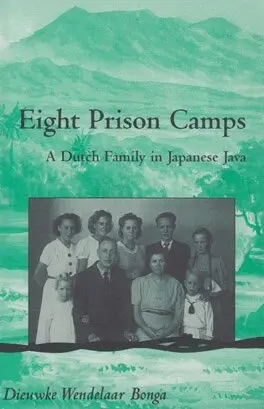
Häftad, Engelska, 1996
Eight Prison Camps
A Dutch Family in Japanese Java
Del i serien Research in International Studies, Southeast Asia Series
354 kr
Beställningsvara. Skickas inom 7-10 vardagar. Fri frakt över 249 kr.
Beskrivning
Produktinformation
- Utgivningsdatum: 1996-05-15
- Mått: 140 x 216 x 13 mm
- Vikt: 352 g
- Format: Häftad
- Språk: Engelska
- Serie: Research in International Studies, Southeast Asia Series
- Antal sidor: 219
- Förlag: Ohio University Press
- ISBN: 9780896801912
Utforska kategorier
Mer om författaren
Dieuwke Wendelaar Bonga, who immigrated to Canada in 1952, is a member of the August 15, 1945 Foundation, an organization of survivors of the Japanese prisoner of war camps. Now retired from public service in Ontario, she has written this candid personal account of her experience in the internment camps of Japanese–occupied Java.
Recensioner i media
"Bonga's writing style is simple and direct and her living tesitmony is uncomplicated by academic jargon, which vastly increases its power. Although brief, her account succeeds marvelously in communicating the emotional and physical trauma that she as a teenage woman and her family went through. … This is not just a good book about Indonesia or Southeast Asia or World War II, it is just a good book." (Journal of Third World Studies) "Dieuwke Wendelaar Bonga's memoir is important as the testimony of the survivor: it shows us how war is directed against women and children, and it tells the end of Dutch history in Indonesia." (The Journal of Asian Studies)
Betyg & recensioner
0 recensioner
Inga recensioner tillgängliga.