Häftad, Engelska, 2006
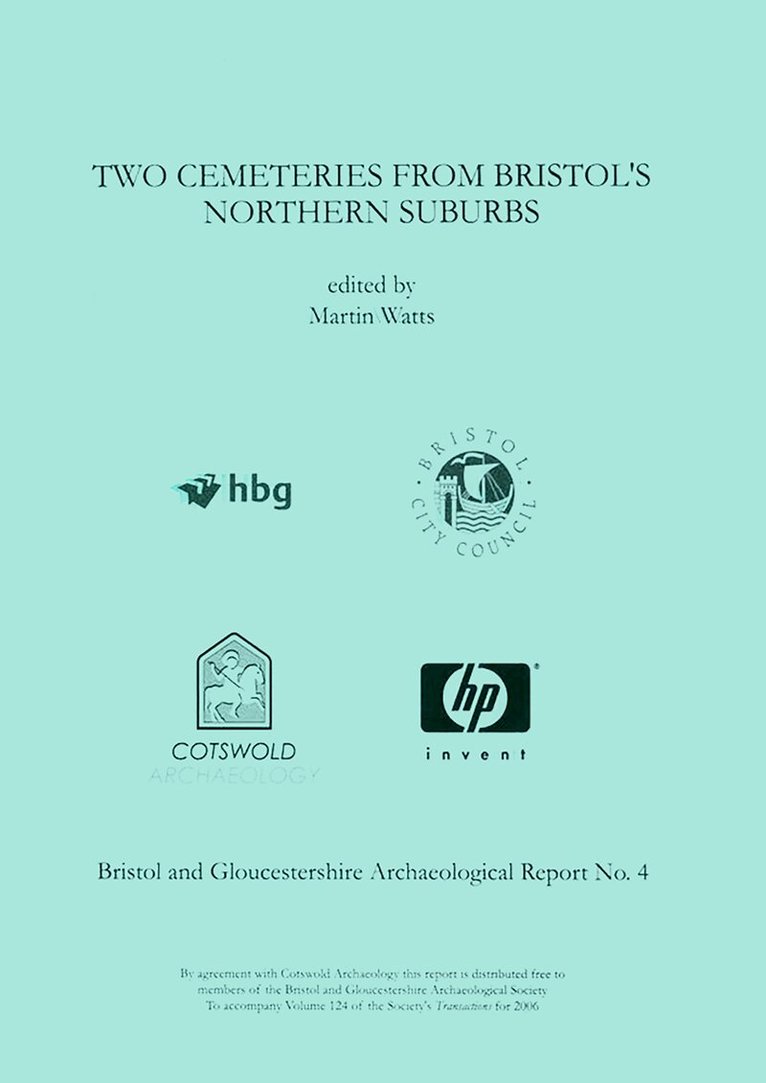
Two Cemeteries from Bristol's Northern Suburbs
Av Martin Watts
238 kr
Skickas torsdag 15/10. Fri frakt över 249 kr.
Beskrivning
Two reports are published in this volume: excavations in 2004 at Henbury School, Bristol (by Derek Evans, Neil Holbrook and E.R. McSloy) and excavations in 2005 at Hewlett Packard, Filton, South Gloucestershire (by Kate Cullen, Neil Holbrook, Martin Watts, Anwen Caffell and Malin Holst). Excavations in 2004 at Henbury School, Bristol, revealed the truncated remains of 21 inhumation burials, making a total of 28 burials recorded at the site since 1982. Of these, 24 burials formed a dispersed cemetery of crouched inhumations, the vast majority of which were aligned north/south and lay on their left sides, with equal numbers of males and females (where sex could be determined) and only one child. Poor bone survival rendered radiocarbon dating invalid, and the cemetery is dated by only one grave good: a finger ring from the mid to late Iron Age. However, the cemetery clearly pre-dated a later rectangular enclosure of very late Iron Age (early 1st-century AD) date. Crouched inhumations from the later Iron Age are known from the region but usually from pits or scattered, so the presence of this cemetery at Henbury is significant. Inhumation cemeteries of this date are rare in Western Britain, although they may have been quite widespread. Despite the dearth of surviving features within the subsequent enclosure, the scale of the ditches suggests it was a farmstead, and environmental evidence hints at both livestock rearing and cereal cultivation. Subsequent Roman activity was clearly intensive, and included a further four burials; although difficult to interpret, it adds to a substantial amount of evidence for Roman activity to the north-west of Bristol. Excavations in 2005 at Hewlett Packard, Filton, revealed the truncated remains of 51 inhumation burials within an isolated post-Roman cemetery. All of the burials were extended and east-west aligned, and were arranged in rows and groups. The tradition of east/west-aligned graves is a common late Roman and post-Roman practice, and these were not necessarily Christian. The largest group comprised 24 burials clustered around a central grave that contained an unusual skeleton and evidence for a distinctive burial rite. Overall there were slightly more females than males (where sex could be determined) and ten children. Adult stature could only be calculated in a few cases; males were generally taller that the early medieval average, females shorter. No grave goods were recovered, but four radiocarbon dates obtained from human bone suggest a period of use sometime between the 5th and 7th centuries AD. There was no evidence for contemporary settlement within the immediate vicinity. Other post-Roman cemeteries that are culturally distinct from Anglo-Saxon influenced burials are known from the region. The absence of Anglo-Saxon cemeteries in South Gloucestershire suggests this area remained under British control in the 5th and 6th centuries. The abandonment of this cemetery may have been the result of changes in the religious landscape once the area finally came under Saxon control in the late 7th century.
Produktinformation
- Utgivningsdatum: 2006-12-12
- Mått: 174 x 246 x 8 mm
- Vikt: 268 g
- Format: Häftad
- Språk: Engelska
- Antal sidor: 96
- Förlag: Cotswold Archaeology
- ISBN: 9780955353406
Utforska kategorier
Betyg & recensioner
0 recensioner
Inga recensioner tillgängliga.