

International Monetary Fund And Latin America
Economic Stabilization And Class Conflict
E-bok
PDF, Engelska, 2019796 kr
Läs direkt i Bokus Reader – eller ladda ned till din enhet (PDF kräver ofta zoom och scroll på små skärmar).
Fler format och utgåvor
Beskrivning
The debt crisis in Latin America has rekindled debate about the effects of the IMF''s stabilization programs in the Third World. Critics contend that these programs have short-run recessionary impacts and damage prospects for long-term growth. In response, Fund economists point to cross-country studies revealing mixed impacts on growth rates coupled with significant success in achieving the IMF''s stated goals: current account and balance-of-payments improvements and inflation rate reduction. Dr. Pastor argues that the traditional growth-oriented critique is theoretically misplaced, and he recasts Fund activities in terms of class and income distribution. Applying the methodology of previous Fund studies, he evaluates the effects of IMF programs in eighteen Latin American countries in the pre-crisis period (1965-1981).
Produktinformation
Utforska kategorier
Hoppa över listan






Mer från samma författare
This Could Be the Start of Something Big
Manuel Pastor, Chris Benner, Martha Matsuoka
Inbunden, 2009
1 619 kr
This Could Be the Start of Something Big
Manuel Pastor, Chris Benner, Martha Matsuoka
Häftad, 2009
340 kr
Computational Geomechanics
Andrew H. C. Chan, Manuel Pastor, Bernhard A. Schrefler, Tadahiko Shiomi, Olgierd C. Zienkiewicz
Inbunden, 2022
1 451 kr
Computational Geomechanics
Olgierd C. Zienkiewicz, Tadahiko Shiomi, Bernhard A. Schrefler, Manuel Pastor, Andrew H. C. Chan
E-bok
20221 690 kr
Computational Geomechanics
Olgierd C. Zienkiewicz, Tadahiko Shiomi, Bernhard A. Schrefler, Manuel Pastor, Andrew H. C. Chan
E-bok
20221 672 kr
Hoppa över listan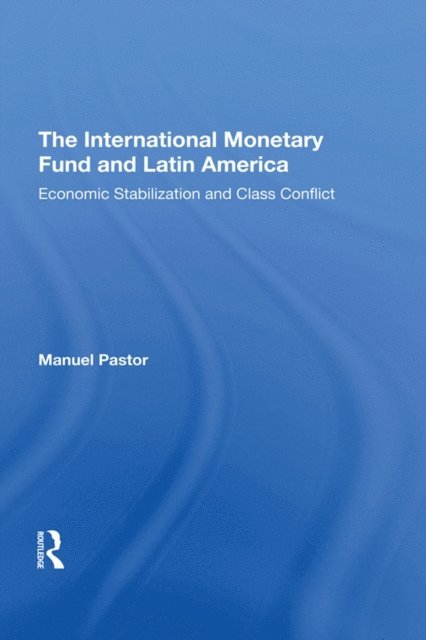



Du kanske också är intresserad av
Computational Geomechanics
Olgierd C. Zienkiewicz, Tadahiko Shiomi, Bernhard A. Schrefler, Manuel Pastor, Andrew H. C. Chan
E-bok
20221 672 kr
This Could Be the Start of Something Big
Manuel Pastor, Chris Benner, Martha Matsuoka
Inbunden, 2009
1 619 kr
Computational Geomechanics
Olgierd C. Zienkiewicz, Tadahiko Shiomi, Bernhard A. Schrefler, Manuel Pastor, Andrew H. C. Chan
E-bok
20221 690 kr
Computational Geomechanics
Andrew H. C. Chan, Manuel Pastor, Bernhard A. Schrefler, Tadahiko Shiomi, Olgierd C. Zienkiewicz
Inbunden, 2022
1 451 kr