• Fri frakt över 249 kr
  • •
  • Snabba leveranser
  • •
  • Billiga böcker
Kundservice

Du är på sajten för privatpersoner.

Företag, bibliotek eller offentlig verksamhet?

Du handlar på classic.bokus.com, där alla dina funktioner finns intakta.
Till classic.bokus.com
Bokus logotyp. Gå till startsidan.
  • Erbjudanden
  • Student
  • Topplistor
  • Barn & ungdom
  • Bokus Play
  • E-böcker
  • Ljudböcker
  • Pocketböcker
  • Spel & pussel

10% rabatt på allt med kod NYSTART10 →

Sidfot

Mina sidor

    Hjälp

    • Kundservice
    • Vanliga frågor och svar
    • Frakt och leverans
    • Retur vid ångerrätt
    • Reklamera vara
    • Betalning
    • Köpvillkor
    • Allmänna villkor
    • Information om webbplatsens tillgänglighet

    Om Bokus

    • Om oss
    • Pressrum
    • För studenter
    • För företag
    • För bibliotek och offentlig verksamhet
    • För leverantörer
    • Hållbarhet

    Populärt

    • Aktuella erbjudanden
    • Presentkort
    • Studentlitteratur
    • Nya böcker
    • Topplistor
    • Signerade böcker
    • Engelska böcker

    Inspiration

    • Boktips
    • BookTok
    • Populära bokserier
    • Barnbokskaraktärer
    • Populära författare
    Logotyp för Bokus
    Följ oss på Facebook (extern länk)Följ oss på Instagram (extern länk)Följ oss på YouTube (extern länk)Följ oss på TikTok (extern länk)
    bokus @ CookiesAnpassa cookiesIntegritetspolicyKöpvillkor
    Till Citymail hemsida (extern länk)Till Budbee hemsida (extern länk)Till Postnord hemsida (extern länk)Till Schenker hemsida (extern länk)Till Early Bird hemsida (extern länk)Till Walleys hemsida (extern länk)
    1. Samhälle och politik
    2. Social välfärd och brottslighet
    3. Brottslighet och kriminologi
    4. Brottsutredning och kriminalteknik

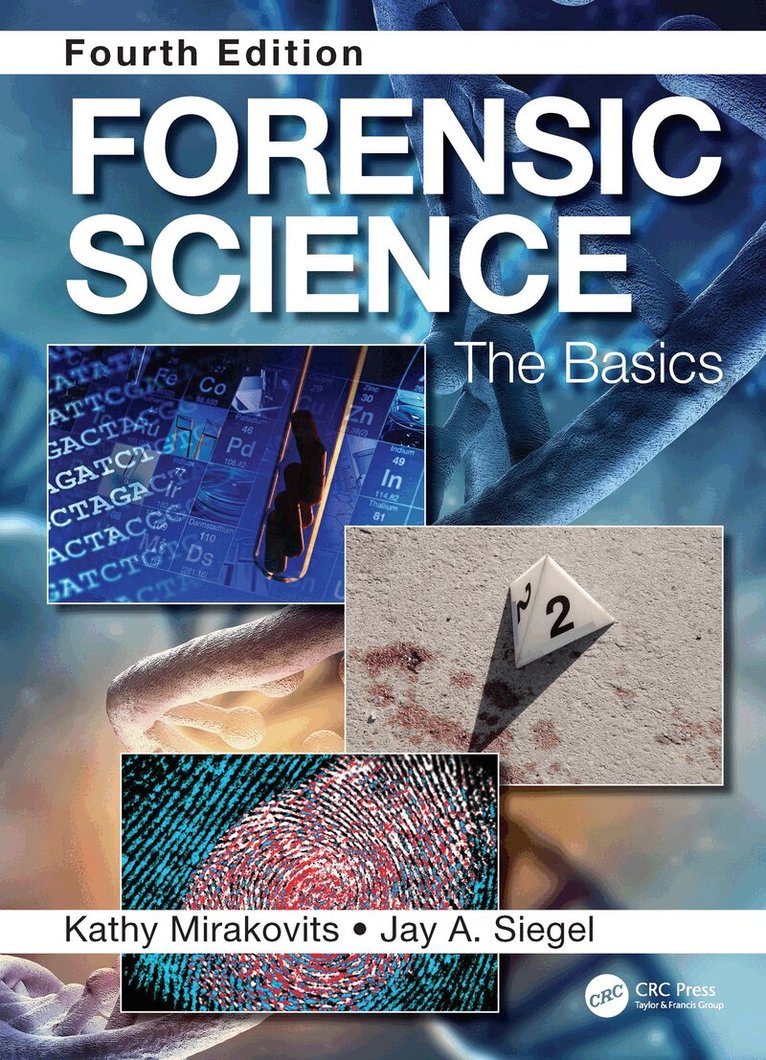
    Forensic Science

    The Basics, Fourth Edition

    AvKathy Mirakovits,Jay A Siegel

    E-bok
    PDF, Engelska, 2021

    1 593 kr

    Läs direkt i Bokus Reader – eller ladda ned till din enhet (PDF kräver ofta zoom och scroll på små skärmar).

    Fler format och utgåvor

    Inbunden

    1 343 kr

    E-bok

    1 593 kr

    Beskrivning

    Forensic Science: The Basics, Fourth Edition is fully updated, building on the popularity of the prior editions. The book provides a fundamental background in forensic science, criminal investigation and court testimony. It describes how various forms of evidence are collected, preserved and analyzed scientifically, and then presented in court based on the analysis of the forensic expert.The book addresses knowledge of the natural and physical sciences, including biology and chemistry, while introducing readers to the application of science to the justice system. New topics added to this edition include coverage of the formation and work of the NIST Organization of Scientific Area Committees (OSACs), new sections on forensic palynology (pollen), forensic taphonomy, the opioid crisis, forensic genetics and genealogy, recent COVID-19 fraud schemes perpetrated by cybercriminals, and a wholly new chapter on forensic psychology.Each chapter presents a set of learning objectives, a mini glossary, and acronyms. While chapter topics and coverage flow logically, each chapter can stand on its own, allowing for continuous or selected classroom reading and study.Forensic Science, Fourth Edition is an ideal introductory textbook to present forensic science principles and practices to students, including those with a basic science background without requiring prior forensic science coursework.

    Produktinformation

    • Utgivningsdatum:2021-07-05
    • Språk:Engelska
    • Filformat:PDF
    • Kopieringsskydd:LCP
    • ISBN:9781000401844
    • Förlag:Taylor & Francis Ltd
    • Upplaga:4

    Utforska kategorier

    • Brottsutredning och kriminalteknik inom Samhälle och politik

    Mer om författaren

    Kathy Mirakovits is currently the principle of Forensic Science Education Consulting, LLC, a training resource providing workshops across the United States for teachers who wish to learn the application of forensic science in a school curriculum. She is a now-retired teacher to taught forensic science and physics at Portage Northern High School in Portage, Michigan, and physics at Kalamazoo Valley Community College in Michigan. She holds an MS in science education from Western Michigan University. She taught general science, physical science, chemistry, biology, earth science, and physics at the high school and two-year college level for more than 25 years. She also conducts. She has developed numerous forensic science educational products and has led workshops at the National Science Teachers Association. Kathy has served as president of the Michigan Chapter of the American Association of Physics Teachers and as a curriculum writer for the Michigan Department of Education. She was previously the high school director for the Michigan Science Teachers Association. She received the RadioShack Science Teaching Award and was a state finalist for the Presidential Award for Excellence in Math and Science Teaching. Jay A. Siegel(Deceased) held a PhD in analytical chemistry from The George Washington University and received its Distinguished Faculty Scholar award in 2009. He worked as a forensic chemist with the Virginia Bureau of Forensic Sciences for three years before spending 25 years as a professor and director of the forensic science program in the School of Criminal Justice at Michigan State University. In 2003 he went to Indiana University–Purdue University as founder and director of the forensic and investigative sciences program in the School of Science. In 2008 he was named the chair of the Department of Chemistry and Chemical Biology. He retired in 2012 and, sadly, passed away in September 2017 at the age of 71. Dr. Siegel was the co-editor of Forensic Science Policy and Management: An International Journal and Encyclopedia of Forensic Sciences, Second Edition, the co-author of Fundamentals of Forensic Science, and the author of Forensic Science: A Beginner’s Guide. He testified over 200 times in federal and military courts, and was named distinguished fellow of the American Academy of Forensic Sciences in 2009.

    Innehållsförteckning

    • ContentsPreface Authors Contributors PART I: Forensic Science and InvestigationChapter 1: Introduction to Forensic Science Learning ObjectivesMini GlossaryAcronymsIntroductionWhat Is Forensic Science?History and Development of Forensic ScienceWhat Is a Forensic Scientist?The United States Forensic Science SystemOther Forensic Science SystemsThe Organization of Forensic Science LaboratoriesExamination of the Forensic Sciences by Outside OrganizationsAfter the National Research Council’s NAS ReportScientific Working Groups Reform and Support Quality AssuranceSummaryTest YourselfFurther ReadingOn the WebChapter 2: Crime Scene Investigation Learning ObjectivesMini GlossaryAcronymsIntroductionCrime Scene as Recent HistoryCrime Scene Investigation ProcessSummaryTest YourselfFurther ReadingOn the WebCase StudyChapter 3: Nature of Evidence Learning ObjectivesMini GlossaryAcronymsIntroductionClassification of EvidencePositive and Negative ControlsSummaryTest YourselfFurther ReadingOn the WebCase StudyPART II: Tools of the TradeChapter 4: Separating Complex Mixtures Learning ObjectivesMini GlossaryAcronymsIntroductionPhysical Separation of MixturesSolid-Phase ExtractionsChromatographySummaryTest YourselfFurther ReadingOn the WebChapter 5: Light and Matter Learning ObjectivesMini GlossaryAcronymsIntroductionWhat Is Light?Light as a Wave: The Electromagnetic SpectrumProperties of WavesEnergy of Light: The PhotonInteractions of Light Energy and MatterSpectrophotometerUltraviolet/Visible SpectrophotometryInfrared SpectrophotometryMass SpectrometrySummaryTest YourselfFurther ReadingOn The WebChapter 6: Microscopy Learning ObjectivesMini GlossaryAcronymsIntroductionLens: How Objects Are MagnifiedCompound MicroscopeModifications of the Compound MicroscopeElectron MicroscopySummaryTest YourselfFurther ReadingOn the WebChapter 7: Detector Dogs as Forensic Tools Susan StejskalLearning ObjectivesMini GlossaryAcronymsIntroductionScenariosForensic Tool: Canine OlfactionBack to the CasesUtility in ForensicsSummaryTest YourselfReferencesOn the WebChapter 8: Digital Evidence, Computer Forensics, and Investigation Learning ObjectivesMini GlossaryAcronymsIntroductionChallengesPhysical versus Virtual CrimesComputer CrimeCriminal LawComputer Crime InvestigationWireless and Handheld DevicesDigital Cell Phone and Handheld InvestigationComputer ForensicsLegal ProceedingsSummaryTest YourselfFurther ReadingOn the WebCase StudiesChapter 9: Forensic Engineering Learning ObjectivesMini GlossaryAcronymsIntroductionEngineering ProfessionForensic EngineerForensic Engineering Case StudiesAccident ReconstructionSummaryTest YourselfFurther ReadingOn the WebCase StudyPART III: Patterns and ImpressionsChapter 10: Fingerprints and Other Impressions Learning ObjectivesMini GlossaryAcronymsIntroduction: A Note on Pattern EvidenceQuest for a Reliable Method of Personal IdentificationOrigin of FingerprintsAnatomy of FingerprintsDetection and Visualization of FingerprintsComparison of FingerprintsComparison of Single FingerprintsAutomated Fingerprint Identification Systems (AFIS and IAFIS)Common Questions about FingerprintsOther Impressions: Footwear and Tire TreadsSummaryTest YourselfFurther ReadingOn the WebCase StudiesChapter 11: Questioned Documents Learning ObjectivesMini GlossaryAcronymsIntroductionWhat Is a Questioned Document?Questioned Document ExaminerHandwriting AnalysisErasures, Obliterations, and AlterationsTypewriters, Photocopiers, and Computer PrintersPaper ExaminationInk ExaminationsPhysical Matches on Torn PaperSummaryTest YourselfFurther ReadingOn the WebCase StudiesChapter 12: Firearms and Toolmarks Learning ObjectivesMini GlossaryAcronymsIntroductionFirearms IdentificationAnatomy of a Live Round (Cartridge)Examination of Firearms EvidenceDigital Imaging Systems for AmmunitionDistance-of-Fire DeterminationsToolmarksSummaryTest YourselfFurther ReadingOn the WebCase StudiesPART IV: Forensic BiologyChapter 13: Forensic Pathology Learning ObjectivesMini GlossaryAcronymsIntroductionHow to Become a Forensic PathologistInvestigation of Death: Coroners and Medical ExaminersDeath Investigation ProcessPostmortem Interval: Time of DeathExhumationsTeamwork ApproachSummaryTest YourselfFurther ReadingOn the WebCase StudyChapter 14: Anthropology and Odontology Learning ObjectivesMini GlossaryAcronymsIntroductionHuman SkeletonIdentification of Skeletal RemainsIndividualization of Human BoneCollection of BonesForensic OdontologySummaryTest It Yourself 1: Pelvic Bones and AgeTest It Yourself 2: Bite MarksTest YourselfFurther ReadingHelpful WebsitesCase StudiesChapter 15: Forensic Palynology & Entomology Learning ObjectivesMini GlossaryAcronymsIntroductionForensic Palynology: Pollen and Spores as EvidenceBecoming a Forensic EntomologistPMI: The Life Cycle of the BlowflyDecomposition of a Body after DeathFactors that Affect PMIEntomological Investigation and Evidence CollectionSummaryTest YourselfFurther ReadingOn the WebCase StudiesChapter 16: Serology Learning ObjectivesMini GlossaryAcronymsIntroductionBloodAnalysis of BloodOther Biological Fluids and StainsBloodstain Pattern AnalysisSummaryAppendix A: Trigonometry Calculation for Locating a BloodstainTry it Yourself: The Genetics of Blood TypingTest YourselfFurther ReadingUseful WebsitesCase StudyChapter 17: DNA Typing Learning ObjectivesMini GlossaryAcronymsIntroductionWhat Is DNA?Collection and Preservation of DNA EvidenceHistory of DNA TypingCurrent Method of DNA Typing: STRsMitochondrial DNACODISSummaryTest YourselfFurther ReadingOn the WebCase StudiesChapter 18: Hair Learning ObjectivesMini GlossaryAcronymsIntroductionWhat Is Hair?Hair GrowthHair ColorStructure of Human HairHuman versus Nonhuman HairsHair Treatment and DamageComparison of Human HairsWhat Can Be Determined from the Structure of Hair?DNA Analysis of HairHair as a Source of DrugsSummaryTest YourselfFurther ReadingOn the WebCase StudyPART V: Forensic ChemistryChapter 19: Illicit Drugs Learning ObjectivesMini GlossaryAcronymsIntroductionIllicit DrugsControl of Illicit Drugs in the United StatesAnalysis of Illicit DrugsSummaryTest YourselfFurther ReadingOn the WebCase StudyChapter 20: Forensic Toxicology Learning ObjectivesMini GlossaryAcronymsIntroductionForensic ToxicologyBecoming a Forensic ToxicologistPrinciples of PharmacologyPharmacology and Toxicology of Ethyl AlcoholAbsorption of EthanolDrunk Driving LawsField Sobriety TestingMeasurement of BACDriving Under the Influence of DrugsSummaryTest YourselfFurther ReadingOn the WebCase StudyChapter 21: Fibers, Paints, and Other Polymers Learning ObjectivesMini GlossaryAcronymsIntroductionWhat Is a Polymer?Textile FibersTypes of FibersFiber MorphologyAnalysis of Synthetic FibersChemical Analysis of FibersInterpretation of Fiber EvidencePaints and Other CoatingsTypes of PaintHow Cars Are PaintedCollection of Paint EvidenceAnalysis of PaintEvidentiary Value of PaintSummaryTest YourselfFurther ReadingOn the WebCase StudiesChapter 22: Glass and Soil Learning ObjectivesMini GlossaryAcronymIntroductionGlassGlass as Forensic EvidenceSoilSummaryTest YourselfFurther ReadingOn the WebCase StudiesChapter 23: Fires and Explosions Learning ObjectivesMini GlossaryAcronymsIntroductionWhat Is a Fire?Extinguishing a FireIncendiary FiresInvestigation of a FireRole of AccelerantsAnalysis of Fire Scene EvidenceAnalysis of AccelerantsExplosionsInvestigation of Bombing ScenesSummaryTest YourselfFurther ReadingOn the WebCase StudyPART VI: Additional Forensic Science TopicsChapter 24: Presentation of Forensic Evidence in Court Learning ObjectivesMini GlossaryAcronymsIntroductionAdmissibility of EvidenceForensic Laboratories: Accreditation, Certification and Laboratory ReportingExpert TestimonySummaryTest YourselfFurther ReadingOn the WebChapter 25: Forensic PsychologyLearning ObjectivesMini GlossaryAcronymsIntroductionWhat is Forensic Psychology?Behavioral Evidence Analysis: The Truth About ProfilingTreatment and Evaluation of OffendersResearchSummaryTest YourselfFurther ReadingOn the WebIndex