• Fri frakt över 249 kr
  • •
  • Snabba leveranser
  • •
  • Billiga böcker
Kundservice

Du är på sajten för privatpersoner.

Företag, bibliotek eller offentlig verksamhet?

Du handlar på classic.bokus.com, där alla dina funktioner finns intakta.
Till classic.bokus.com
Bokus logotyp. Gå till startsidan.
  • Erbjudanden
  • Nyheter
  • Student
  • Topplistor
  • Barn & ungdom
  • Bokus Play
  • E-böcker
  • Pocketböcker
  • Spel & pussel

10% rabatt på allt med kod: NYSTART10 →

Sidfot

Mina sidor

    Hjälp

    • Kundservice
    • Vanliga frågor och svar
    • Frakt och leverans
    • Retur vid ångerrätt
    • Reklamera vara
    • Betalning
    • Köpvillkor
    • Allmänna villkor
    • Information om webbplatsens tillgänglighet

    Om Bokus

    • Om oss
    • Pressrum
    • För studenter
    • För företag
    • För bibliotek och offentlig verksamhet
    • För leverantörer
    • Hållbarhet

    Populärt

    • Aktuella erbjudanden
    • Presentkort
    • Studentlitteratur
    • Nya böcker
    • Topplistor
    • Signerade böcker
    • Engelska böcker

    Inspiration

    • Boktips
    • BookTok
    • Populära bokserier
    • Barnbokskaraktärer
    • Populära författare
    Logotyp för Bokus
    Följ oss på Facebook (extern länk)Följ oss på Instagram (extern länk)Följ oss på YouTube (extern länk)Följ oss på TikTok (extern länk)
    bokus @ CookiesAnpassa cookiesIntegritetspolicyKöpvillkor
    Till Citymail hemsida (extern länk)Till Budbee hemsida (extern länk)Till Postnord hemsida (extern länk)Till Schenker hemsida (extern länk)Till Early Bird hemsida (extern länk)Till Walleys hemsida (extern länk)
    1. Samhälle och politik
    2. Sociologi och antropologi
    3. Antropologi

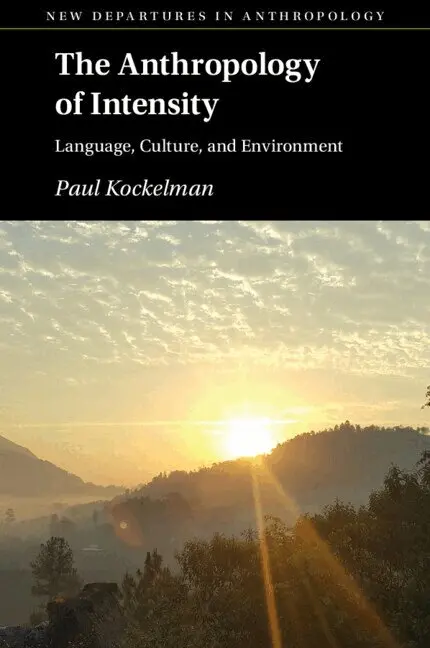
    The Anthropology of Intensity

    Language, Culture, and Environment

    AvPaul Kockelman

    Häftad, Engelska, 2022

    Del i serien New Departures in Anthropology

    328 kr

    Beställningsvara. Skickas inom 10-15 vardagar. Fri frakt över 249 kr.

    Fler format och utgåvor

    Inbunden

    1 040 kr

    Beskrivning

    What counts as too close for comfort? How can an entire room suddenly feel restless at the imminence of a yet unknown occurrence? And who decides whether or not we are already in an age of unliveable extremes? The anthropology of intensity studies how humans encounter and communicate the continuous and gradable features of social and environmental phenomena in everyday interactions. Focusing on the last twenty years of life in a Mayan village in the cloud forests of Guatemala, this book provides a natural history of intensity in exceedingly tense times, through a careful analysis of ethnographic and linguistic evidence. It uses intensity as a way to reframe Anthropology in the age of the Anthropocene, and rethinks classic work in the formal linguistic tradition from a culture-specific and context-sensitive stance. It is essential reading not only for anthropologists and linguists, but also for ecologically oriented readers, critical theorists, and environmental scientists.

    Produktinformation

    • Utgivningsdatum:2022-05-19
    • Mått:151 x 228 x 20 mm
    • Vikt:590 g
    • Format:Häftad
    • Språk:Engelska
    • Serie:New Departures in Anthropology
    • Antal sidor:402
    • Förlag:Cambridge University Press
    • ISBN:9781009011075

    Utforska kategorier

    • Antropologi inom Samhälle och politik

    Mer om författaren

    Paul Kockelman is Professor of Anthropology at Yale University. His books include Kinds of Value: An Experiment in Modal Anthropology (Prickly Paradigm Press) and The Art of Interpretation in the Age of Computation (Oxford University Press).

    Recensioner i media

    '… offers a thorough framework for understanding how speakers make sense of shifting degrees of change in a starkly mutable world.' Sean P. Smith, Language in Society

    Innehållsförteckning

    • Introduction; Part I. Grounds: 1. Comparative grounds; 2. Casual grounds; 3. Grounding experience: Grounding the anthropocene; Part II. Tensors: 5. Intensifiers; 6. The history of Mas; The comparative complex; 8. More, also, only; Part III. Thresholds: 9. Temporality and replacement; 10. Temporal thresholds; 11. Modality and worlding; 12. Modal thoughts; Conclusion: the ecological self.