• Fri frakt över 249 kr
  • •
  • Snabba leveranser
  • •
  • Billiga böcker
Kundservice

Du är på sajten för privatpersoner.

Företag, bibliotek eller offentlig verksamhet?

Du handlar på classic.bokus.com, där alla dina funktioner finns intakta.
Till classic.bokus.com
Bokus logotyp. Gå till startsidan.
  • Erbjudanden
  • Nyheter
  • Student
  • Topplistor
  • Barn & ungdom
  • Bokus Play
  • E-böcker
  • Pocketböcker
  • Spel & pussel

Må bättre, för mindre! Upp till 50% rabatt på hälsoböcker

Sidfot

Mina sidor

    Hjälp

    • Kundservice
    • Vanliga frågor och svar
    • Frakt och leverans
    • Retur vid ångerrätt
    • Reklamera vara
    • Betalning
    • Köpvillkor
    • Allmänna villkor
    • Information om webbplatsens tillgänglighet

    Om Bokus

    • Om oss
    • Pressrum
    • För studenter
    • För företag
    • För bibliotek och offentlig verksamhet
    • För leverantörer
    • Hållbarhet

    Populärt

    • Aktuella erbjudanden
    • Presentkort
    • Studentlitteratur
    • Nya böcker
    • Topplistor
    • Signerade böcker
    • Engelska böcker

    Inspiration

    • Boktips
    • BookTok
    • Populära bokserier
    • Barnbokskaraktärer
    • Populära författare
    Logotyp för Bokus
    Följ oss på Facebook (extern länk)Följ oss på Instagram (extern länk)Följ oss på YouTube (extern länk)Följ oss på TikTok (extern länk)
    bokus @ CookiesAnpassa cookiesIntegritetspolicyKöpvillkor
    Till Citymail hemsida (extern länk)Till Budbee hemsida (extern länk)Till Postnord hemsida (extern länk)Till Schenker hemsida (extern länk)Till Early Bird hemsida (extern länk)Till Walleys hemsida (extern länk)
    1. Historia och arkeologi
    2. Arkeologi
    3. Arkeologiska perioder och områden

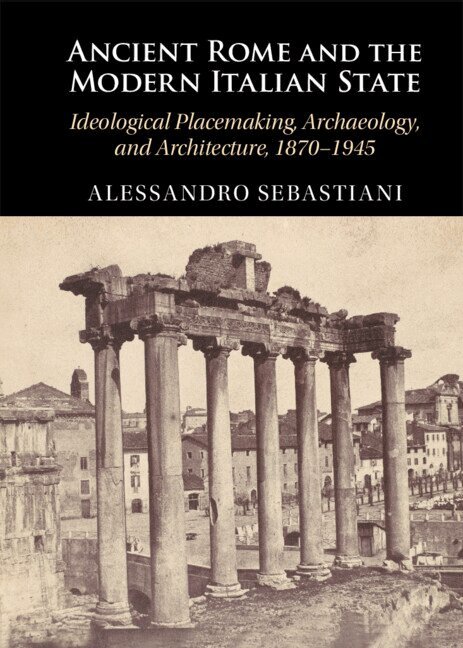
    Ancient Rome and the Modern Italian State

    Ideological Placemaking, Archaeology, and Architecture, 1870-1945

    AvAlessandro Sebastiani

    Inbunden, Engelska, 2023

    1 237 kr

    Beställningsvara. Skickas inom 10-15 vardagar. Fri frakt över 249 kr.

    Beskrivning

    In this book, Alessandro Sebastiani examines how architecture and urbanism can be used to construct national identity. Using Rome as his case study, he explores how the city was transformed to accommodate different political ideologies in the period from 1870 to the end of World War II. After unification, Rome's classical architecture served as a reference point, guiding transformations of the urban fabric that met contemporary needs but also supported the agenda of the newly-formed Italian state. The advent of fascist state in the 1920s ushered in a different order of ideological placemaking. The monuments of ancient Roman were isolated in order to enhance their structural elegance, a scheme that powerfully conveyed political messages in support of Mussolini's regime. Sebastiani's volume offers a new approach to understanding the sophisticated relationships between archeology, urban planning, and politics within the city of Rome. Moreover, it highlights the consequences of suppressing historical evidence from monuments and archaeological sites.

    Produktinformation

    • Utgivningsdatum:2023-07-20
    • Mått:185 x 262 x 22 mm
    • Vikt:760 g
    • Format:Inbunden
    • Språk:Engelska
    • Antal sidor:306
    • Förlag:Cambridge University Press
    • ISBN:9781009354103

    Utforska kategorier

    • Arkeologiska perioder och områden inom Historia och arkeologi

    Mer om författaren

    Alessandro Sebastiani is Assistant Professor of Roman Archaeology at the University at Buffalo (State University of New York). His research interests span from the Etruscan to the medieval periods, with a focus on the archaeology of Roman Tuscany. He is a former Marie Sklodowska-Curie Intra European Fellow at the University of Sheffield and has participated in numerous excavation projects across the Mediterranean. Most recently, he has been directing the Interconnected Mobility of People and Economy along the River Ombrone (IMPERO) Project in Etruria.

    Recensioner i media

    'Alessandro Sebastiani's book is a riveting account of Rome's transformation at the turn of the 20th century and during the ventennio. It marshals a vast number of sources and produces a gripping panorama of statesmen, trailblazing archaeologists, and visionaries, as they sought to reconcile a monumental past with their vision for Rome.' Andrea U. de Giorgi, Professor of Classical Studies, Florida State University

    Innehållsförteckning

    • List of figures; Preface; Acknowledgements; Structure of the Book; 1. Placemaking: an introduction; 2. Ideological placemaking: narratives and agents (1870–1945); 3. Post-unification placemaking (1870–1922); 4. Reclaiming historical identities of four classical monuments; 5. The fascist placemaking of four classical monuments (1922–1945); 6. The fascist ideological placemaking: new architecture; 7. Afterword; References; Index.