• Fri frakt över 249 kr
  • •
  • Snabba leveranser
  • •
  • Billiga böcker
Kundservice

Du är på sajten för privatpersoner.

Företag, bibliotek eller offentlig verksamhet?

Du handlar på classic.bokus.com, där alla dina funktioner finns intakta.
Till classic.bokus.com
Bokus logotyp. Gå till startsidan.
  • Erbjudanden
  • Nyheter
  • Student
  • Topplistor
  • Barn & ungdom
  • Bokus Play
  • E-böcker
  • Pocketböcker
  • Spel & pussel

10% rabatt på allt med kod: NYSTART10 →

Sidfot

Mina sidor

    Hjälp

    • Kundservice
    • Vanliga frågor och svar
    • Frakt och leverans
    • Retur vid ångerrätt
    • Reklamera vara
    • Betalning
    • Köpvillkor
    • Allmänna villkor
    • Information om webbplatsens tillgänglighet

    Om Bokus

    • Om oss
    • Pressrum
    • För studenter
    • För företag
    • För bibliotek och offentlig verksamhet
    • För leverantörer
    • Hållbarhet

    Populärt

    • Aktuella erbjudanden
    • Presentkort
    • Studentlitteratur
    • Nya böcker
    • Topplistor
    • Signerade böcker
    • Engelska böcker

    Inspiration

    • Boktips
    • BookTok
    • Populära bokserier
    • Barnbokskaraktärer
    • Populära författare
    Logotyp för Bokus
    Följ oss på Facebook (extern länk)Följ oss på Instagram (extern länk)Följ oss på YouTube (extern länk)Följ oss på TikTok (extern länk)
    bokus @ CookiesAnpassa cookiesIntegritetspolicyKöpvillkor
    Till Citymail hemsida (extern länk)Till Budbee hemsida (extern länk)Till Postnord hemsida (extern länk)Till Schenker hemsida (extern länk)Till Early Bird hemsida (extern länk)Till Walleys hemsida (extern länk)
    1. Ekonomi och Ledarskap
    2. Nationalekonomi
    3. Mikroekonomi

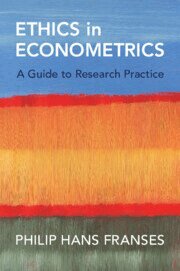
    Ethics in Econometrics

    A Guide to Research Practice

    AvPhilip Hans Franses

    Häftad, Engelska, 2024

    403 kr

    Beställningsvara. Skickas inom 10-15 vardagar. Fri frakt över 249 kr.

    Fler format och utgåvor

    E-bok

    488 kr

    Inbunden

    1 254 kr

    E-bok

    488 kr

    Beskrivning

    Applied econometrics uses the tools of theoretical econometrics and real-word data to develop predictive models and assess economic theories. Due to the complex nature of such analysis, various assumptions are often not understood by those people who rely on it. The danger of this is that economic policies can be assessed favourably to suit a particular political agenda and forecasts can be generated to match the needs of a particular customer. Ethics in Econometrics argues that econometricians need to be aware of potential ethical pitfalls when carrying out their analysis and that they need to be encouraged to avoid them. Using a range of empirical examples and detailed discussions of real cases, this book provides a guide for research practices in econometrics, illustrating why it is imperative that econometricians act ethically in terms of the way they conduct their analysis and treat their data.

    Produktinformation

    • Utgivningsdatum:2024-11-28
    • Mått:229 x 151 x 20 mm
    • Vikt:452 g
    • Format:Häftad
    • Språk:Engelska
    • Antal sidor:310
    • Förlag:Cambridge University Press
    • ISBN:9781009428071

    Utforska kategorier

    • Mikroekonomi inom Ekonomi och Ledarskap

    Mer om författaren

    Philip Hans Franses is Professor of Applied Econometrics at the Erasmus University Rotterdam. He is a Fellow of the Journal of Econometrics, Journal of Applied Econometrics, International Journal of Forecasting, and of the Royal Netherlands Academy of Arts and Sciences. He has published monographs and textbooks with Cambridge University Press.

    Recensioner i media

    'Having a deeper understanding of econometric tools, their use and misuse, is essential for not making misleading conclusions based on 'data evidence.' This excellent textbook introduces the reader to spotting some of the pitfalls in econometric and other data analysis.' Niels Haldrup, Aarhus University

    Innehållsförteckning

    • Introduction; 1. Ethical guidelines; 2. Scientific misconduct; 3. Influential observations; 4. Model selection; 5. Estimation and interpretation; 6. Missing data; 7. Spurious relations; 8. Blinded by the data; 9. Predictability; 10. Adjustment of forecasts; 11. Big data; 12. Algorithms.