• Fri frakt över 249 kr
  • •
  • Snabba leveranser
  • •
  • Billiga böcker
Kundservice

Du är på sajten för privatpersoner.

Företag, bibliotek eller offentlig verksamhet?

Du handlar på classic.bokus.com, där alla dina funktioner finns intakta.
Till classic.bokus.com
Bokus logotyp. Gå till startsidan.
  • Erbjudanden
  • Nyheter
  • Student
  • Topplistor
  • Barn & ungdom
  • Bokus Play
  • E-böcker
  • Pocketböcker
  • Spel & pussel

10% rabatt på allt med kod: NYSTART10 →

Sidfot

Mina sidor

    Hjälp

    • Kundservice
    • Vanliga frågor och svar
    • Frakt och leverans
    • Retur vid ångerrätt
    • Reklamera vara
    • Betalning
    • Köpvillkor
    • Allmänna villkor
    • Information om webbplatsens tillgänglighet

    Om Bokus

    • Om oss
    • Pressrum
    • För studenter
    • För företag
    • För bibliotek och offentlig verksamhet
    • För leverantörer
    • Hållbarhet

    Populärt

    • Aktuella erbjudanden
    • Presentkort
    • Studentlitteratur
    • Nya böcker
    • Topplistor
    • Signerade böcker
    • Engelska böcker

    Inspiration

    • Boktips
    • BookTok
    • Populära bokserier
    • Barnbokskaraktärer
    • Populära författare
    Logotyp för Bokus
    Följ oss på Facebook (extern länk)Följ oss på Instagram (extern länk)Följ oss på YouTube (extern länk)Följ oss på TikTok (extern länk)
    bokus @ CookiesAnpassa cookiesIntegritetspolicyKöpvillkor
    Till Citymail hemsida (extern länk)Till Budbee hemsida (extern länk)Till Postnord hemsida (extern länk)Till Schenker hemsida (extern länk)Till Early Bird hemsida (extern länk)Till Walleys hemsida (extern länk)
    1. Juridik
    2. Rättsvetenskap
    3. Juridik: metod och teori

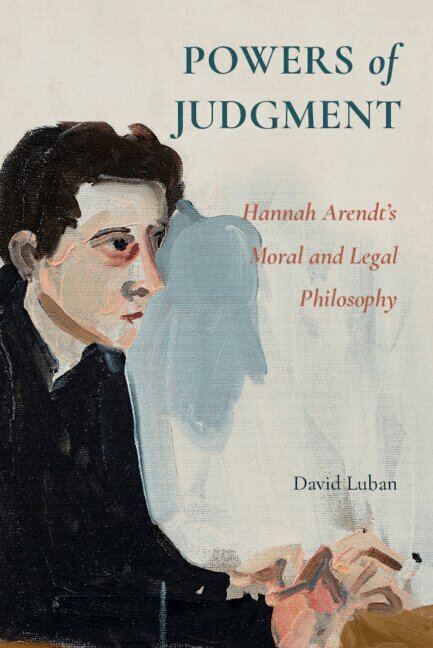
    Powers of Judgment

    Hannah Arendt's Moral and Legal Philosophy

    AvDavid Luban

    Inbunden, Engelska, 2026

    520 kr

    Beställningsvara. Skickas inom 10-15 vardagar. Fri frakt över 249 kr.

    Fler format och utgåvor

    E-bok

    633 kr

    E-bok

    632 kr

    Beskrivning

    This book is about conscience and moral clarity. It asks how some people keep their judgment steadfast even when many around them are swept away by conspiracy theories, moral panics, and murderous ideologies-or, on a smaller scale, by immersion in a corrupt and corrupting workplace culture. It asks about the surprising fragility of common sense, including moral common sense, and it asks where morality fits into a meaningful human life. Beyond this, the book asks about legal accountability for crimes committed when moral judgment fails on a vast and deadly scale. Hannah Arendt addressed all these questions in a profound and original way. Drawing on her published works, letters, diaries, and notes, David Luban offers clear accounts of Arendt's contributions to moral philosophy and international law, showing how her ideas about judgment and accountability remain crucially important to the moral and legal life of our century.

    Produktinformation

    • Utgivningsdatum:2026-05-14
    • Mått:163 x 231 x 27 mm
    • Vikt:690 g
    • Format:Inbunden
    • Språk:Engelska
    • Antal sidor:430
    • Förlag:Cambridge University Press
    • ISBN:9781009647465

    Utforska kategorier

    • Juridik: metod och teori inom Juridik
    • Filosofiska discipliner inom Filosofi och religion

    Mer om författaren

    David Luban is Distinguished Professor at Georgetown University Law Center. He is the author of Lawyers and Justice: An Ethical Study (1988), Legal Modernism (1994), Legal Ethics and Human Dignity (Cambridge, 2007), and Torture, Power, and Law (Cambridge, 2014).

    Recensioner i media

    'At this perilous moment in our history, David Luban has delivered a work of exceptional importance. On one level, the book offers an astute and judicious study of Hannah Arendt's moral philosophy, brilliantly illuminating an overlooked dimension of the great thinker's oeuvre. But more distinctively, Luban proves the equal of Arendt, expounding a novel contribution to international legal theory and offering an indispensable guide to preserving our moral bearing and capacity for reasoned judgment in the darkest of times.' Lawrence Douglas, Amherst College

    Innehållsförteckning

    • Introduction: Hannah Arendt, the philosopher of judgment; Part I. Adolf Eichmann and the Banality of Evil: 1. Arendt in Jerusalem; 2. Did Arendt get Eichmann wrong?; Part II. The Moral Philosophy: 3. Judgment in dark times; 4. The Socratic moral propositions: thinking and judging; 5. Conscience and the banality of evil; Part III. Common Sense and Moral Breakdown: 6. The flight from common sense; 7. Common sense and plurality; Part IV. Arendt Before Jerusalem: Ethics in The Human Condition: 8. The curious case of the missing morality; 9. The problem of futility in The Human Condition: Part V. Arendt and International Law: 10. Statelessness, human rights, and humanity; 11. The idea of international criminal law; 12. The crime against the human status: Lemkin and Arendt; 13. The promise and peril of identity as politics; 14. Doing justice; 15. Thoughtlessness as culpability; Conclusion: taking stock.