• Fri frakt över 249 kr
  • •
  • Snabba leveranser
  • •
  • Billiga böcker
Kundservice

Du är på sajten för privatpersoner.

Företag, bibliotek eller offentlig verksamhet?

Du handlar på classic.bokus.com, där alla dina funktioner finns intakta.
Till classic.bokus.com
Bokus logotyp. Gå till startsidan.
  • Erbjudanden
  • Nyheter
  • Student
  • Topplistor
  • Barn & ungdom
  • Bokus Play
  • E-böcker
  • Pocketböcker
  • Spel & pussel

10% studentrabatt med kod TERM26

Sidfot

Mina sidor

    Hjälp

    • Kundservice
    • Vanliga frågor och svar
    • Frakt och leverans
    • Retur vid ångerrätt
    • Reklamera vara
    • Betalning
    • Köpvillkor
    • Allmänna villkor
    • Information om webbplatsens tillgänglighet

    Om Bokus

    • Om oss
    • Pressrum
    • För studenter
    • För företag
    • För bibliotek och offentlig verksamhet
    • För leverantörer
    • Hållbarhet

    Populärt

    • Aktuella erbjudanden
    • Presentkort
    • Studentlitteratur
    • Nya böcker
    • Topplistor
    • Signerade böcker
    • Engelska böcker

    Inspiration

    • Boktips
    • BookTok
    • Populära bokserier
    • Barnbokskaraktärer
    • Populära författare
    Logotyp för Bokus
    Följ oss på Facebook (extern länk)Följ oss på Instagram (extern länk)Följ oss på YouTube (extern länk)Följ oss på TikTok (extern länk)
    bokus @ CookiesAnpassa cookiesIntegritetspolicyKöpvillkor
    Till Citymail hemsida (extern länk)Till Budbee hemsida (extern länk)Till Postnord hemsida (extern länk)Till Schenker hemsida (extern länk)Till Early Bird hemsida (extern länk)Till Walleys hemsida (extern länk)
    1. Kultur
    2. Arkitektur
    3. Arkitekturhistoria
    • Nyhet

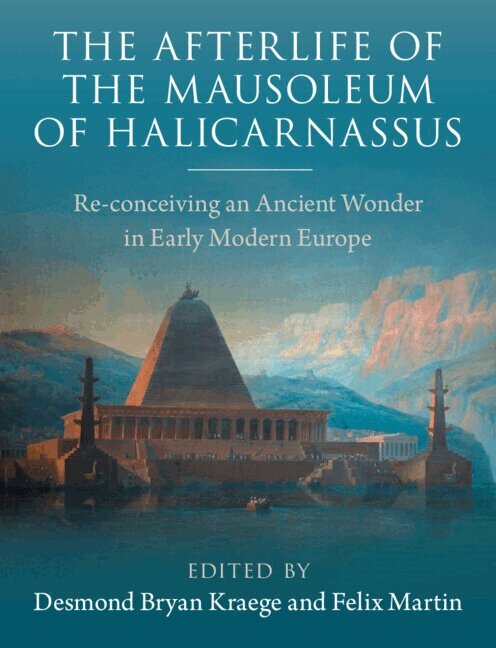
    The Afterlife of the Mausoleum of Halicarnassus

    Re-conceiving an Ancient Wonder in Early Modern Europe

    AvDesmond Bryan Kraege,Felix Martin

    Inbunden, Engelska, 2026

    1 319 kr

    Beställningsvara. Skickas inom 10-15 vardagar. Fri frakt över 249 kr.

    Beskrivning

    Few buildings have been as important to Western culture as the Mausoleum of Halicarnassus. One of the Seven Wonders of antiquity, it was destroyed during the Middle Ages, leading countless architects, antiquarians, painters and printmakers in Early Modern Europe to speculate upon its appearance. This book - the first on its subject - examines their works, from erudite publications to simple pen sketches, from elegant watercolours to complete buildings inspired by the monument. Spanning the period between the Italian Renaissance and the discovery and archaeological excavation of the Mausoleum's foundations in the 1850s, it covers the most important cultural contexts of Western Europe, without neglecting artworks from Peru, China and Japan. The monument's connexion with themes of widowhood and female political power are analysed, as are the manifold interactions between architecture, text and image in the afterlife of the Mausoleum. This title is also available as Open Access on Cambridge Core.

    Produktinformation

    • Utgivningsdatum:2026-08-20
    • Mått:221 x 286 x 18 mm
    • Vikt:500 g
    • Format:Inbunden
    • Språk:Engelska
    • Antal sidor:246
    • Förlag:Cambridge University Press
    • ISBN:9781009728614

    Utforska kategorier

    • Arkitekturhistoria inom Kultur

    Mer om författaren

    Desmond Bryan Kraege is Lecturer in Early Modern art history at the University of Lausanne, having previously held postdoctoral research fellowships at the Oslo School of Architecture and Design and Princeton University. Grants and prizes he has received include awards from the Swiss National Science Foundation, the University of Lausanne, and the VKKS Association of Swiss Art Historians. His research interests encompass the study of architectural images, historical temporality, and the interactions between science and landscape representation in eighteenth-century Europe. Felix Martin is a postdoctoral researcher at the Chair for Architectural History, RWTH Aachen University. Funded by the German Academic Exchange Service and the German Scholarship Foundation, he has previously conducted research at Trinity College Dublin and the Warburg Institute London. His research explores the architectural influence of the Grand Tour and the emergence of public architecture in the eighteenth and nineteenth centuries, the legacy of the eighteenth century in twentieth-century architecture, and the processes of democratisation in post-war West German architecture. He is co-founder of smaa studio architects and editor of the architectural history and theory journal archimaera.

    Recensioner i media

    'From the Renaissance through the Victorian era, architects mused on the surviving ekphrastic descriptions of the Mausoleum of Halicarnassus, producing imaginative reconstructions and original designs. The essays comprising this volume explore key moments in the rich afterlife of a major monument, illuminating its place in the history of western architecture.' John Pinto, Princeton University

    Innehållsförteckning

    • Introduction Desmond Bryan Kraege and Felix Martin; Part I. Situating a Wonder: 1. The Maussolleion at Halikarnassos Poul Pedersen; 2. The Monument and the list: the Mausoleum of Halicarnassus amongst the seven wonders Inmaculada Rodriguez Moya and Victor Minguez; Part II. Renaissance Appropriations: 3. From Mausolus to Martyr: Caria's Mausoleum and the cult of saints in Cinquecento architecture Peter Fane-Saunders; 4. Combining Porsenna and Mausolus. The pyramids of Antonio da Sangallo the younger Fabio Colonnese; 5. Embodying the Mausoleum: Nicolas Houel and Antoine Caron Envisage Artemisia for Catherine de' Medici Sheila ffolliott; Part III. Print Culture: 6. The Mausoleum of Halicarnassus in seventeenth-century series of the seven wonders: following in the wake of Maarten van Heemskerck Ainhoa de Miguel; 7. Fischer von Erlach's Mausoleum of Halicarnassus Marco Folin; 8. The Mausoleum of Halicarnassus through the eyes of travellers, 1656–1857 Raphaëlle Merle; Part IV. The Mausoleum and the City: 9. Hawksmoor's St George's Bloomsbury, Hogarth's Gin Lane and the reception of the Mausoleum of Halicarnassus in Georgian London, 1716–1751 Daniel Sherer; 10. A Monument to eternity: Augustus the strong's 'Pyramid Building' in Dresden-Neustadt, the Hypnerotomachia Poliphili and the Mausoleum of Halicarnassus Stefan Hertzig; 11. Halicarnassus in the garden: architectural assimilation and shifting relations of Monument and setting, Paris 1740s–1800s Desmond Bryan Kraege; Part V. Halicarnassus for a Mass Public: 12. Building civic confidence: Friedrich Weinbrenner's Monument to the wars of liberation and the Mausoleum of Halicarnassus in the German imagination around 1800 Felix Martin; 13. Karl Friedrich Schinkel's Tomb of king Maussollos in Caria Christian Raabe; 14. Charles Robert Cockerell: a pioneering measurement-based study of the Mausoleum of Halicarnassus Lynda Mulvin; Appendix I. Sources on the original Mausoleum; Appendix II. Discussions and representations of the Mausoleum, 1500–1850; Bibliography.