• Fri frakt över 249 kr
  • •
  • Snabba leveranser
  • •
  • Billiga böcker
Kundservice

Du är på sajten för privatpersoner.

Företag, bibliotek eller offentlig verksamhet?

Du handlar på classic.bokus.com, där alla dina funktioner finns intakta.
Till classic.bokus.com
Bokus logotyp. Gå till startsidan.
  • Erbjudanden
  • Nyheter
  • Student
  • Topplistor
  • Barn & ungdom
  • Bokus Play
  • E-böcker
  • Pocketböcker
  • Spel & pussel

Må bättre, för mindre! Upp till 50% rabatt på hälsoböcker

Sidfot

Mina sidor

    Hjälp

    • Kundservice
    • Vanliga frågor och svar
    • Frakt och leverans
    • Retur vid ångerrätt
    • Reklamera vara
    • Betalning
    • Köpvillkor
    • Allmänna villkor
    • Information om webbplatsens tillgänglighet

    Om Bokus

    • Om oss
    • Pressrum
    • För studenter
    • För företag
    • För bibliotek och offentlig verksamhet
    • För leverantörer
    • Hållbarhet

    Populärt

    • Aktuella erbjudanden
    • Presentkort
    • Studentlitteratur
    • Nya böcker
    • Topplistor
    • Signerade böcker
    • Engelska böcker

    Inspiration

    • Boktips
    • BookTok
    • Populära bokserier
    • Barnbokskaraktärer
    • Populära författare
    Logotyp för Bokus
    Följ oss på Facebook (extern länk)Följ oss på Instagram (extern länk)Följ oss på YouTube (extern länk)Följ oss på TikTok (extern länk)
    bokus @ CookiesAnpassa cookiesIntegritetspolicyKöpvillkor
    Till Citymail hemsida (extern länk)Till Budbee hemsida (extern länk)Till Postnord hemsida (extern länk)Till Schenker hemsida (extern länk)Till Early Bird hemsida (extern länk)Till Walleys hemsida (extern länk)
    1. Samhälle och politik
    2. Politik och statsskick
    3. Internationella relationer

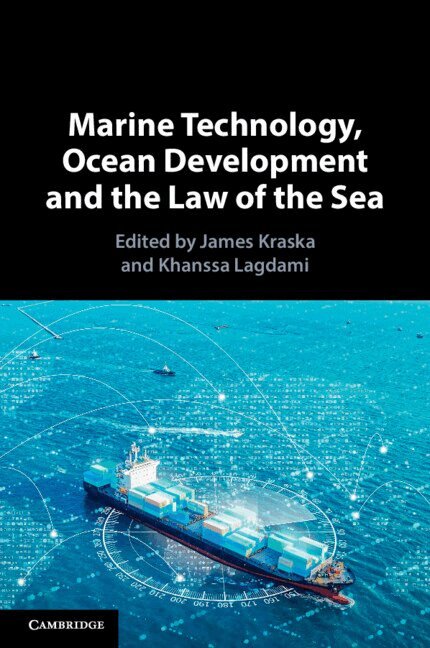
    Marine Technology, Ocean Development and the Law of the Sea

    AvJames Kraska,Khanssa Lagdami

    Häftad, Engelska, 2026

    476 kr

    . Fri frakt över 249 kr.

    Beskrivning

    Emerging technologies such as autonomous vessels, artificial intelligence, and alternative fuels are revolutionizing the way we operate at sea. This volume examines how advancements in information technology and biotechnology are influencing the evolution of ocean law and policy. These technologies, including blockchain, satellite and submarine cable communications, nuclear power at sea, seabed mining, underwater archaeology, marine genetics, and decarbonization, are changing the architecture of ocean governance. This volume explores both the opportunities and challenges these advancements pose to the law of the sea, which is evolving to adapt to ever accelerating rates of global change. Looking forward, the book considers the role of the law of the sea in the future of ocean governance. This title is also available as open access on Cambridge Core.

    Produktinformation

    • Utgivningsdatum:2026-04-02
    • Mått:213 x 17 x 144 mm
    • Vikt:610 g
    • Format:Häftad
    • Språk:Engelska
    • Antal sidor:430
    • Förlag:Cambridge University Press
    • ISBN:9781009760225

    Utforska kategorier

    • Internationella relationer inom Samhälle och politik
    • Folkrätt inom Juridik

    Mer om författaren

    James Kraska is Charles H. Stockton Chair of International Maritime Law and Visiting Professor of Law and John Harvey Gregory Lecturer on World Organization at Harvard Law School. His research focuses on emerging and disruptive marine technologies, the law of the sea, and the law of naval warfare. Khanssa Lagdami is the ITF Seafarers' Trust Associate Professor at the World Maritime University. She specializes in maritime labor law, human rights at sea, maritime security and the future of work. With extensive international research, consultancy and project leadership experience, she advances legal, policy and capacity-building initiatives, particularly in developing regions.

    Innehållsförteckning

    • Part I. Autonomous Shipping: 1. Port state jurisdiction and remotely controlled ships Murat Sümer; 2. Autonomous ships and time charter parties Ceren Cerit Dindar; 3. AI at sea: implications for seafarers and maritime labor law Khanssa Lagdami; 4. Attribution of the conduct of MASS shipmasters to the flag state Maral Javidbakht; Part II. Protection of the Marine Environment: 5. Towards a just and equitable transition to decarbonization of the international shipping sector Sindhura Polepalli; Part III. Maritime Cyber Safety and Security: 6. Maritime cyber threats: jamming and spoofing of commercial vessels Raul (Pete) Pedrozo; 7. Vessel tracking innovations Richard L. Kilpatrick; Part IV. Conservation and Use of Marine Resources: 8. Blockchain and the law of the sea Krisztina Tilinger; 9. Seabed mining technology and the precautionary approach Digvijay Rewatkar; Part V. Marine Science and Exploration: 10. Sensor monitoring and reliable telecommunications (smart) submarine cables and marine scientific research Youri van Logchem; 11. Advances in underwater archaeology Natalia Perez; Part VI. Maritime Security and Naval Threats: 12. Floating nuclear power plants, nonproliferation norms, and the law of the sea Marc Fialkoff; 13. National security challenges to implementing the high seas regime on marine genetic resources James Kraska.