• Fri frakt över 249 kr
  • •
  • Snabba leveranser
  • •
  • Billiga böcker
Kundservice

Du är på sajten för privatpersoner.

Företag, bibliotek eller offentlig verksamhet?

Du handlar på classic.bokus.com, där alla dina funktioner finns intakta.
Till classic.bokus.com
Bokus logotyp. Gå till startsidan.
  • Erbjudanden
  • Nyheter
  • Student
  • Topplistor
  • Barn & ungdom
  • Bokus Play
  • E-böcker
  • Pocketböcker
  • Spel & pussel

10% studentrabatt med kod TERM26

Sidfot

Mina sidor

    Hjälp

    • Kundservice
    • Vanliga frågor och svar
    • Frakt och leverans
    • Retur vid ångerrätt
    • Reklamera vara
    • Betalning
    • Köpvillkor
    • Allmänna villkor
    • Information om webbplatsens tillgänglighet

    Om Bokus

    • Om oss
    • Pressrum
    • För studenter
    • För företag
    • För bibliotek och offentlig verksamhet
    • För leverantörer
    • Hållbarhet

    Populärt

    • Aktuella erbjudanden
    • Presentkort
    • Studentlitteratur
    • Nya böcker
    • Topplistor
    • Signerade böcker
    • Engelska böcker

    Inspiration

    • Boktips
    • BookTok
    • Populära bokserier
    • Barnbokskaraktärer
    • Populära författare

    Mina sidor

      Hjälp

      • Kundservice
      • Vanliga frågor och svar
      • Frakt och leverans
      • Retur vid ångerrätt
      • Reklamera vara
      • Betalning
      • Köpvillkor
      • Allmänna villkor
      • Information om webbplatsens tillgänglighet

      Om Bokus

      • Om oss
      • Pressrum
      • För studenter
      • För företag
      • För bibliotek och offentlig verksamhet
      • För leverantörer
      • Hållbarhet

      Populärt

      • Aktuella erbjudanden
      • Presentkort
      • Studentlitteratur
      • Nya böcker
      • Topplistor
      • Signerade böcker
      • Engelska böcker

      Inspiration

      • Boktips
      • BookTok
      • Populära bokserier
      • Barnbokskaraktärer
      • Populära författare
      Logotyp för Bokus
      Följ oss på Facebook (extern länk)Följ oss på Instagram (extern länk)Följ oss på YouTube (extern länk)Följ oss på TikTok (extern länk)
      bokus @ CookiesAnpassa cookiesIntegritetspolicyKöpvillkor
      Till Citymail hemsida (extern länk)Till Budbee hemsida (extern länk)Till Postnord hemsida (extern länk)Till Schenker hemsida (extern länk)Till Early Bird hemsida (extern länk)Till Walleys hemsida (extern länk)
      1. Historia och arkeologi
      2. Arkeologi
      • -10% student

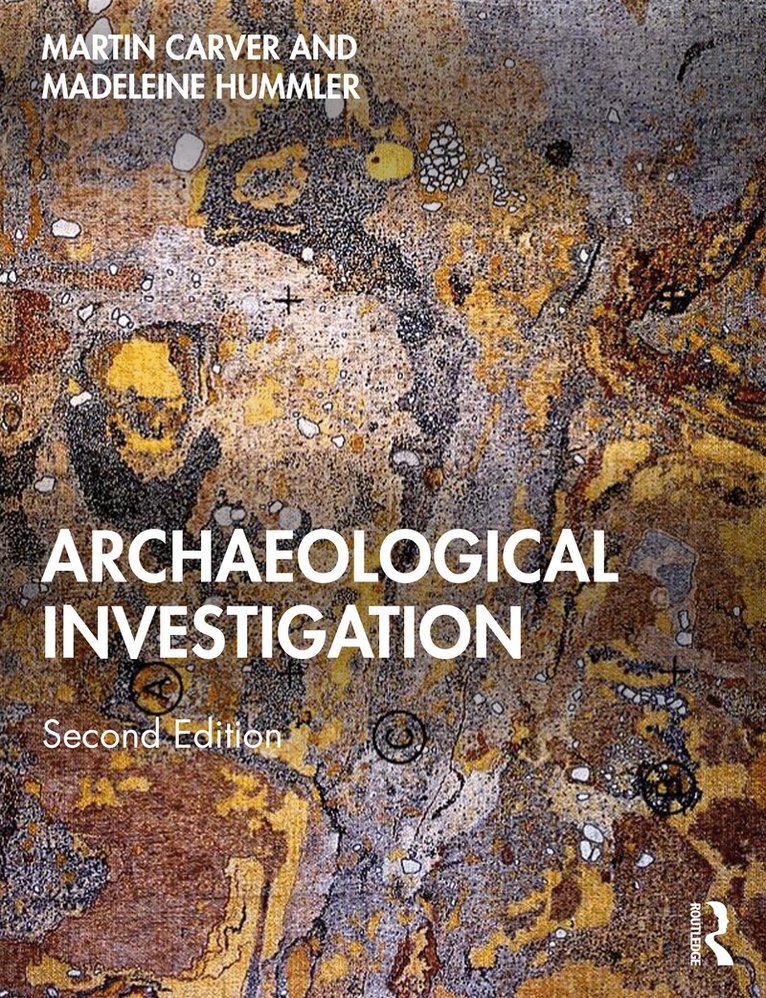
      Archaeological Investigation

      AvMartin Carver,Madeleine Hummler

      Häftad, Engelska, 2024

      588 kr

      Beställningsvara. Skickas inom 10-15 vardagar. Fri frakt över 249 kr.

      Fler format och utgåvor

      Inbunden

      2 506 kr

      Häftad

      Tillf. slut

      Inbunden

      Tillf. slut

      Beskrivning

      The thoroughly updated second edition of Archaeological Investigation reviews and explains the practices of field archaeology in the world today. Now co-authored by Madeleine Hummler, the book’s scope has been enlarged in time and space, reaching out to the different methods and strategies applied in both the academic and commercial sectors in diverse terrain on land and under the sea.Archaeological Investigation accompanies the reader on a journey from absolute beginner to professional. Part 1 (Principles) sets the scene for newcomers, showing the axial role of fieldwork in rediscovering the past. Part 2 (In the Field) is aimed at those setting out to collect primary data by the diverse methods of modern survey and excavation. Word pictures on "First day in the field" and "First day on a dig" provide friendly introductions to the high-tech enterprise that fieldwork has become. Now fully engaged in the process, newcomers to archaeology are ready, in Part 3 (Writing Up), to take part in the process of making the discoveries known. Here the findings of fieldwork are marshalled to analyse the assemblage, the use of space and the chronology of what happened. The results are then combined in a synthesis and communicated through websites, museums, the display of sites and above all through publication. Part 4 (Design) engages the reader in archaeology’s primary action: how to design projects that conserve, rediscover and explain the human past, beginning with a review of some landmark examples (Chapter 13). The final chapter (The Profession) reviews the role of the state, the academy, the commercial sector and the public in making archaeology happen – and why it matters.Building on the authors’ extensive experience, Archaeological Investigation remains an inspiring, provocative, informative and entertaining book for students and professionals, arguing that the investigation of the human and environmental past is highly relevant to contemporary society and its future.

      Produktinformation

      • Utgivningsdatum:2024-12-18
      • Mått:189 x 246 x 33 mm
      • Vikt:0 g
      • Format:Häftad
      • Språk:Engelska
      • Antal sidor:620
      • Upplaga:2
      • Förlag:Taylor & Francis Ltd
      • ISBN:9781032024912

      Ingår i kampanjer

      -10% student

      Utforska kategorier

      • Arkeologi inom Historia och arkeologi

      Mer om författaren

      Martin Carver is an archaeologist who has worked in ten countries and had four careers: 14 years as an army officer, 13 years as a freelance excavator, 22 years as a university professor and 16 years, so far, as an archaeological researcher, writer and editor. He has undertaken projects in England, in the West Midlands and Sutton Hoo, in north-east Scotland at Portmahomack, and in France, Italy and Algeria for their government agencies. From 2003 to 2012, he was editor of Antiquity, which publishes archaeological theories and discoveries from all over the world. Here he created a special section on methods and an online supplement that carries notices of new projects (Project Gallery). He was the first secretary of the Institute of Field Archaeologist (now the Chartered Institute for Archaeologists), and is a fellow of the Societies of Antiquaries of London and Scotland, a corresponding member of the German Archaeological Institute and a Fellow of the British Academy.Madeleine Hummler was educated at the Universities of Basel, Birmingham and Oxford, where she completed her DPhil on the Iron Age archaeology of the Rhône valley. She has excavated widely in Switzerland, Britain, France, northern Italy and Sicily, directing fieldwork in Britain, Provence and Lombardy and training generations of students to excavate, survey and record over four decades. Mastering four languages and a trained teacher of modern languages, she has translated and edited numerous archaeological publications, including for Antiquity and the European Journal of Archaeology, and reviewed hundreds of books when Reviews Editor at Antiquity (2005–2012). She is a fellow of the Societies of Antiquaries of London.

      Innehållsförteckning

      • List of illustrationsAcknowledgements and picture creditsPrefacePreface to the second editionThe authorsPART 1: PrinciplesHow archaeological fieldwork relates to theory and the society in which it is practised. The demands of research, the needs of conservation and the rights of stakeholders – and how these can be reconciled.Chapter 1: The StuffA prodigious varietyHow sites formDigging them upLet’s speak archaeologyMega-macro-micro-nanoIn sum…BriefingChapter 2: ApproachesWhat do we want from fieldwork?Empirical to reflexive: four approachesValue-led archaeologyField Research ProcedureIn sum…BriefingChapter 3: Field Research Procedure – a frameworkA value-led project: Sutton HooThe recent campaignStage 1 ReconnaissanceStage 2 EvaluationStage 3 Project DesignStage 4 ImplementationStage 5 Analyses and synthesesStage 6 Publication and the publicThe futureReflectionsBriefingPART 2: In the FieldHere we review techniques and their applications for three principal types of field operation.Chapter 4: Landscape Survey First day in the fieldMethods: Using maps, from the air, on the surfaceApplications: Inventory surveys, mitigation surveys, research surveys, environments (historic and natural), survey by samplesIn sum…BriefingChapter 5: Site Survey DefinitionsMethods: In the archives, from the air, on the ground (topography and surface collection), geophysical mapping, georadar, geochemical methods, strata testing (cores pits and trenches)Applications: In the countryside, a basket of site surveys in Sicily, urban sites, graveyards, battlefields and gardens, studying standing buildingsIn sum….BriefingChapter 6: Excavation First day on a digOn method: three ways of dissecting strata, contexts, features and structures, the excavation site as a laboratoryOn procedure: Recovery levels A–ERecovering the unseen: Recovery level F (taking away, nano investigations)Recording: Rationales of recording, recording in action, components of records (contexts, features, structures, horizons, sections and profiles), finds, notebooks and videos, an integrated recording systemThe course of an excavationIn sum…BriefingPART 3: WRITING UPThis section shows how the records gathered in the field are studied and reported to researchers, to clients and to the public.Chapter 7: AnalysisPreliminary tasks: inventory, assessment and designThe analytical programme: assemblage, space, chronologyDesigning the analytical itineraryAn exampleIn sum…BriefingChapter 8: AssemblageRetrievalProgrammes of AnalysisArtefacts: fabric, form, styleEcodata: bioarchaeological material: Human remains: SI, aDNA; Animals; Plants and plant-related remains; Organic Residues and Proteomics; SoilsInterpretation of archaeological assemblages: in settlements and cemeteriesIn sum…BriefingChapter 9: SpaceScales of spaceSpatial patterns from excavation: mapping objects, contexts, features and structures; finding patterns in burial; finding buildings; Inside buildingsSpatial patterns from site survey: mapping settlementsSpatial patterns in the landscapeIn sum….BriefingChapter 10: ChronologyThe business of chronologyTypological dating of artefactsDirect dating of objectsDirect dating of contextsRelative ordering of contextsUsing objects to date contextsOrdering assemblagesUsing stratification, assemblage and radiocarbon togetherFeature sequencesChronology of sites: dating buildings; rural sites; urban sitesContext seriation: assemblages and stratification working togetherConvergent chronologiesIn sum…..BriefingChapter 11: SynthesisWhy write?The case for synthesisSite modelsTowards synthesisEthnographyExperiment: artefacts; a building; a shipThe validation of synthesesJoined-up synthesis: science and humanities in tandemIn sum…Chapter 12: PublicationEight ways of telling it: who pays and why?Archives and Field RecordsField ReportsClient ReportsReporting research: preparing a research reportBooks for the wider public (including students)Presenting sites to the publicMuseums and websitesEphemeral output: the press, TV, social mediaArchaeologists communicate.The Future of PublicationBriefingPART 4 DesignThis part studies project design as the principal driver of archaeological investigations and how the concept has created a vivid and varied repertoire of career opportunities.Chapter 13: ChallengesExtensive investigations – The Ruby Pipeline Nevada, Olympic Dam South Australia, Loango coast Congo, Green Sahara, Canadian ice patches and calibou.Intensive investigations- Digging deep - Paleolithic Urals, Klithi cave. Digging mounds- Carlston Annis mound, Wijnaldum-Tjitsma terp. On the flat - Yeavering, Bylany. Underneath towns - York Minster, Managing Urban Archaeology (Ove Arup), Crossrail, Grand Arcade in Cambridge.Underwater investigations- wrecks: Yassīada. Drowned settlements: Charavines, Atlit Yam, Splashcos.An integrated challenge: – the underground carpark of the Zurich Opera house.ReflectionsBriefingChapter 14: Designing ProjectsIntroduction - a rationale for designField Research Procedure and its Design StagesEvaluation in town and countryThe research agendaPredicting the archaeologyThe Social contextContents of a Project DesignSubmission and assessmentReflectionsBriefingChapter 15: Our profession and its futureThe basis for a professionDeregulated archaeology: values, responsibilities, rewardsThe Research CycleThe Heritage CycleProfessional prospects – the way inA global agenda? – the SDGsThe Creative SpiritBriefingReferencesIndex