• Fri frakt över 249 kr
  • •
  • Snabba leveranser
  • •
  • Billiga böcker
Kundservice

Du är på sajten för privatpersoner.

Företag, bibliotek eller offentlig verksamhet?

Du handlar på classic.bokus.com, där alla dina funktioner finns intakta.
Till classic.bokus.com
Bokus logotyp. Gå till startsidan.
  • Erbjudanden
  • Nyheter
  • Student
  • Topplistor
  • Barn & ungdom
  • Bokus Play
  • E-böcker
  • Pocketböcker
  • Spel & pussel

10% rabatt på allt med kod: NYSTART10 →

Sidfot

Mina sidor

    Hjälp

    • Kundservice
    • Vanliga frågor och svar
    • Frakt och leverans
    • Retur vid ångerrätt
    • Reklamera vara
    • Betalning
    • Köpvillkor
    • Allmänna villkor
    • Information om webbplatsens tillgänglighet

    Om Bokus

    • Om oss
    • Pressrum
    • För studenter
    • För företag
    • För bibliotek och offentlig verksamhet
    • För leverantörer
    • Hållbarhet

    Populärt

    • Aktuella erbjudanden
    • Presentkort
    • Studentlitteratur
    • Nya böcker
    • Topplistor
    • Signerade böcker
    • Engelska böcker

    Inspiration

    • Boktips
    • BookTok
    • Populära bokserier
    • Barnbokskaraktärer
    • Populära författare
    Logotyp för Bokus
    Följ oss på Facebook (extern länk)Följ oss på Instagram (extern länk)Följ oss på YouTube (extern länk)Följ oss på TikTok (extern länk)
    bokus @ CookiesAnpassa cookiesIntegritetspolicyKöpvillkor
    Till Citymail hemsida (extern länk)Till Budbee hemsida (extern länk)Till Postnord hemsida (extern länk)Till Schenker hemsida (extern länk)Till Early Bird hemsida (extern länk)Till Walleys hemsida (extern länk)
    1. Data och IT
    2. Informationsteknik: allmänt

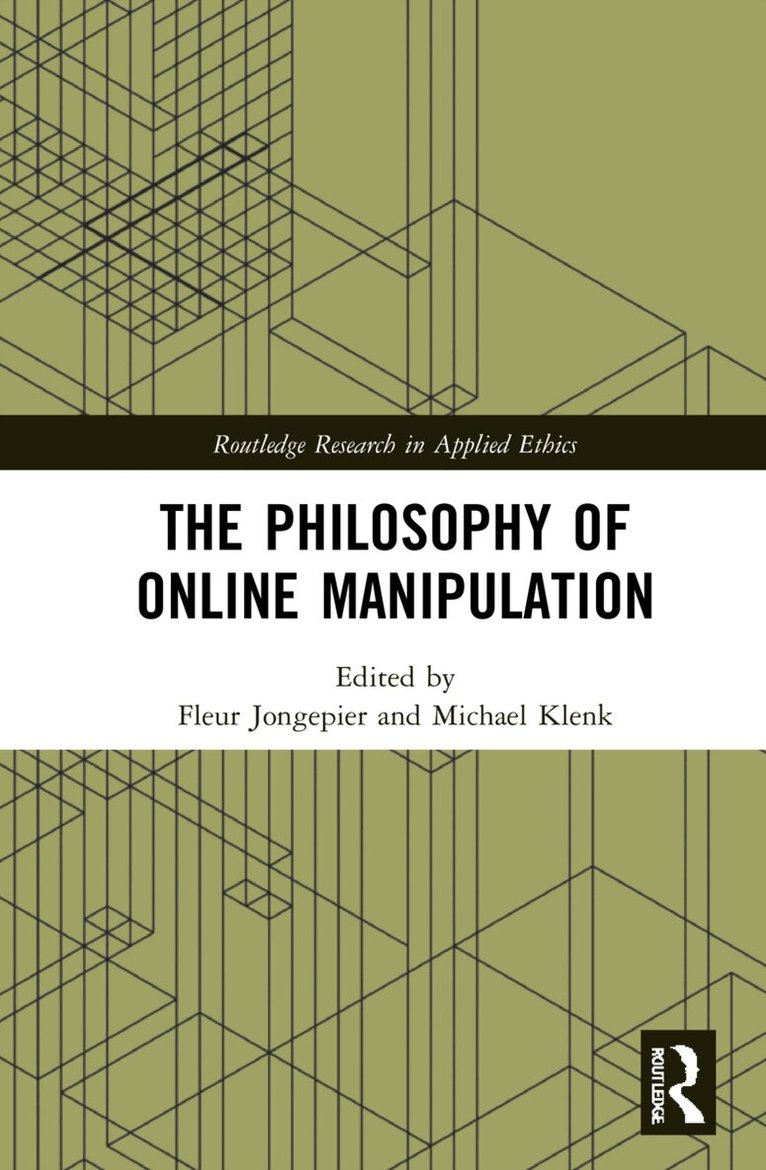
    Philosophy of Online Manipulation

    AvFleur Jongepier,Michael Klenk

    Inbunden, Engelska, 2022

    Del i serien Routledge Research in Applied Ethics

    2 423 kr

    Beställningsvara. Skickas inom 10-15 vardagar. Fri frakt över 249 kr.

    Beskrivning

    Are we being manipulated online? If so, is being manipulated by online technologies and algorithmic systems notably different from human forms of manipulation? And what is under threat exactly when people are manipulated online?This volume provides philosophical and conceptual depth to debates in digital ethics about online manipulation. The contributions explore the ramifications of our increasingly consequential interactions with online technologies such as online recommender systems, social media, user friendly design, microtargeting, default settings, gamification, and real time profiling. The authors in this volume address four broad and interconnected themes:What is the conceptual nature of online manipulation? And how, methodologically, should the concept be defined?Does online manipulation threaten autonomy, freedom, and meaning in life and if so, how?What are the epistemic, affective, and political harms and risks associated with online manipulation?What are legal and regulatory perspectives on online manipulation?This volume brings these various considerations together to offer philosophically robust answers to critical questions concerning our online interactions with one another and with autonomous systems. The Philosophy of Online Manipulation will be of interest to researchers and advanced students working in moral philosophy, digital ethics, philosophy of technology, and the ethics of manipulation.

    Produktinformation

    • Utgivningsdatum:2022-06-20
    • Mått:156 x 234 x 27 mm
    • Vikt:940 g
    • Format:Inbunden
    • Språk:Engelska
    • Serie:Routledge Research in Applied Ethics
    • Antal sidor:412
    • Förlag:Taylor & Francis Ltd
    • ISBN:9781032030012

    Utforska kategorier

    • Informationsteknik: allmänt inom Data och IT
    • Filosofiska discipliner inom Filosofi och religion
    • Juridisk teknik inom Juridik

    Mer om författaren

    Fleur Jongepier is Assistant Professor in digital ethics at the Radboud University Nijmegen, The Netherlands. She is currently working on a research project on the impact of algorithms on our capacity for self-knowledge and autonomy, and the ways in which algorithms are said to know us ‘better than we know ourselves’. She is also interested in feminist ethics, self and identity, moral pedagogy, and is actively engaged in public philosophy.Michael Klenk is Assistant Professor of Philosophy at Delft University of Technology, The Netherlands. His work is at the intersection of metaethics, moral psychology, and the philosophy of technology. He is the editor of Higher-Order Evidence and Moral Epistemology (Routledge, 2020) and co-editor of Philosophy in the Age of Science? Inquiries into Philosophical Progress, Method, and Societal Relevance (2020).

    Recensioner i media

    "The sophisticated way in which data-driven technologies are able to manipulate our thinking and actions raises fundamental ethical questions about––among other things––freedom, legitimacy, and integrity in our networked society. By bringing together philosophical discussions on manipulation, human-machine interaction, and digital ethics, this volume provides an in-depth and much-needed analysis of the key concepts and questions underpinning these challenges."Esther Keymolen, Tilburg University, The Netherlands

    Innehållsförteckning

    • Introduction and Overview of Chapters, Fleur Jongepier & Michael Klenk Part I Conceptual and methodological questions Online Manipulation: Charting the Field, Fleur Jongepier & Michael Klenk Online Manipulation and Agential Risk, Max Cappuccio, Constantine Sandis, & Austin Wyatt How philosophy might contribute to the practical ethics of online manipulation, Anne Barnhill Manipulative Machines, Jessica Pepp, Rachel Sterken, Matthew McKeever, & Eliot Michaelson Manipulation, Injustice, and Technology, Michael Klenk Part II Threats to autonomy, freedom, and meaning in life Commercial Online Choice Architecture: When Roads Are Paved With Bad Intentions, Bart Engelen & Thomas Nys Microtargeting people as a mere means, Fleur Jongepier & Jan-Willem Wieland Manipulation as Digital Invasion: A neo-republican approach, Marianna Capasso Gamification, Manipulation, and Domination, Moti Gorin Manipulative Design Through Gamification, W. Jared Parmer Technological manipulation and threats to Meaning in Life, Sven Nyholm Digital Manipulation and Mental Integrity, Geoff Keeling & Christopher Burr Part III Epistemic, affective, and political harms and risks Is There A Duty To Disclose Epistemic Risk?, Hanna Gunn Promoting Vices: Designing the Web for Manipulation, Lukas Schwenger Online Affective Manipulation, Nathan Wildman, Natascha Rietdijk, & Alfred Archer Manipulation and the Affective Realm of Social Media, Alexander Fischer Social Media, Emergent Manipulation, and Political Legitimacy, Adam Pham, Alan Rubel, & Clinton Castro Part IV Legal and regulatory perspectives Regulating Online Defaults, Kalle Grill Manipulation, real-time profiling, and their wrongs, Lucas Miotto & Jiahong Chen