• Fri frakt över 249 kr
  • •
  • Snabba leveranser
  • •
  • Billiga böcker
Kundservice

Du är på sajten för privatpersoner.

Företag, bibliotek eller offentlig verksamhet?

Du handlar på classic.bokus.com, där alla dina funktioner finns intakta.
Till classic.bokus.com
Bokus logotyp. Gå till startsidan.
  • Erbjudanden
  • Nyheter
  • Student
  • Topplistor
  • Barn & ungdom
  • Bokus Play
  • E-böcker
  • Pocketböcker
  • Spel & pussel

Må bättre, för mindre! Upp till 50% rabatt på hälsoböcker

Sidfot

Mina sidor

    Hjälp

    • Kundservice
    • Vanliga frågor och svar
    • Frakt och leverans
    • Retur vid ångerrätt
    • Reklamera vara
    • Betalning
    • Köpvillkor
    • Allmänna villkor
    • Information om webbplatsens tillgänglighet

    Om Bokus

    • Om oss
    • Pressrum
    • För studenter
    • För företag
    • För bibliotek och offentlig verksamhet
    • För leverantörer
    • Hållbarhet

    Populärt

    • Aktuella erbjudanden
    • Presentkort
    • Studentlitteratur
    • Nya böcker
    • Topplistor
    • Signerade böcker
    • Engelska böcker

    Inspiration

    • Boktips
    • BookTok
    • Populära bokserier
    • Barnbokskaraktärer
    • Populära författare
    Logotyp för Bokus
    Följ oss på Facebook (extern länk)Följ oss på Instagram (extern länk)Följ oss på YouTube (extern länk)Följ oss på TikTok (extern länk)
    bokus @ CookiesAnpassa cookiesIntegritetspolicyKöpvillkor
    Till Citymail hemsida (extern länk)Till Budbee hemsida (extern länk)Till Postnord hemsida (extern länk)Till Schenker hemsida (extern länk)Till Early Bird hemsida (extern länk)Till Walleys hemsida (extern länk)
    1. Samhälle och politik
    2. Samhälle och kultur
    3. Sociala grupper och identitet
    4. Genusvetenskap

    Linguistic Image of Womanhood in South Korea

    AvJieun Kiaer,Jiyoung Shin

    Häftad, Engelska, 2022

    Del i serien Routledge Studies in East Asian Translation

    596 kr

    Beställningsvara. Skickas inom 10-15 vardagar. Fri frakt över 249 kr.

    Fler format och utgåvor

    Inbunden

    2 056 kr

    Beskrivning

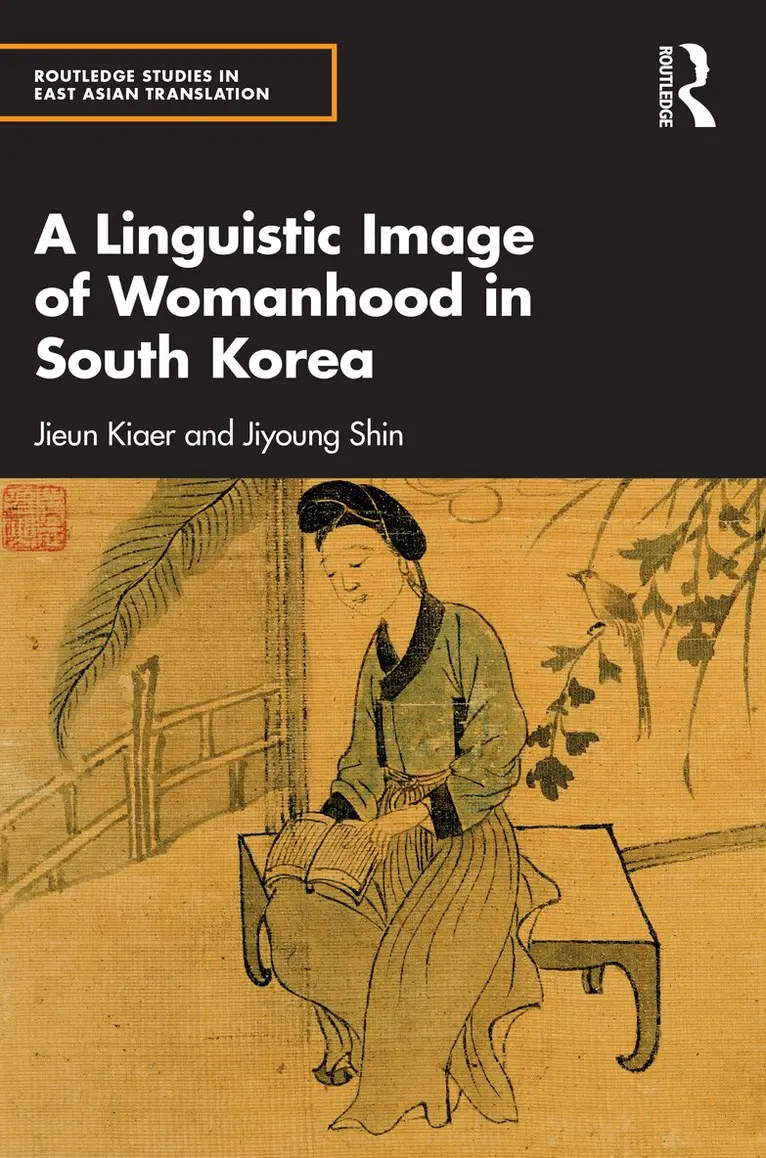
    A Linguistic Image of Womanhood in South Korea examines the verbal and non-verbal techniques used by contemporary South Korean women to navigate their society.South Korea is extremely hierarchical, and this is expressed through a complex array of different politeness levels in words, gestures, and behaviours. These hierarchies were formed over 500 years ago with the introduction of Neo-Confucianism from China, but patriarchal and paternalistic values still linger in contemporary Korean society. In this book, the authors have coined the term ‘language cosmetics’ to describe how women in South Korea modify their language and behaviour to conform to social expectations. The book examines womanhood and femininity as seen in popular Korean films, K-dramas, and K-pop. The authors note that feminine language and behaviour are not limited to women (as seen by the practice of aegyo or ‘acting cute’ within Korean boy bands), and they describe the tensions between gender hierarchy and socioeconomic status (as seen in the powerful and elegant samonim ladies of K-drama).This book will be informative for those studying and researching in the fields of Asian studies, cultural studies, linguistics, and East Asian languages, particularly those analysing how society and gender have an impact upon language.

    Produktinformation

    • Utgivningsdatum:2022-12-30
    • Mått:156 x 234 x 13 mm
    • Vikt:860 g
    • Format:Häftad
    • Språk:Engelska
    • Serie:Routledge Studies in East Asian Translation
    • Antal sidor:120
    • Förlag:Taylor & Francis Ltd
    • ISBN:9781032053738

    Utforska kategorier

    • Genusvetenskap inom Samhälle och politik
    • Språkvetenskap och lingvistik inom Språk och ordböcker
    • Kulturvetenskap inom Samhälle och politik

    Mer om författaren

    Jieun Kiaer is Professor of Korean Linguistics at the University of Oxford. She publishes widely on East Asian linguistics, with particular emphasis on pragmatics. Her recent publications include Understanding Korean Film: A Cross-Cultural Perspective (with Loli Kim, 2021), More Than Polite (Routledge, forthcoming), and Pragmatic Particles: Findings from Asian Languages (2020).Jiyoung Shin is Professor of Korean Linguistics at Korea University. Her research areas are phonetics and phonology, spoken grammar of Korean, and the role of prosody in subareas of linguistics. She is also interested in the ideology behind language. Shin has most recently published The Tug-of-War of the Language (2018) and The High Jump of Language (2021). She received the Presidential Commendation for her contributions to family policy in 2020.

    Innehållsförteckning

    • List of figures List of tables Acknowledgments Preliminaries 1. Introduction1.1 Studies of Women’s Languaging Habits 1.2 The Case of Japan 1.3 What are Language Cosmetics? 2. Womanhood in Neo-Confucian Society - Past and Present2.1 Introduction 2.2 Transition from Goryeo 2.3 The Making of Womanhood in Joseon 2.3.i Women’s place 2.3.ii Oryun (五倫) ‘Five Relations’ 2.3.iii Women’s Virtues 2.3.iv Admonishment for Women 2.3.v Women’s Misconduct 2.3.vi Women’s Education 2.3.vii Women’s Sorrow Han (恨): The Untranslatable Grief 2.4 Between the Joseon dynasty and contemporary Korean society 2.5 Neo-Confucianism in Contemporary Korea 2.5.i Father-son relation (bujayuchin 父子有親) 2.5ii King-Vassal Relation (gunsinyuui 君臣有義) 2.5.iii Husband-Wife Relation (bubuyubyeol 夫婦有別) 2.5.iv Sibling relation (hyeongjeuae 兄弟友愛) 2.5.v Old-young relation (jangyuyuseo 長幼有序) 2.6 Marriage Migration 2.7 Exceptions: Gen Z in the Metaverse 2.8 Patriarchy in North Korea 2.9 Summary 3. The Linguistic Landscape of Korea3.1 A Fine Line Between Nature and Nurture 3.1.i Studies of East Asia 3.1.ii The Need to Avoid Generalisation 3.2 The Influence of the Linguistic Landscape 3.2.i Feminisation of Professional Titles 3.2.ii Meanings of Yeosa (女史) 3.2.iii Problematic Family Address Terms 3.2.iv Terms of ‘Endearment’ 3.2.v Moving Towards a Gender-Neutral Language 3.3 Case Study: Invisible and Unheard in 100 Minute Debate 3.4 Summary 4. Language Cosmetics4.1 Introduction 4.2 Language Cosmetics: More than Verbal Hygiene 4.3 Aegyo as a Linguistic Cosmetic 4.4 ‘Generation MZ’ women 4.4.i The Fist Pump 4.4.ii Closing eyes 4.4.iii Hand over heart 4.5 Online Language Cosmetics 4.6 Summary 5. Language Cosmetics in Non-Verbal Behaviour5.1 Introduction 5.2 Neo-Confucian Non-Verbal Indicators of Politeness 5.3 Gender and Gesture 5.5 The Samonim Dynamic 5.6 Summary 6. Conclusion6.1 The Female Voice in the Future