• Fri frakt över 249 kr
  • •
  • Snabba leveranser
  • •
  • Billiga böcker
Kundservice

Du är på sajten för privatpersoner.

Företag, bibliotek eller offentlig verksamhet?

Du handlar på classic.bokus.com, där alla dina funktioner finns intakta.
Till classic.bokus.com
Bokus logotyp. Gå till startsidan.
  • Erbjudanden
  • Nyheter
  • Student
  • Topplistor
  • Barn & ungdom
  • Bokus Play
  • E-böcker
  • Pocketböcker
  • Spel & pussel

10% rabatt på allt med kod: NYSTART10 →

Sidfot

Mina sidor

    Hjälp

    • Kundservice
    • Vanliga frågor och svar
    • Frakt och leverans
    • Retur vid ångerrätt
    • Reklamera vara
    • Betalning
    • Köpvillkor
    • Allmänna villkor
    • Information om webbplatsens tillgänglighet

    Om Bokus

    • Om oss
    • Pressrum
    • För studenter
    • För företag
    • För bibliotek och offentlig verksamhet
    • För leverantörer
    • Hållbarhet

    Populärt

    • Aktuella erbjudanden
    • Presentkort
    • Studentlitteratur
    • Nya böcker
    • Topplistor
    • Signerade böcker
    • Engelska böcker

    Inspiration

    • Boktips
    • BookTok
    • Populära bokserier
    • Barnbokskaraktärer
    • Populära författare
    Logotyp för Bokus
    Följ oss på Facebook (extern länk)Följ oss på Instagram (extern länk)Följ oss på YouTube (extern länk)Följ oss på TikTok (extern länk)
    bokus @ CookiesAnpassa cookiesIntegritetspolicyKöpvillkor
    Till Citymail hemsida (extern länk)Till Budbee hemsida (extern länk)Till Postnord hemsida (extern länk)Till Schenker hemsida (extern länk)Till Early Bird hemsida (extern länk)Till Walleys hemsida (extern länk)
    1. Naturvetenskap och teknik
    2. Geovetenskap
    3. Regional planering

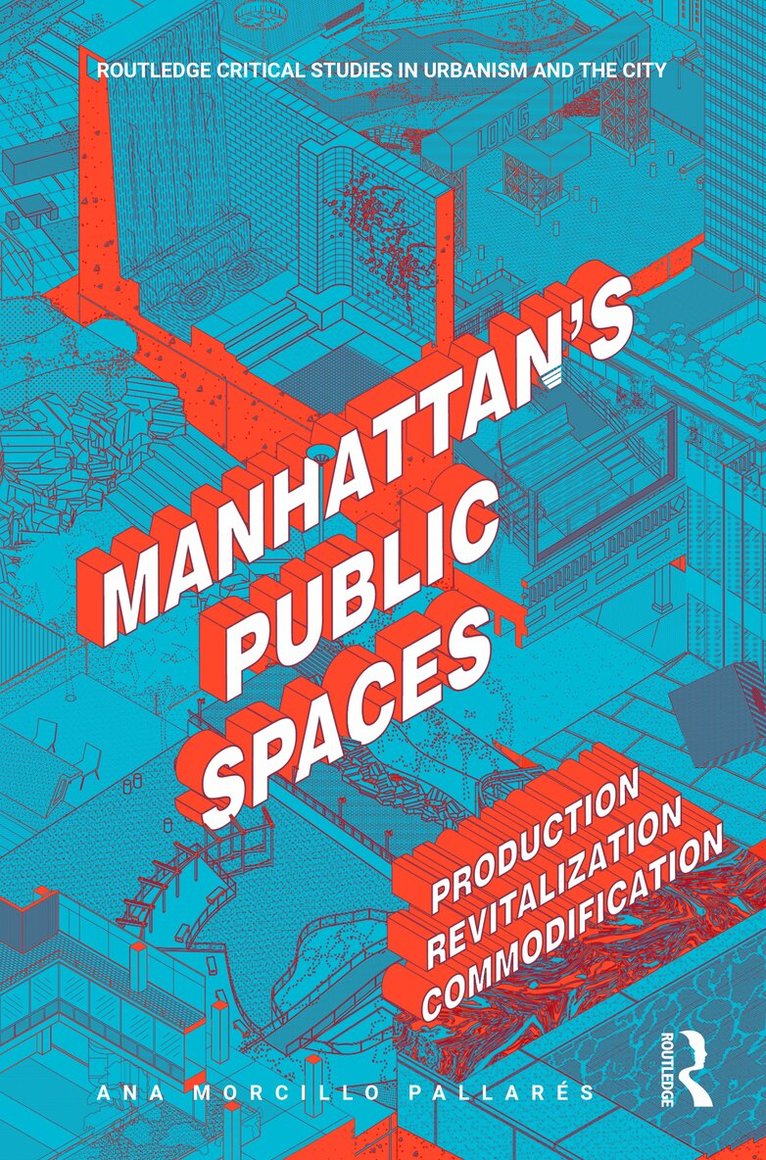
    Manhattan's Public Spaces

    Production, Revitalization, Commodification

    AvAna Morcillo Pallarés

    Häftad, Engelska, 2024

    Del i serien Routledge Critical Studies in Urbanism and the City

    624 kr

    Beställningsvara. Skickas inom 10-15 vardagar. Fri frakt över 249 kr.

    Fler format och utgåvor

    E-bok

    681 kr

    E-bok

    679 kr

    Inbunden

    2 493 kr

    Beskrivning

    Manhattan’s Public Spaces: Production, Revitalization, Commodification analyzes a series of architectural works and their contribution to New York’s public space over the past few decades. By exploring a mix of urban mechanisms, supportive frameworks, legal systems, and planning guidelines for the transformation of the city’s collective realm, the text frames Manhattan as a controversial landscape of interests and concerns to authorities, communities, and, very importantly, developers.The production, revitalization, and commodification of Manhattan’s public spaces, as a phenomenon and as a subject of study, also highlights the vicissitudes of the reconciliation of the many different agents, which are part of the process. The challenge of the book does not only lie in the analysis of good design but, more importantly, in how to understand the functional mechanisms for the current trends in the production of space for public use. A complex framework of actors, governance, and market monopolies, which invites the reader to participate in the debate of how these interventions contribute, or not, to an inclusive environment anchored in the existing built fabric.Manhattan’s Public Spaces invites reflection on the revitalization of the city’s shared space from all dimensions. Beautifully illustrated in black and white, with over 50 images, this book will be of interest to scholars and students in architecture, planning, and urban design.

    Produktinformation

    • Utgivningsdatum:2024-08-26
    • Mått:156 x 234 x undefined mm
    • Vikt:440 g
    • Format:Häftad
    • Språk:Engelska
    • Serie:Routledge Critical Studies in Urbanism and the City
    • Antal sidor:184
    • Förlag:Taylor & Francis Ltd
    • ISBN:9781032056418

    Utforska kategorier

    • Regional planering inom Naturvetenskap och teknik

    Mer om författaren

    Ana Morcillo Pallarés is a Spanish architect, researcher, and designer based in Ann Arbor, Michigan, and Cieza, Spain. Her research and creative practice critically engage today’s increasing need for more shared space as an ongoing process of continuous agreements among the diverse networks of people who are part of the city. Her work has been featured in the Journal of Architectural Education, VLC Arquitectura, MONU, and the Plan Journal, among others. Ana is an assistant professor at Taubman College of Architecture and Urban Planning, where she initiated her academic career as the 2015 Walter B. Sander Research Fellow. She received her Ph.D. from the Polytechnic School of Madrid and her professional degree in architecture from the Polytechnic School of Valencia.

    Recensioner i media

    "This book is a remarkable window onto a unique moment in the history of New York – and the history of contemporary urban design - when squalor, decline, innovation and opportunity somehow existed simultaneously."-Robert Fishman"Rivers of ink have gone into tackling the Big Apple from numerous and widely varied critical angles. A new addition to this hermeneutic lineage is by a Michigan-based Spanish scholar, who scans recent production of public space through examples which are halfway between architectural and urban, covering the period from the times of Mies van der Rohe to the High Line. These examples are analyzed by means of sensible texts and photographs, illustrated through analytical drawings rendered by the author, and complemented with conclusions of a critical nature.-Arquitectura Viva

    Innehållsförteckning

    • Preface: Robert Fishman Introduction: Privacy vs. publicness in an increasingly shared city PART I: Production 1. Goodbye, La Guardia 2. Lever House and Seagram Plaza 3. ´Plaza Bonus´: One Chase Manhattan, 140 Broadway and One Liberty PART II: Revitalization 4. Crisis and opportunity 5. Harlem and Paley Park: collaborative inventions 6. Teardrop Park: reinventing urban grounds PART III: Commodification 7. Battery Park City vs. Gantry Park 8. The logic of the air rights 9. Identity crisis: Lincoln Center and the High Line Conclusions