• Fri frakt över 249 kr
  • •
  • Snabba leveranser
  • •
  • Billiga böcker
Kundservice

Du är på sajten för privatpersoner.

Företag, bibliotek eller offentlig verksamhet?

Du handlar på classic.bokus.com, där alla dina funktioner finns intakta.
Till classic.bokus.com
Bokus logotyp. Gå till startsidan.
  • Erbjudanden
  • Nyheter
  • Student
  • Topplistor
  • Barn & ungdom
  • Bokus Play
  • E-böcker
  • Pocketböcker
  • Spel & pussel

Må bättre, för mindre! Upp till 50% rabatt på hälsoböcker

Sidfot

Mina sidor

    Hjälp

    • Kundservice
    • Vanliga frågor och svar
    • Frakt och leverans
    • Retur vid ångerrätt
    • Reklamera vara
    • Betalning
    • Köpvillkor
    • Allmänna villkor
    • Information om webbplatsens tillgänglighet

    Om Bokus

    • Om oss
    • Pressrum
    • För studenter
    • För företag
    • För bibliotek och offentlig verksamhet
    • För leverantörer
    • Hållbarhet

    Populärt

    • Aktuella erbjudanden
    • Presentkort
    • Studentlitteratur
    • Nya böcker
    • Topplistor
    • Signerade böcker
    • Engelska böcker

    Inspiration

    • Boktips
    • BookTok
    • Populära bokserier
    • Barnbokskaraktärer
    • Populära författare
    Logotyp för Bokus
    Följ oss på Facebook (extern länk)Följ oss på Instagram (extern länk)Följ oss på YouTube (extern länk)Följ oss på TikTok (extern länk)
    bokus @ CookiesAnpassa cookiesIntegritetspolicyKöpvillkor
    Till Citymail hemsida (extern länk)Till Budbee hemsida (extern länk)Till Postnord hemsida (extern länk)Till Schenker hemsida (extern länk)Till Early Bird hemsida (extern länk)Till Walleys hemsida (extern länk)
    1. Naturvetenskap och teknik
    2. Teknik och industri
    3. Byggnadsteknik

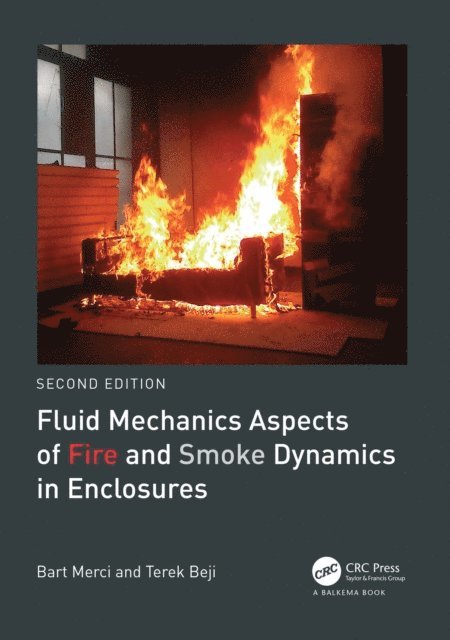
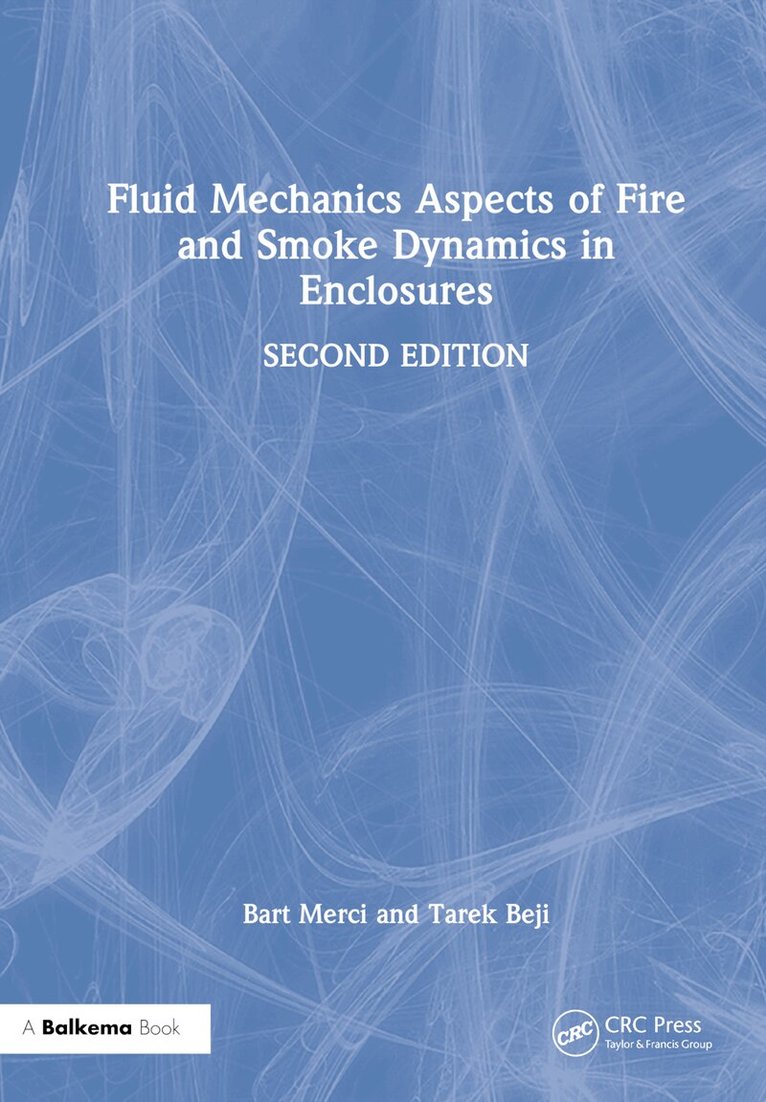
    Fluid Mechanics Aspects of Fire and Smoke Dynamics in Enclosures

    AvBart Merci,Tarek Beji

    Häftad, Engelska, 2022

    1 031 kr

    Beställningsvara. Skickas inom 10-15 vardagar. Fri frakt över 249 kr.

    Fler format och utgåvor

    Inbunden

    2 421 kr

    Häftad

    Tillf. slut

    Beskrivning

    This book provides essential understanding of flows in fire and smoke dynamics in enclosures, covering combustion, heat transfer and fire suppression in more detail than other introductory books. It moves from the basic equations for turbulent flows with combustion, through a discussion of the structure of flames, to fire and smoke plumes and their interaction with enclosure boundaries. This is then applied to fire dynamics and smoke and heat control in enclosures. This new edition provides considerably more on the fluid mechanics of the effect of water, and on fire dynamics modelling using Computational Fluid Dynamics.Presents worked examples taken from practical, everyday fire-related problemsCovers a broad range of topics, from the basics to state-of-the-art computer simulations of fire and smoke-related fluid mechanics, including the effect of waterProvides extensive treatment of the interaction of water sprays with a fire-driven flowContains a chapter on Computational Fluid Dynamics, the increasingly popular calculation method in the field of fire safety scienceThe book serves as a comprehensive guide at the undergraduate and starting researcher level on fire and smoke dynamics in enclosures, with an emphasis on fluid mechanics.

    Produktinformation

    • Utgivningsdatum:2022-10-24
    • Mått:174 x 246 x 30 mm
    • Vikt:600 g
    • Format:Häftad
    • Språk:Engelska
    • Antal sidor:338
    • Upplaga:2
    • Förlag:Taylor & Francis Ltd
    • ISBN:9781032065847

    Utforska kategorier

    • Byggnadsteknik inom Naturvetenskap och teknik
    • Maskinteknik och material inom Naturvetenskap och teknik
    • Systemvetenskap och AI inom Data och IT

    Mer om författaren

    Prof. Bart Merci obtained his PhD, entitled ‘Numerical Simulation and Modelling of Turbulent Combustion’, from the Faculty of Engineering at Ghent University in the year 2000. As a post-doctoral fellow of the Fund for Scientific Research – Flanders (FWO-Vlaanderen), he specialized in numerical simulations of turbulent non-premixed combustion, with focus on turbulence–chemistry interaction and turbulence–radiation interaction. He reoriented his research towards fire safety science, taking the fluid mechanics aspects as the central research topic. He became lecturer at Ghent University in 2004, Full Professor in 2012 and Senior Full Professor in 2020. He is the head of the research unit ‘Fire Safety Science and Engineering’ in the Department of Structural Engineering and Building Materials. Since 2009, Bart Merci has coordinated the ‘International Master of Science in Fire Safety Engineering’, with Lund University and the University of Edinburgh as partners. He was the President of The Belgian Section of The Combustion Institute from 2009 until 2016. Since 2016, he has been Editor-in-Chief of Fire Safety Journal. He is a member of the Executive Committee of the International Association for Fire Safety Science. He is co-author of more than 150 journal papers.Tarek Beji obtained his Ph.D. degree in 2009 from the University of Ulster (UK) with a thesis entitled ‘Theoretical and Experimental Investigation on Soot and Radiation in Fires’. In 2011, he joined Ghent University (UGent) as a post-doctoral researcher and worked on the topic of Fire Forecasting. In 2014, he was awarded an FWO post-doctoral fellowship and performed research on ‘Numerical Modelling of Water Sprays in Fire-Driven Flows’. In 2019, Tarek Beji was promoted to Assistant Professor in Fire Dynamics at Ghent University (UGent) in the Department of Structural Engineering and Building Materials where he is consolidating his research activities around the topic of ‘Numerical Modelling of Multi-Phase Aspects in Fire-Driven Flows’ with a particular interest in liquid sprays, pool fires and soot modelling.

    Innehållsförteckning

    • 1 Introduction. 2 Turbulent Flows with Chemical Reaction. 3 Turbulent Flames and Fire Plumes. 4 Smoke Plumes. 5 Fire and Smoke Dynamics in Enclosures. 6 Driving Forces in Smoke and Heat Control. 7 Impact of Water on Fire and Smoke Dynamics. 8 Introduction to Fire Modelling in Computational Fluid Dynamics.