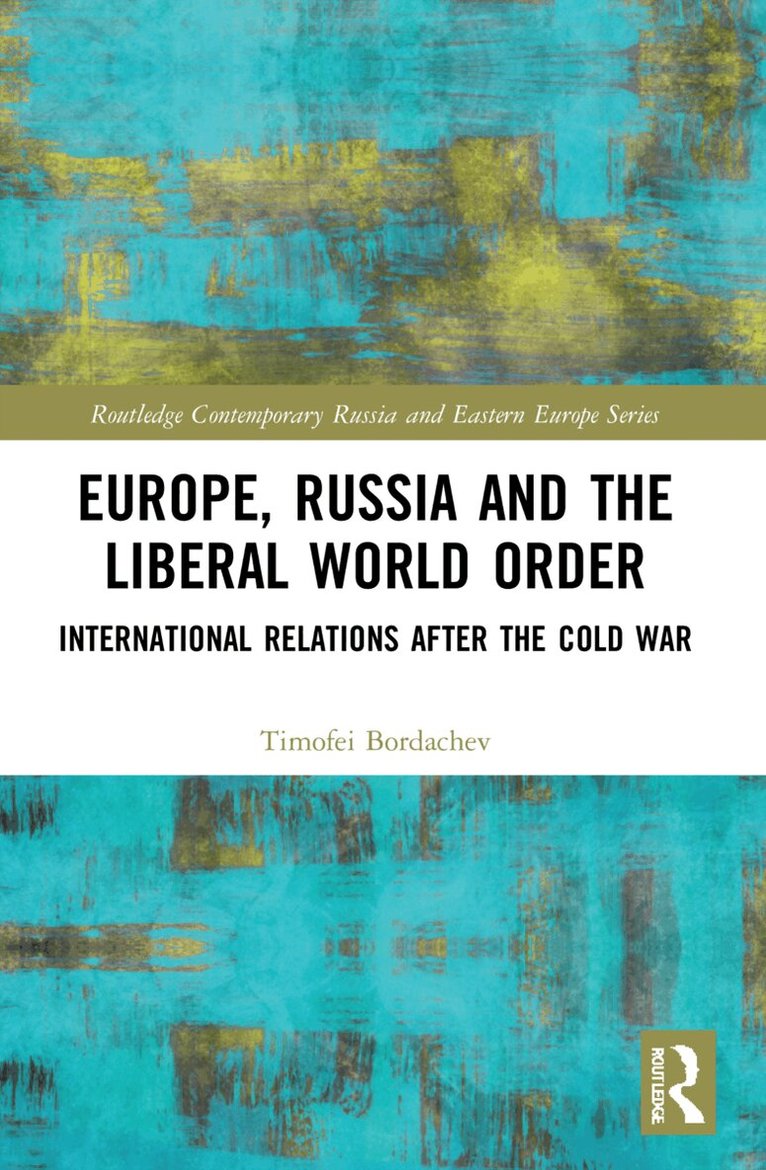
Häftad, Engelska, 2023
Europe, Russia and the Liberal World Order
International Relations after the Cold War
Del i serien Routledge Contemporary Russia and Eastern Europe Series
689 kr
Beställningsvara. Skickas inom 10-15 vardagar. Fri frakt över 249 kr.
Fler format och utgåvor
Beskrivning
Produktinformation
- Utgivningsdatum: 2023-05-31
- Mått: 156 x 234 x 14 mm
- Vikt: 1 280 g
- Format: Häftad
- Språk: Engelska
- Serie: Routledge Contemporary Russia and Eastern Europe Series
- Antal sidor: 222
- Förlag: Taylor & Francis Ltd
- ISBN: 9781032069715
Utforska kategorier
Mer om författaren
Timofei Bordachev is Programme Director of the Valdai Discussion Club and Academic Supervisor of the Center for Comprehensive European and International Studies at the National Research University Higher School of Economics (Russia).
Recensioner i media
Timofei Bordachev has filled cavernous gap in the study of European Security and global politics. Europe, Russia and The Liberal International Order is one of few enjoyable reads on the subject in recent years. By examining the intersection where national interests and an ideology with globalist pretentions meet. Using the example of relations between Russia and Europe after the Cold War the author shows how the nature and substance of international politics in general have been transformed. A recommended read for anyone interested in why the Post Cold War order unravelled so fast. Asle Toje (PhD, Cantab.) Member of the Norwegian Nobel Committee)What went wrong? This is the most frequently asked question when it comes to relations between Russia and Europe after the Cold War. Why shining expectations turned into such a dark alienation? Timofei Bordachev gives a unique perspective arguing that political failure of Common European Home derived from contradictions embedded in the Liberal World Order per se. This book is a brilliant proof that theory of international relations is not just an academic exercise, but a very important instrument of applied analysis. Truly fascinating reading!Fyodor Lukyanov, editor of Russia in Global Affairs, research director at the Valdai International Duscussion ClubWhy did Europe and Russia fail to build the broadly cooperative relationship they both aspired to after the end of the Cold War? In this ambitious work, Timofei Bordachev of the Higher School of Economics deftly draws on international relations theory to illuminate the practical consequences of decisions made in Moscow and Brussels that led to a parting of ways. In the process, he deepens our understanding of the post-Cold War period and makes a valuable contribution to IR theory, highlighting the vital role a balance of power plays in structuring and sustaining international institutions that are ostensibly founded on other principles. Thomas Graham, Distinguished Fellow, Council on Foreign Relations
Betyg & recensioner
0 recensioner
Inga recensioner tillgängliga.