Häftad, Engelska, 2019
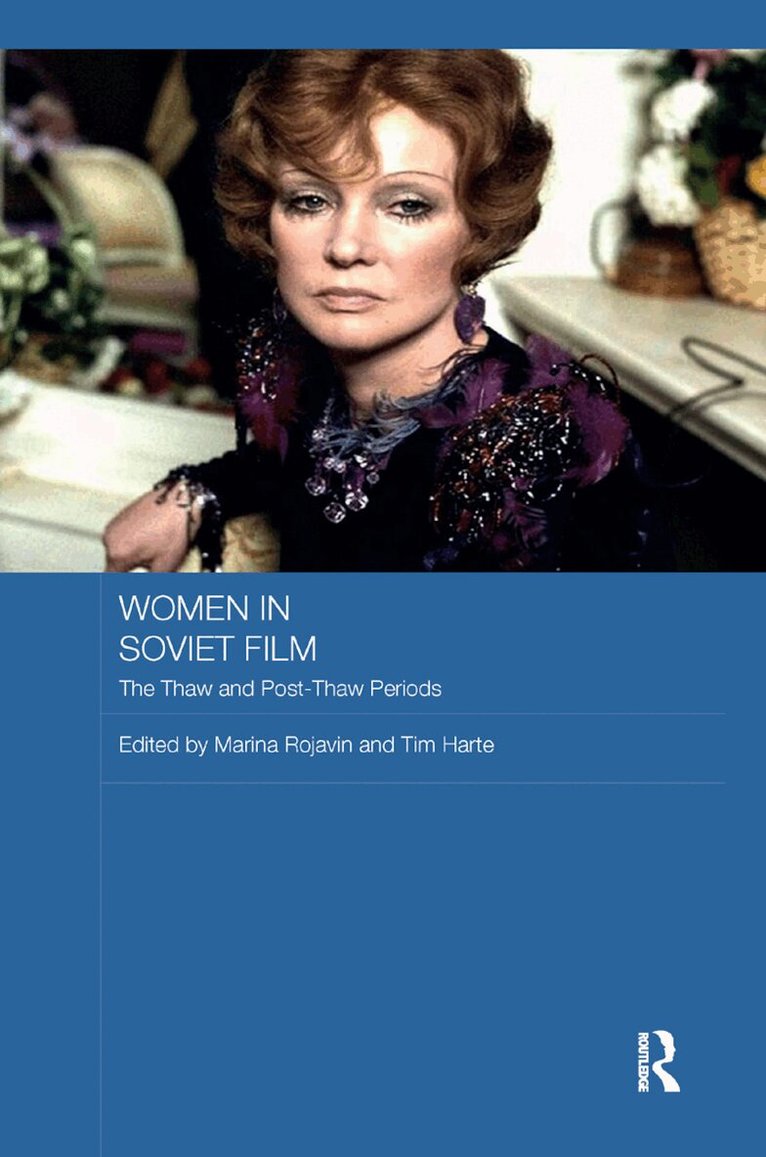
Women in Soviet Film
The Thaw and Post-Thaw Periods
762 kr
Beställningsvara. Skickas inom 10-15 vardagar. Fri frakt över 249 kr.
Fler format och utgåvor
Beskrivning
Produktinformation
- Utgivningsdatum: 2019-12-12
- Mått: 156 x 234 x 14 mm
- Vikt: 453 g
- Format: Häftad
- Språk: Engelska
- Serie: Routledge Contemporary Russia and Eastern Europe Series
- Antal sidor: 216
- Förlag: Taylor & Francis Ltd
- ISBN: 9780367889715
Utforska kategorier
Mer om författaren
Marina Rojavin is teaching at Bryn Mawr College. Some of her scholarly interests are Russian intellectuals in Imperial Russia and Russian intelligentsia, women, and character archetypes in Soviet cinema of 1960s–1980s. Her most recent publication is the textbook Russian for Advanced Students (2013) completed with her colleagues. Tim Harte is an associate professor of Russian at Bryn Mawr College. He is author of Fast Forward: The Aesthetics and Ideology of Speed in Russian Avant-Garde Culture, 1910–1930 (2009) as well as various articles on twentieth-century Russian literature and film.
Recensioner i media
‘Critics and viewers typically perceive the cinema of the late Soviet period as dominated by male stars, male directors, and the male gaze. Women in Soviet Film complicates this perspective by revealing the "womanly face" of Thaw and Stagnation cinema. Defying expectations, a gendered critique of Soviet (and especially late Soviet) patriarchality in the cinema of the 1960-70s appears to be more profound and more disquieting than in the following, much more liberal times. Most paradoxically, as the volume’s authors eloquently demonstrate, this deconstruction was performed from within popular cinematic genres, in mainstream films and by beloved stars. This hidden streak of gendered subversion within mainstream Soviet cinema, is a true discovery superbly presented by this collection of articles.’ - Mark Lipovetsky, Professor of Russian Studies, University of Colorado-Boulder
Betyg & recensioner
0 recensioner
Inga recensioner tillgängliga.